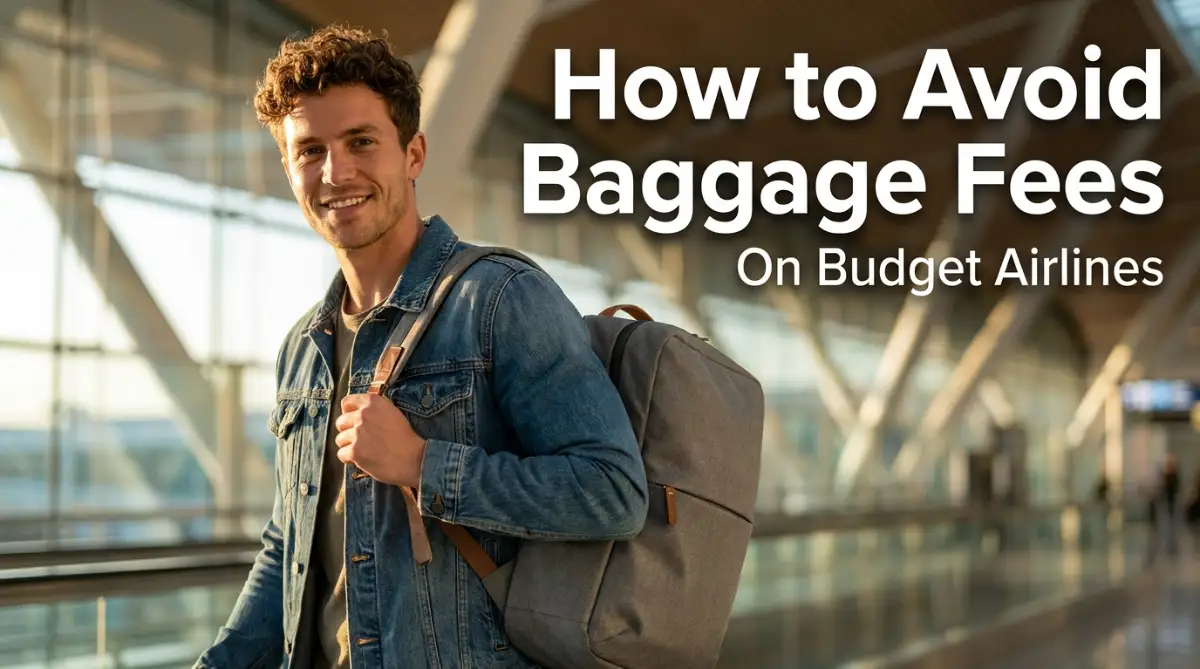
The Hidden Trap at the Checkout Screen
We have all experienced this exact scenario. You are browsing the internet late at night, dreaming of a quick weekend getaway. Suddenly, you spot a flight deal that looks completely unreal.
A round-trip ticket to a beautiful beach destination for less than the cost of a decent dinner. Your heart races, and you immediately click "book."
But as you move through the booking process, the excitement slowly starts to drain away. The airline hits you with a charge to pick a seat. Then, they ask for a fee to print your boarding pass.
Finally, the ultimate insult appears on the screen. They want to charge you sixty dollars just to bring a standard piece of luggage. By the time you reach the payment page, your magical cheap flight has suddenly doubled in price.
This is the harsh reality of flying on low-cost carriers today. These airlines practically give away the seat for free, but they make their massive profits by charging you for every single extra item you bring on board.
It feels like a scam. You end up standing at the airport counter, sweating and feeling completely helpless, while the gate agent forces you to stuff your sweater into your purse just to avoid a penalty fee.
The stress of worrying about bag sizes can ruin the joy of travel before your vacation even begins. You start wondering if saving money on the ticket was even worth the massive headache.
You deserve to travel without this constant financial anxiety. You should be able to grab a cheap flight and actually pay the price advertised on the front page.
Let us break down exactly how you can outsmart the budget airline system. You can travel comfortably, pack everything you need, and never pay another unfair luggage charge again.
Outsmarting the Low-Cost Carrier System
Airlines rely on your packing laziness to make their money. They know most people will just throw clothes into a giant hard-shell suitcase and accept the extra charges.
To beat them at their own game, you have to completely change the way you view luggage. Packing is no longer just about putting clothes in a bag; it is a strategic game of geometry and physics.
We are going to look closely at some highly effective techniques to maximize your packing space. You can easily fit five days of clothing into a bag that slips right under an airplane seat.
Mastering the "Personal Item" Loophole
The absolute secret to flying budget airlines for free is fully understanding the personal item allowance. Almost every strict airline in the world allows you to bring one small bag on board for zero dollars.
However, they carefully define this bag by its physical dimensions, not its weight. They usually require this bag to fit perfectly underneath the seat directly in front of you.
Many travelers assume a "personal item" means a tiny purse or a small laptop sleeve. This is a massive misconception.
You can actually bring a surprisingly large backpack, as long as it matches the specific length and width rules of your airline. A 30-liter travel backpack will almost always pass as a personal item if it does not have a rigid metal frame.
Pro Tip for Bag Selection: Always avoid hard-shell tiny suitcases with wheels. Wheels and handles take up valuable inches of space in the airport sizing bin. A soft, flexible backpack can easily be squished into the metal sizer if an agent challenges you.
The Science of Fabric Compression
If you are only using a small backpack, you cannot afford to leave any empty air inside. Every single inch of fabric matters.
The traditional method of folding shirts into flat squares is terrible for saving space. When you fold clothes normally, air gets trapped between the layers of fabric.
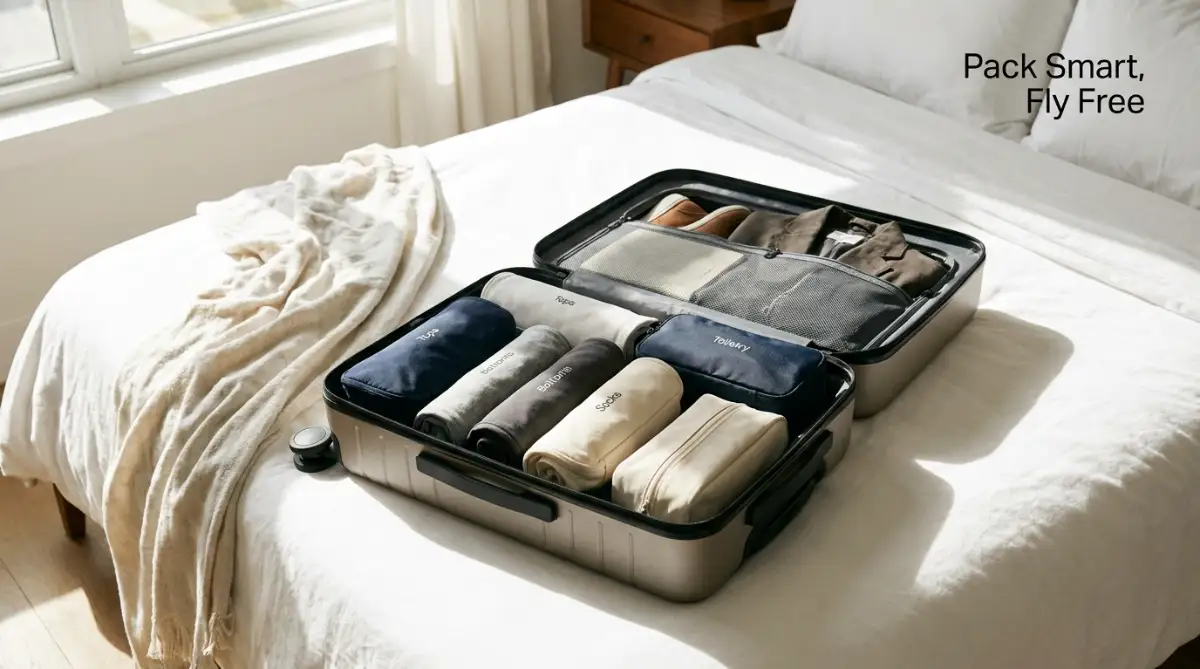
Instead, you need to use the military rolling method. Lay your shirt completely flat, fold the sleeves inward, and roll it as tightly as humanly possible from the neck down to the bottom.
Rolling your clothes forces the trapped air out and turns your garments into tiny, dense cylinders. You can pack nearly twice as many rolled shirts into a bag compared to folded ones.
To take this a step further, invest in a set of lightweight compression packing cubes. These clever fabric boxes feature a secondary zipper that physically squeezes the extra air out of your clothes.
When you use compression cubes, a massive pile of bulky sweaters suddenly turns into a compact, hard brick of fabric. This simple tool is an absolute game changer for budget airline travelers.
Wearable Luggage: The Ultimate Travel Hack
What happens if your carefully rolled clothes still do not fit into your small personal item backpack? You simply wear them on your body.
Airlines are allowed to weigh your bag, but they are not legally allowed to weigh your actual body. You must use this loophole to your maximum advantage.
If you are traveling with a heavy winter coat, absolutely do not put it inside your backpack. Wear it through the airport security line and onto the plane.
You can always take the coat off as soon as you sit down in your seat. This one move saves a massive amount of storage space.
You should also wear your heaviest, bulkiest shoes on the travel day. If you plan to bring large hiking boots and lightweight flip-flops on your trip, always wear the boots on the airplane.
Some expert travelers even use multi-pocket fishing vests or heavy jackets with deep pockets as secondary storage. You can easily slip phone chargers, socks, and small electronics into your jacket pockets before walking past the gate agent.
Rethinking Your Toiletries
Liquids are the natural enemy of the budget traveler. Heavy bottles of shampoo and thick tubes of toothpaste take up precious room and add unnecessary weight to your bag.
Furthermore, carrying large liquid bottles forces you to deal with strict airport security rules. If your bag gets flagged for a liquid inspection, you might miss your flight.
The solution is to switch entirely to solid toiletries. You can buy solid shampoo bars, solid perfume, and even tiny toothpaste tablets that look like mints.
Solid toiletries completely bypass the liquid security restrictions. They are also incredibly tiny and will never explode or leak inside your backpack during a turbulent flight.
If you absolutely must have your favorite liquid face wash, do not bring the entire bottle. Buy tiny, reusable silicone travel tubes and pour just enough product for your specific trip.
Myth vs. Reality: The Neck Pillow Trick
You might have seen a popular trend floating around social media recently. People claim they avoid baggage fees by stuffing a travel neck pillow with extra clothing.
Let us look closely at whether this trick actually works in the real world.
The Myth: Airline staff will ignore your giant, lumpy neck pillow because it looks like a standard comfort item, allowing you to sneak five extra shirts onto the plane.
The Reality: While this trick used to work beautifully a few years ago, budget airline agents have caught on to the scheme. Gate agents are now trained to squeeze unusually heavy neck pillows.
If they notice your pillow is stuffed with heavy denim jeans instead of soft foam, they will immediately charge you a penalty fee right at the boarding gate.
Instead of risking a public argument with staff, rely on the wearable luggage strategy mentioned earlier. It is much safer to wear three shirts on your body than to hide them inside a fake pillow.
Strategies for the Airport Sizer Bin
The most stressful moment of flying on a budget airline happens right before you board. The gate agents often ask passengers to place their bags into a metal measuring bin to prove the size.
If your bag sticks out even an inch above the metal bars, they will force you to hand over a credit card.
Never overstuff your bag to the point where the zippers are stretching. A bulging bag immediately attracts the attention of strict gate agents.
When you approach the gate, wear your backpack on one shoulder so it looks casual and lightweight. Do not struggle or act like the bag is heavy.
If an agent does ask you to use the measuring bin, stay completely calm. Because you followed our advice and brought a soft backpack, you can gently push and mold the bag until it slides perfectly into the metal cage.
By applying these exact physical packing methods, you remove all the stress from the airport experience. You can confidently walk right past the angry passengers paying surprise fees, knowing your cheap flight is actually going to stay cheap.
Next-Level Packing Secrets Frequent Flyers Swear By
If you want to completely stop paying for luggage, you have to think outside the traditional suitcase. Expert travelers do not just pack differently; they completely change how they approach their belongings.
Mastering this minimalist lifestyle takes a little bit of practice. However, once you learn these advanced strategies, you will never want to drag a heavy roller bag through a busy terminal again.
Let us look closely at some incredibly effective tricks that veteran travelers use to bypass airline charges entirely.
The Airport Shopping Bag Loophole
This is one of the most brilliant and least-known secrets in the budget travel world. Every airline has strict rules about your personal item and your carry-on luggage.
However, they almost always allow you to bring airport merchandise on board for free. Gate agents are specifically trained not to penalize passengers for shopping at the terminal stores.
You can use this rule directly to your advantage. After you pass through the main security checkpoint, stop at a duty-free shop or a large terminal bookstore.
Buy a cheap item, like a bottle of water or a magazine, and politely ask the cashier for their largest plastic shopping bag. You can now take your heaviest items, like a thick sweater or your bulky camera, and place them right inside this shopping bag.
When you walk onto the airplane, the gate agent will just assume you bought a lot of snacks or souvenirs. They will not charge you a dime for that extra bag.
Shipping Your Belongings to Your Hotel
Sometimes, you simply cannot fit everything into a small personal item. Perhaps you are attending a formal wedding and need a heavy suit, or you are going on a ski trip and need bulky winter gear.
Most people instantly surrender and pay the airline eighty dollars each way for a checked bag. There is a much cheaper and safer alternative.
You can simply mail your clothes to your destination using standard ground shipping. A medium-sized cardboard box sent through the postal service often costs a fraction of an airline luggage fee.
Before you try this, call your hotel and speak to the front desk manager. Let them know you are expecting a package and ask them to hold it for your arrival.
Address the box to yourself, write "Guest Arriving On [Your Date]" on the side, and ship it a few days early. You get to walk through the airport with nothing but your ticket in your hand.
While you are carefully planning your travel logistics, do not forget about the vehicle you leave behind in the airport parking lot. Leaving a vehicle sitting idle for weeks can cause unexpected battery drain, which is one of the silent mistakes slowly destroying your hybrid car engine if you are not careful.
Doing Laundry on the Go
The biggest reason people overpack is the fear of running out of clean clothes. They pack fourteen different outfits for a seven-day vacation "just in case."
To travel for free on budget airlines, you need to break this habit completely. You should only pack enough clothing for three or four days, regardless of how long your trip actually is.
The secret is to wash your clothes while you travel. You do not need a washing machine to do this effectively.
Buy a small travel-sized packet of liquid laundry detergent and keep it in your toiletry bag. Before you go to sleep at your hotel, fill the bathroom sink with warm water and wash your socks, underwear, and t-shirts.
Wring them out tightly and hang them over the shower rod. By the time you wake up the next morning, you have a completely fresh set of clothes ready to wear.
This single habit cuts your luggage size in half immediately.

The Hidden Traps That Will Destroy Your Travel Budget
Even smart travelers can easily fall into expensive traps at the airport. Low-cost carriers design their boarding process specifically to catch you making mistakes.
If you let your guard down for even a second, they will hit you with a massive penalty fee. These fees are usually much higher at the boarding gate than they are online.
Let us discuss the most dangerous packing mistakes people make so you can protect your wallet.
Measuring Your Bag Incorrectly at Home
Many travelers try to be responsible and measure their backpack before leaving the house. They grab a soft measuring tape and wrap it around the fabric of their bag.
This is a terrible way to measure your luggage. Airlines do not use soft measuring tapes; they use solid metal boxes called sizers.
If your bag has a rigid internal frame or hard plastic wheels, those parts will not squish into the metal box. If a single wheel sticks out above the metal bar, you will be forced to pay.
To avoid this nightmare, always measure your bag against a flat surface. Place your bag on the floor against a flat wall.
Place a heavy book on the top of the bag and use a tape measure from the floor straight up to the book. This gives you the true, unforgiving dimensions of your luggage.
For the most accurate regulations on what you can legally bring on a plane, it is always smart to check the official Transportation Security Administration (TSA) guidelines directly. Knowing these federal rules prevents security from throwing away your expensive items.
Assuming Gate Checking is Always Free
If you have ever flown on a major legacy airline, you have probably heard the gate agent make a friendly announcement. They often offer to check your carry-on bag for free because the overhead bins are full.
Do not ever expect this friendly treatment on a budget airline.
Low-cost carriers view oversized bags at the gate as a massive opportunity to make money. If you bring a large bag to the gate without paying for it beforehand, they will not check it for free.
They will pull you out of the boarding line and force you to pay an "at-gate penalty fee." This fee is often double or even triple the normal price of a checked bag.
Dealing with a system that feels designed to punish you can be incredibly frustrating. It feels very similar to experiencing the truth about unfair losing streaks and mar decay in tactic games online. No matter how much you prepare, one wrong move makes you feel like the system is rigged against you.
Ignoring the Return Trip Souvenirs
This is perhaps the most heartbreaking mistake a budget traveler can make. You pack your small personal item perfectly before leaving home.
You breeze through the airport, enjoy a wonderful vacation, and buy a few heavy souvenirs to remember the trip.
When it is time to fly back home, you suddenly realize your bag will not zip shut. You try pushing and shoving, but the extra items make your bag look like a giant balloon.
When you get to the airport for your return flight, the agent spots your bulging bag immediately. They force you into the metal sizer box, your bag fails the test, and you are slapped with a seventy-dollar fee on the way home.
Always leave at least twenty percent of your bag completely empty when you pack at home.
If you do not leave empty space, you cannot buy anything at your destination. If you know you are a heavy shopper, plan ahead and wear your bulkiest clothing on the flight home to make room in your bag for those gifts.
If you want to understand more about your rights as a passenger when dealing with unfair fees, the U.S. Department of Transportation’s Aviation Consumer Protection website outlines exactly what airlines are legally allowed to do.
Your Ultimate Pre-Flight Action Plan
Flying on a low-cost airline does not have to be a stressful, miserable experience. You now hold the exact blueprint to beat the airlines at their own profitable game.
You know how to maximize every single square inch of your personal item. You understand the incredible value of wearable luggage and the magic of compression packing cubes.
Most importantly, you know exactly what tricks the gate agents use to catch unsuspecting passengers. You are no longer an easy target for their hidden checkout fees.
To help you put this knowledge into action immediately, here is exactly what you need to do before your next adventure.
The Smart Traveler Checklist
Before you ever click that final "purchase" button on a flight website, run through these simple steps:
- Review the Dimensions: Check the exact personal item measurements on the airline's website. They change their rules frequently, so never assume you know the exact numbers.
- Pick the Right Bag: Ditch the hard roller suitcase. Grab a soft-sided, flexible travel backpack that can easily bend and squish under an airplane seat.
- Roll, Do Not Fold: Use the tight military roll technique for every single piece of clothing you pack. Better yet, buy compression cubes today.
- Plan Your Airport Outfit: Lay out your heaviest shoes, thickest coat, and bulkiest sweater. You will wear all of these onto the airplane to save space.
- Downsize Your Toiletries: Swap your liquid shampoo and heavy toothpaste tubes for dry, solid alternatives.
Just like you would prepare your vehicle with the ultimate smart car upgrades for android and ios users to make a road trip totally seamless, you must prepare your luggage to make your flight completely stress-free.
The next time you see a flight advertised for twenty dollars, you can book it with a massive smile on your face. You can finally enjoy the thrill of cheap travel exactly the way it was meant to be experienced.
Pack light, stay calm at the boarding gate, and spend all that saved luggage money on an amazing dinner at your destination. You have officially beaten the system.
Disclaimer: The tips and strategies provided in this blog post are for general informational and educational purposes only. Airline luggage policies, fees, and personal item dimensions change frequently and vary heavily between different carriers. We highly recommend checking the official baggage guidelines directly on your specific airline's website immediately before packing for your trip. We are not responsible for any unexpected fees or penalties incurred at the airport.