
The Panic In The Mirror: When Beauty Products Fight Back
Imagine you are getting ready for a highly anticipated weekend event. You finally bought that viral foundation everyone has been talking about online. You apply it carefully, feeling confident and completely flawless.
But just a few hours later, your face begins to feel unusually warm. You walk over to the mirror, and your heart instantly drops into your stomach. Your cheeks and forehead are covered in angry, bright red patches.
The itching starts, and it is absolutely maddening. The panic sets in immediately as you realize your skin is having a severe reaction. You start calculating how quickly you can hide the redness with more makeup.
You even wonder if you need to cancel your exciting plans entirely. A sudden cosmetic reaction is not just an annoying physical discomfort. It completely shatters your self-esteem in a matter of seconds.
You feel entirely trapped in your own skin. I know exactly how frustrating and scary this moment is. You just want the burning sensation to stop right now, and you want your normal skin back.
Do not panic, and step away from the concealer. We are going to fix this together using a very gentle, science-backed approach. Let us take a deep breath and start your emergency skin rescue.
Stopping The Attack: Your First Line of Defense
Let us walk through exactly how to calm this massive flare-up safely. The very first thing you must do is remove the offending product immediately. Do not wait an hour to see if the redness miraculously goes away on its own.
Your skin is sending you a very loud warning signal. Leaving the irritating chemicals on your face will only deepen the damage to your skin barrier. We need to wash the slate clean right now.
The Zero-Friction Cleansing Method
Go straight to your bathroom sink and turn the water on. Adjust the temperature so it is comfortably cool, but never freezing cold. Never use hot water on an allergic reaction. Heat rapidly increases blood flow, which will make the inflammation and redness look significantly worse.
Wash your face using only cool water or an extremely gentle, fragrance-free cleanser. Gently splash the water directly onto your skin. Do not rub, scrub, or use a textured washcloth under any circumstances.
Your skin barrier is currently broken and severely compromised. Treat your face like a highly fragile piece of silk. Once the product is thoroughly rinsed off, pat your face dry with a clean microfiber towel.
Do not drag or wipe the towel across your sensitive cheeks. If your skin feels too painful to touch, simply let it air dry completely. Patience is your best friend during this step.
💡 Myth vs. Reality Check
The Myth: You should quickly apply a strong acne cream to dry out the small, red bumps on your face.
The Reality: Rash bumps from a cosmetic reaction are not acne. Applying harsh, drying spot treatments will chemically burn the area and make the allergic reaction ten times worse. Keep those acne treatments far away.
Cooling The Fire: Immediate Relief Strategies
Now that your face is completely clean, we need to lower the physical temperature of your skin. A sudden rash brings a lot of localized heat to the surface. A simple cold compress is the most effective tool you have right now.
Grab a clean, soft cotton cloth and soak it in a bowl of ice-cold water. Wring out the excess water and lay the damp cloth gently over your inflamed cheeks. Leave it there for about ten to fifteen minutes.
The cold temperature naturally constricts your blood vessels beneath the skin. This action physically reduces the angry redness and provides immediate relief from the burning sensation. You can repeat this process a few times throughout the evening if the heat returns.
Ingredients That Actually Calm The Storm
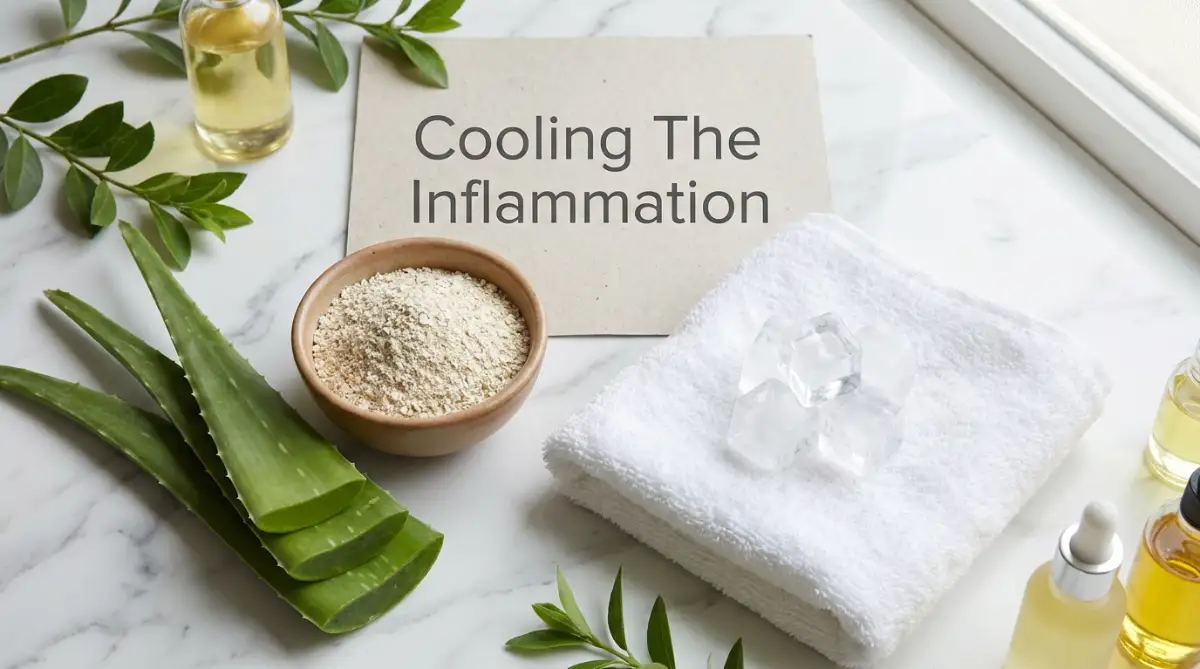
What can you safely apply to your face when everything seems to burn? Let us talk about the soothing magic of pure aloe vera. If you happen to have a real aloe plant sitting in your living room, slice a thick leaf open.
Apply the fresh, clear, cooling gel directly to the worst parts of the rash. If you must use store-bought aloe gel, you need to check the back label immediately. Make sure it absolutely does not contain hidden drying alcohols, artificial green dyes, or strong added fragrances.
Colloidal oatmeal is another incredible, scientifically proven skin savior. You can easily find this in the baby care aisle of almost any local drugstore. Mix a small spoonful of colloidal oatmeal powder with a few drops of water to create a thick, muddy paste.
Apply this gentle paste over your rash like a calming face mask. Leave it sitting on the skin for fifteen minutes, and then gently rinse it away with cool water. The oatmeal creates a microscopic protective film over your irritated skin, providing incredible instant relief from the intense itching.
🟢 Safe Rescue Ingredients 🔴 Absolute Danger Zone Ingredients
Pure Colloidal Oatmeal ~ Glycolic & Salicylic Acids
Centella Asiatica (Cica) ~ Synthetic Fragrances & Essential Oils
Ceramides & Panthenol ~ Retinol & Vitamin C Serums
Pure Aloe Vera Gel ~ Physical Scrubs & Peeling Gels
The "Do Nothing" Healing Philosophy
Sometimes, the absolute best skincare routine is no routine at all. When you are dealing with a severe cosmetic allergic reaction, less is always more. You need to put away your expensive ten-step skincare lineup immediately.
Your daily brightening serums, clarifying toners, and exfoliating acids belong hidden in a drawer right now. Ingredients like vitamin C, lactic acid, and retinol are far too aggressive for a face that is already under attack. Applying them now will only add massive amounts of fuel to the fire.
Your only goal for the next few days is basic survival for your skin barrier. Do not try to treat dark spots or wrinkles while your face is actively fighting an allergic reaction. Give your skin the peace and quiet it desperately needs to heal itself.
Locking In The Moisture Safely
After cooling the skin and calming the itch, you must protect your face from the outside air. A damaged skin barrier loses its natural ability to hold onto hydration. Water evaporates from your skin rapidly, leaving it feeling tight and highly uncomfortable.
This is exactly where a very basic, thick barrier cream comes into play. Look for a healing ointment or a thick recovery cream containing ceramides or glycerin. Even a very thin, light layer of plain petroleum jelly can work absolute wonders overnight.
It acts exactly like a temporary, artificial shield for your face. It strictly locks the necessary water inside while keeping environmental dirt and irritants completely out.
Expert Pro Tip: Always keep a simple tube of your favorite basic barrier cream in the refrigerator door. Applying chilled cream provides an incredible extra wave of soothing relief to hot, burning skin.
Understanding The Root Cause of The Attack
To prevent this frustrating nightmare from ever happening again, we need to understand the science behind it. A sudden rash from makeup or skincare is usually caused by one of two specific issues. It is either an irritant contact dermatitis or a true allergic contact dermatitis.
Irritant contact dermatitis happens when a strong product physically damages the outer surface of your skin. It essentially feels like a mild chemical burn. This often happens if you use a new product with a very high concentration of strong exfoliating acids.
The stinging and burning sensation usually happens almost immediately after application. Anyone can experience irritant contact dermatitis if a product is simply too strong for human skin.
Allergic contact dermatitis, on the other hand, is a specific immune system response. Your personal body mistakes a normally harmless ingredient for a highly dangerous, attacking invader. This specific type of rash might not appear immediately after you apply the makeup.
Sometimes it actually takes hours, or even a full twenty-four hours, to finally show up on your face. Synthetic fragrances, chemical sunscreens, and strong liquid preservatives are the most common culprits for these sneaky allergies.
Knowing When To Call A Doctor
Most mild to moderate cosmetic rashes will naturally subside within a few days using this extremely gentle method. However, you absolutely need to know when a simple home remedy is no longer enough. Your health always comes first.
If the red rash begins spreading rapidly down your neck, back, or chest, you need professional help. If you ever experience any unusual swelling around your eyes, your lips, or your throat, this is a severe medical emergency.
Do not wait for a cold compress to magically work. Seek immediate medical attention from an emergency room or a doctor. For severe, persistent itching that keeps you awake at night, an over-the-counter hydrocortisone cream might be necessary.
However, you must use steroid creams very sparingly and only for a few days. Prolonged use of steroids on the delicate skin of your face can cause long-term thinning and more sensitivity.
The Golden Rule for Buying Future Products
Once your skin has finally completely healed, you might find yourself terrified to try anything new. This anxiety is completely normal and entirely valid. However, you do not have to avoid buying new cosmetics forever.
You just need to adopt a very strict patch-testing habit moving forward. Never, ever apply a brand new formula directly to your entire face. This is like playing a dangerous game of roulette with your skin barrier.
Take a tiny, pea-sized drop of the new product and apply it gently behind your ear. You can also apply it on the soft inside of your wrist or elbow. Leave the product there for a full twenty-four hours without washing it off.
If that small spot becomes red, itchy, or unusually warm, throw the product in the trash immediately. Your face just successfully dodged a massive, painful bullet. Patch testing definitely takes a little extra patience, but it guarantees your total peace of mind.
Rebuilding Trust With Your Daily Routine
Recovering from a sudden cosmetic rash is a slow, steady journey. You need to give your skin at least two full weeks of basic, gentle care before even thinking about reintroducing active ingredients.
Bring back your regular, trusted products one by one, spaced out over several days. Do not dump your entire routine back onto your face on the same morning. If you rush this delicate process, your skin might easily rebel and break out all over again.
Listen closely to your body and read your skin's daily signals. If something slightly stings when you apply it, wash it off immediately. Healthy, glowing, resilient skin is always built on patience and gentle care, never on rushed experiments.
Master-Level Skin Repair Strategies After a Severe Reaction
When the initial burning and intense redness finally begin to fade, your skin enters a highly vulnerable recovery phase. This is the exact moment where most people completely drop their guard. They assume the danger has passed and immediately go back to their regular beauty habits.
However, your skin barrier is still completely shattered on a microscopic level. The invisible shield that keeps moisture trapped inside and harmful bacteria outside is broken. If you do not actively rebuild this delicate barrier, you will likely experience continuous, low-level irritation for months.
We need to shift our focus from immediate emergency relief to long-term structural repair. You can think of your skin exactly like a brick wall that just survived a massive storm. The bricks might still be standing, but the protective mortar holding them together is completely washed away.
Rebuilding this natural mortar requires extreme patience and a highly calculated approach. It reminds me of the slow, steady discipline needed when figuring out how to monetize a niche website safely and build consistent income. You simply cannot rush the process without risking major, frustrating setbacks.
Understanding The Lipid Matrix Hierarchy
To fix the invisible mortar in your skin, you need to supply it with the exact right materials. Your natural skin barrier is primarily made up of three specific components. These are ceramides, cholesterol, and natural fatty acids.
When a cosmetic reaction strips your face, it violently removes these three essential fats. Applying a basic water-based lotion will temporarily make your face feel wet, but it will not actually repair the damage. You need a deeply nourishing cream that specifically lists ceramides on the back label.
Scientific studies published by the National Institutes of Health regarding skin barrier function clearly show how topical ceramides rapidly speed up recovery times. When you apply a thick layer of ceramide cream before bed, you are physically handing your skin the building blocks it desperately needs.
Do not be afraid of heavy, greasy-looking ointments during this specific healing phase. The goal right now is not to look matte or perfectly shine-free for a selfie. Your only goal is intensive, protective healing.
Managing Environmental Triggers During Recovery
While your face is actively trying to heal from a bad cosmetic reaction, it becomes highly sensitive to your surrounding environment. Things that never bothered you before might suddenly cause a completely unexpected stinging sensation. Your own sweat is one of the biggest hidden triggers during this sensitive time.
Sweat contains natural salts and tiny amounts of urea. On healthy skin, this is absolutely fine. But on a broken, inflamed face, letting sweat sit on the surface feels like pouring salt directly into an open cut.
If you decide to work out while recovering, you must gently rinse your face with cool water the exact second you finish. Do not let the sweat dry on your cheeks. Similarly, direct sunlight is your absolute worst enemy right now.
UV rays cause massive oxidative stress, which severely prolongs inflammation. However, chemical sunscreens might actually irritate your healing skin even more. To stay completely safe, rely on physical barriers like wide-brimmed hats and large sunglasses whenever you step outside.
The Hidden Traps That Will Keep Your Face Red and Angry
Navigating a sudden skincare disaster is incredibly stressful. Out of pure desperation, people often rush to fix the problem and end up making things significantly worse. Ignoring minor warning signs is a very dangerous game.
Much like ignoring the hidden legal traps that can destroy your new startup overnight, small cosmetic mistakes quickly compound into massive, long-lasting disasters. I want you to completely avoid these common pitfalls so you can actually get your normal life back. Let us break down the exact things you must never do when your skin is angry.
The "DIY Kitchen Chemistry" Disaster
When panic sets in, many people immediately turn to natural home remedies they find online. They run to their kitchen pantry looking for a quick, magical cure. This is one of the most destructive things you can possibly do to a compromised face.
You will see countless blogs recommending things like raw lemon juice, baking soda pastes, or straight apple cider vinegar for rashes. Please keep these food items entirely away from your sensitive face. Baking soda is highly alkaline, which completely destroys the natural acidic balance of your skin surface.
Raw lemon juice is highly acidic and contains compounds that react violently when exposed to normal daylight. Applying these raw kitchen ingredients will almost guarantee a severe chemical burn on top of your existing allergic reaction.
According to guidelines from the American Academy of Dermatology on managing contact dermatitis, using unverified natural remedies is a leading cause of worsened skin inflammation. Stick to proven, dermatologically tested recovery creams instead of playing scientist in your kitchen.
The Compulsive Over-Washing Habit
Another major trap is the intense psychological desire to aggressively wash the reaction away. You might feel like your skin is somehow dirty or contaminated. This leads to standing over the sink, vigorously scrubbing your face three or four times a day.
Every single time water and soap touch your face, they strip away tiny amounts of natural oil. When you over-wash, you are repeatedly stealing the exact moisture your face needs to heal. Water loss is the main reason your skin currently feels incredibly tight and itchy.
You should only cleanse your face once a day, ideally at night, to remove daily environmental dust. In the morning, a very gentle splash of plain water is more than enough. You need to build a protective safety net for your skin barrier.
Just as families carefully analyze the truth about employer-sponsored insurance to ensure they are truly safe, you must carefully analyze and minimize your washing habits. Give your skin a well-deserved break from constant cleansing.
Trying to "Peel Off" The Texture
A few days after the initial red reaction, you will likely notice a new, frustrating symptom. The affected areas might start getting very dry, flaky, and rough to the touch. It feels exactly like sandpaper when you run your fingers across your cheeks.
The immediate human instinct is to grab a gritty face scrub and physically rub the dead skin away. You want to force the skin to feel smooth again instantly. This is a massive mistake that resets your entire healing progress back to zero.
Those dry flakes are actually microscopic protective bandages formed by your own body. Your skin is creating a temporary crust to protect the fresh, new, healthy cells forming underneath. If you aggressively scrub those flakes off prematurely, you expose raw, unhealed skin to the harsh outside air.
The redness will instantly return, and the burning sensation will start all over again. Instead of scrubbing, you need to heavily moisturize those dry flakes. Soften them with a thick ointment and let them fall off entirely on their own schedule.
Your Skin Will Recover: Next Steps for Tomorrow Morning
Experiencing a sudden cosmetic allergic reaction is undeniably scary, but I promise you it is not permanent. Your skin is an incredibly smart, highly resilient organ. It already knows exactly how to heal itself if you simply give it the right environment.
You have now learned the exact science of calming immediate inflammation with cool compresses and gentle care. You know exactly which heavy, protective creams to use, and more importantly, which dangerous kitchen ingredients to entirely avoid. All of the power and control is completely back in your hands.
Moving forward, I want you to treat your daily routine with a newfound sense of protective respect. Become a smart, cautious consumer who always reads the ingredient labels before putting anything new on their face.
Make patch-testing a non-negotiable habit for every single new jar or bottle you purchase. Think of this slow healing phase as a valuable learning experience for your personal health. You now have the exact blueprint to handle any future skincare emergency with complete confidence and total calm.
Morning Action Plan Checklist:
- Wake up and gently splash your face with cool, plain water. No cleansers.
- While the skin is still slightly damp, apply a generous layer of your favorite ceramide cream.
- Seal dry patches with a tiny dot of plain healing ointment.
- Wear a wide-brimmed hat if you need to step outside, avoiding chemical sunscreens until fully healed.
Be kind to yourself and be highly patient with your amazing skin. The redness will fade, the smooth texture will absolutely return, and your natural, healthy glow will be back before you know it. Take a deep breath, trust this gentle process, and let the healing officially begin today.
Disclaimer: The information provided in this blog post is completely for educational and informational purposes only. It does not constitute professional medical advice, diagnosis, or targeted medical treatment. Always seek the direct advice of a qualified dermatologist or your local healthcare provider with any specific questions you may have regarding a severe medical condition or severe allergic reaction.