
When Macaroni and Cheese Becomes the Only Food Group
I still vividly remember sitting at the kitchen table, staring blankly at my two-year-old daughter. She was pushing her plate away with maximum force, screaming as if I had just insulted her best friend.
Her crime? I had the audacity to put a single, tiny green pea on the exact same plate as her beloved buttered noodles. For three straight weeks, she had survived entirely on goldfish crackers, plain white bread, and whatever form of pasta I could quickly boil.
Every single night felt like I was walking into a high-stakes negotiation where the other side refused to compromise. I found myself bargaining, begging, and eventually just giving up to ensure she had at least something in her stomach before bed.
If your child is currently living on a diet of beige carbohydrates, I want you to take a deep breath. You are absolutely not a bad parent, and you are definitely not alone in this exhausting daily struggle.
The mental toll of raising a picky eater is incredibly heavy and rarely talked about honestly. You spend hours reading nutrition blogs, feeling a deep sense of guilt every time you open a box of frozen waffles.
You worry about their vitamin intake, their growth charts, and what the pediatrician will say at the next checkup. It feels like a personal failure when you spend forty minutes cooking a healthy family dinner, only to end up making a separate peanut butter sandwich just to stop the crying.
Dinner time is supposed to be a relaxing way to connect with your family after a long day. Instead, it transforms into a stressful battleground that leaves everyone sitting at the table feeling anxious and defeated.
But I eventually learned something incredibly comforting from a pediatric feeding specialist that changed our lives completely. Your toddler is not trying to manipulate you, and they are not doing this just to make you angry.
They are actually experiencing a very normal, biological phase of development that makes unfamiliar foods feel genuinely terrifying to them. By understanding the psychology behind why they only want bread, we can completely flip the script.
We can use gentle, proven strategies to slowly expand their palate without forcing a single bite. Let me show you exactly how to guide your child toward a colorful, balanced plate while keeping the peace in your home.

The Biology Behind the Beige Diet
Before we try to fix the problem, we need to understand why toddlers are so obsessed with carbohydrates in the first place. Are you dealing with a stubborn child, or is there something deeper going on?
Question: Why does my child suddenly hate foods they loved as a baby?
Answer: Babies will eat almost anything because pureed food has a very predictable texture. As they turn into toddlers, their taste buds become hyper-sensitive, and they develop a biological fear of new things called "neophobia."
In the wild, this natural fear kept early human toddlers from eating poisonous berries when they started walking around on their own. Today, it just makes them terrified of a harmless piece of broccoli.
Carbohydrates like crackers and bread are incredibly safe for a toddler's developing brain. Every single goldfish cracker tastes exactly the same, feels the same in their mouth, and requires very little energy to chew.
Compare that to a blueberry, which might be sweet today and terribly sour tomorrow. A toddler's brain craves safety and predictability, and simple carbs deliver that exact feeling every single time.
Once you understand that their refusal is based on fear and sensory overwhelm, your entire perspective shifts. You stop seeing a stubborn kid and start seeing a little person who just needs some gentle reassurance.
The Step-by-Step Blueprint for Food Expansion
You cannot force a child to change their diet overnight, and trying to do so will only cause massive meltdowns. Instead, we are going to use a series of tiny, almost invisible changes to slowly stretch their comfort zone.
These steps are designed to remove the anxiety from mealtime and put the power back in your hands.
Step 1: Implementing the "Safe Food" Anchor
The absolute quickest way to trigger a toddler tantrum is to present them with a plate full of things they do not recognize. If a child looks at their dinner and feels unsafe, their nervous system immediately shuts down their appetite.
To prevent this, you must always include at least one "safe food" on every single plate you serve. A safe food is something you know with 100% certainty your child will happily eat, even on their worst day.
If you are serving roasted chicken and asparagus for the family, do not just hand that to your carb-loving toddler. Add a small handful of their favorite dry cereal, a slice of bread, or some familiar fruit to the side of the plate.
This simple addition acts as an emotional anchor for your child. When they see that familiar piece of bread, their brain instantly registers that they will not starve tonight.
Because they feel safe and relaxed, they are actually much more likely to casually explore the unfamiliar chicken or asparagus sitting nearby. If they only eat the bread and leave the rest, that is completely okay for now.
You have successfully exposed them to new foods without creating a traumatic dinner table fight. Exposure is the very first step toward eventual acceptance.
Step 2: The Art of Micro-Portions
When adults decide to eat healthier, we usually fill half our plate with a giant salad or a huge pile of vegetables. We mistakenly think we need to do the exact same thing for our growing toddlers.
Putting a large scoop of strange, green spinach on a toddler's plate is deeply overwhelming for their little sensory systems. It looks like a massive mountain they are being forced to climb.
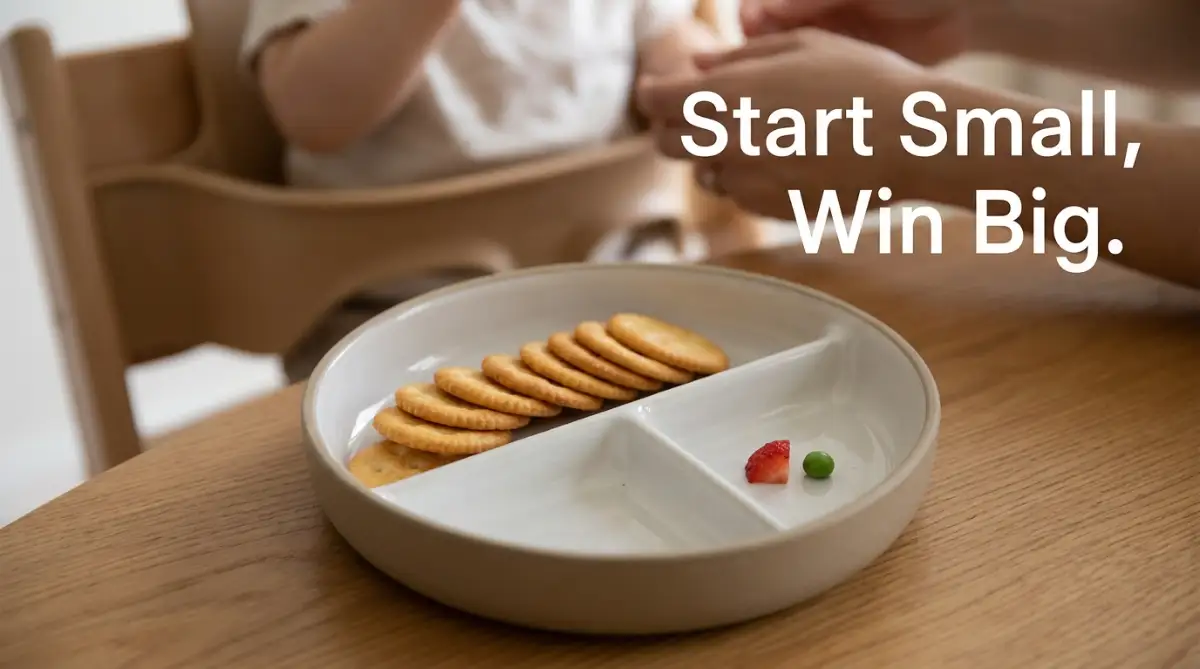
Instead, you need to use the magic of micro-portions. A micro-portion is exactly what it sounds like: an incredibly tiny, non-threatening amount of a new food.
If you want them to try a carrot, do not give them a whole stick. Give them a single piece of carrot that is no bigger than your pinky nail.
Place this tiny speck of food far away from their beloved carbohydrates so the foods are not touching. Because the portion is so incredibly small, the child does not feel pressured to eat it.
They might just look at it, poke it with their finger, or even throw it on the floor. That is perfectly fine, because interacting with the food in any way is a massive victory.
Over a few weeks, you slowly increase the size of that micro-portion from a tiny speck to a normal bite.
If you are struggling to figure out how to arrange these foods without causing a panic, watch this brilliant breakdown by a pediatric dietitian.
Step 3: Mastering the Division of Responsibility
This next concept completely saved my sanity, but it requires a major shift in how you view your job as a parent. It is called the Division of Responsibility in feeding, created by child feeding expert Ellyn Satter.
The rule is remarkably simple. Your job as the parent is to decide
Your child's only job is to decide whether they will eat it, and how much they will eat.
Once you put the plate down on the table, your job is completely done. You do not need to coax, bribe, cheerlead, or perform airplane noises to get the food into their mouth.
If they choose to eat nothing but the safe carbohydrate, you do not comment on it. If they choose to eat everything, you do not over-praise them either.
When you remove all the verbal pressure, the dinner table suddenly becomes a neutral, peaceful zone. Toddlers are naturally oppositional; the harder you push them to eat a vegetable, the harder they will resist it.
I remember the first time I actually tried this. I put down a plate of fish sticks, rice, and a few peas, and then I completely ignored my daughter and started eating my own food.
She sat there waiting for our usual fight, but I just talked to my husband about his day. After five minutes of total silence on my end, she picked up a pea, squished it, and actually licked her finger.
I almost fell out of my chair, but I forced myself to look away and act completely normal. The lack of pressure gave her the freedom to be curious on her own terms.
Step 4: The Power of Food Chaining
You cannot jump straight from buttered noodles to a raw kale salad. The leap in texture and flavor is way too extreme for a toddler's brain to process.
Instead, you use a psychological technique called "food chaining." This means you take a food they currently love and make one tiny, almost unnoticeable change to it.
Let us say your child only eats plain french fries. You cannot offer roasted broccoli tomorrow and expect success.
Instead, your first step in the chain is to offer sweet potato fries. They look similar to regular fries and have the exact same shape, but they introduce a slightly new flavor and color.
Once they accept the sweet potato fries, you might transition to baked carrot sticks cut in the exact same fry shape. From there, you might move to roasted zucchini sticks.
You are slowly walking them down a path, changing just one sensory property (like color, shape, or texture) at a time.
If they love plain macaroni, try changing the shape of the pasta first without changing the flavor. Then, try adding a tiny drop of red pasta sauce to change the color slightly.
The goal is to teach their brain that slight variations in their food are safe and normal.
Step 5: Taking Food Out of the Kitchen
Sometimes, the dining room table carries too much negative emotional baggage for a child. They associate their highchair with stress, crying, and being forced to do things they hate.
If you want them to get comfortable with a balanced diet, you need to expose them to food in low-pressure environments. Getting them involved in the kitchen is one of the best ways to reduce their anxiety.
Let them stand on a sturdy stool and help you wash the bell peppers in the sink. Give them a plastic, child-safe knife and let them chop up a soft banana or a cucumber.
When children are allowed to touch, smell, and play with food outside of mealtime, their sensory defense mechanisms drop. They are not being asked to eat the pepper; they are just exploring it like a toy.
Many children who refuse to eat vegetables at the dinner table will happily munch on a raw carrot they just helped wash in the sink.
Myth vs. Reality: Breaking Parenting Feeding Rules
The internet is full of terrible advice about how to feed children. Let us clear up a few common myths that might be making your life much harder than it needs to be.
Myth: If a child is hungry enough, they will eventually eat whatever healthy food you put in front of them.
Reality: Some toddlers have such severe sensory aversions that they will actually choose to starve themselves rather than eat an unsafe food. This outdated "tough love" approach usually leads to massive weight loss and deep psychological food trauma.
Myth: Sneaking vegetables into a child's favorite brownie recipe is the best way to get them healthy.
Reality: Hiding food destroys trust. If your child discovers a green spinach leaf hidden inside their safe chocolate muffin, they might permanently stop eating muffins out of fear. Always be honest about what is in their food.
Myth: Sugar makes kids hyperactive, so you should ban all desserts until they eat their vegetables.
Reality: Putting dessert on a pedestal creates an unhealthy obsession with sweets. Offering a small cookie right on the same plate as their dinner removes the magic of the treat and normalizes all foods equally.
Step 6: Changing Your Personal Vocabulary
Kids are incredibly smart, and they pick up on the subtle ways we talk about food. If you constantly label broccoli as "healthy" and cookies as a "bad treat," you are assigning moral value to their diet.
Toddlers do not care about long-term health benefits, vitamins, or heart disease. Telling them a vegetable will make them grow big and strong usually just sounds like boring adult noise.
Instead, start talking about the actual physical properties of the food.
Instead of saying, "Eat your carrots, they are healthy," try saying, "Listen to how loud this orange carrot crunches when I bite it!"
Instead of saying, "You need to finish your meat," try saying, "This chicken feels very warm and savory on my tongue."
By changing your vocabulary to focus on the sensory experience, you invite them to explore. You turn eating into a fun science experiment rather than a mandatory chore.
When you combine this neutral vocabulary with the safe food method, the magic truly begins to happen. You will slowly watch your child's anxiety melt away, replaced by a cautious but genuine curiosity about the colorful world beyond bread.
Advanced Strategies for Long-Term Feeding Success
Now that we understand the basic psychology of a picky eater, we need to focus on building sustainable daily habits. Getting your child to lick a carrot on a Tuesday is a great small victory.
However, our real goal is to raise a teenager who naturally reaches for a balanced meal without any prompting. To achieve this, you need to implement a few advanced environmental changes around your home.
You have to remember that a child’s eating habits are directly tied to how they spend their entire day, not just what happens at the dinner table. If we want them to be hungry and curious for dinner, we have to look closely at their afternoon routines.
The Danger of the All-Day Graze
One of the most common reasons toddlers refuse dinner is simply because they are not actually hungry. Many parents leave a small cup of dry cereal or crackers out in the living room for the child to snack on all afternoon.
If a toddler is constantly taking tiny bites of carbohydrates every thirty minutes, their blood sugar never naturally drops. They never experience that slightly uncomfortable feeling of true hunger that makes new foods look appealing.
According to the American Academy of Pediatrics feeding guidelines, a toddler should have a very structured eating schedule. They recommend three main meals and two designated snacks, with at least two hours of zero food in between.
During those two-hour fasting windows, they should only be drinking plain water. Milk and juice are incredibly filling; a child who drinks a large cup of milk right before dinner will absolutely refuse their vegetables.
Creating a Brand Rotation System
Carb-loving toddlers are notoriously brand loyal. If you always buy the exact same blue box of macaroni and cheese, their brain memorizes the exact color, shape, and salt level.
If you suddenly buy the organic brand in a purple box, they will often reject it instantly before even tasting it. To prevent this severe brand loyalty, you need to constantly rotate the types of carbohydrates you bring into the house.
Buy a different brand of whole wheat bread every single week. Switch between penne, bowtie, and spiral pasta so they get used to seeing different shapes on their plate.
This teaches their brain that food can look slightly different and still be completely safe to eat. It is a very small shift that builds massive flexibility in their sensory processing over time.
Sensory Play Outside the Kitchen
If your child cries when a wet piece of fruit touches their hand, they are dealing with mild tactile defensiveness. We can help them overcome this by doing messy sensory play far away from the dining room.
Buy a cheap plastic bin and fill it with dry rice, beans, or dry pasta. Hide their favorite plastic toys inside the bin and let them dig through the dry food with their bare hands.
You can even let them use a celery stick as a paintbrush to spread yogurt on a piece of paper. This allows them to interact with the smell and texture of food in a completely zero-pressure environment.
When they learn that food is not something to be afraid of, their nervous system calms down significantly. Just like adults need patience when researching safe weight loss supplements for women over 40, children need time to adjust their bodies to new healthy habits.
Consistency is the real secret ingredient here. If you stick to the schedule and keep exposing them gently, their natural curiosity will eventually take over.
The Feeding Pitfalls That Make Picky Eating Worse
Even with the best intentions, parents often fall back into old habits when they are tired and stressed. It is incredibly easy to make emotional decisions when your child is screaming because they are hungry and tired.
However, certain common reactions actually reinforce a child's fear of food and make the beige-diet phase last much longer. By recognizing these natural parental instincts, you can catch yourself before making a situation worse.
Let us walk through the most common dinner table mistakes and explore exactly why they backfire so heavily.
The Short-Order Cook Syndrome
This is the most common trap exhausted parents fall into. You serve the family a beautiful meal of roasted chicken and green beans, and your toddler immediately pushes it away.
Because you are terrified they will go to bed hungry, you immediately get up and make them a separate peanut butter sandwich. You have just taught them an incredibly powerful lesson about how to control the household.
They now know that if they complain loudly enough, a magical, customized meal will appear on demand. Why would they ever try a strange green bean when they know a guaranteed slice of bread is just a tantrum away?
Always serve one single family meal, ensuring that it includes at least one safe food they recognize. If they choose to only eat that safe food, you must hold your boundary and politely refuse to cook a second meal.
The "Just One Bite" Negotiation
We have all done this; we hold a fork near their mouth and beg them to take just one tiny lick. We promise them that if they take one bite of broccoli, they can immediately leave the table.
This type of bargaining instantly creates a massive power struggle. It puts intense pressure on the child, which immediately spikes their adrenaline and kills their appetite entirely.
More importantly, it sends a psychological message that the vegetable is a terrible punishment they have to endure. Food should never be used as a punishment or a chore to cross off a list.
Using Dessert as a Bribe
"If you eat three more carrots, you can have a cookie." This is probably the most universally used parenting phrase in the world.
While it might actually get the carrot into their mouth tonight, it creates long-term damage to how they view food. According to research on child eating behaviors, bribing makes the "reward" food seem highly valuable and the "chore" food seem disgusting.
They learn to obsess over sweets and view vegetables as merely an obstacle in their way. Try serving a small cookie right on the same plate alongside the carrots, giving them equal value and neutralizing the power of the dessert.
Hiding Vegetables in Secret
Many popular cookbooks suggest pureeing spinach and hiding it inside a chocolate brownie. While this might get some vitamins into their body today, it completely destroys the trust between you and your child.
If they bite into a brownie and discover a hidden green leaf, they will feel betrayed and tricked. This can cause them to become highly suspicious of all baked goods going forward, restricting their diet even further.
This loss of trust is very similar to falling into the hidden legal traps that can destroy your new startup overnight. One small, deceitful mistake early on can completely ruin the foundation you are trying to build.
You want them to consciously know they are eating a vegetable and learn to like it openly. Always be honest about what is on their plate, even if they choose not to eat it right away.
Showing Visible Frustration
When you have spent an hour cooking, seeing it thrown on the floor is infuriating. But if you sigh loudly, roll your eyes, or raise your voice, your child absorbs all of that negative energy.
They begin to associate the dining room table with anger, disappointment, and stress. If they feel anxious just walking into the kitchen, their digestive system physically tightens up, making eating nearly impossible.
You must practice taking a deep breath and maintaining a completely neutral facial expression when they reject food. Acting like you truly do not care whether they eat or not is your most powerful tool.
If you can avoid these common emotional traps, you will save yourself years of unnecessary dinner table battles.
An Action Plan for a Peaceful Family Dinner
Transitioning a child away from an all-carb diet is not a quick weekend project; it is a long-term parenting journey. You are essentially trying to rewire how their brain processes safety and comfort.
It requires the exact same level of patience and planning as unlocking your dream home low deposit condo mortgages explained. You have to focus on the long-term investment rather than looking for an instant overnight fix.
Start tomorrow by simply changing the physical presentation of their food without changing the food itself. Serve their favorite crackers in a different bowl, or cut their toast into tiny triangles instead of squares.
Begin serving their meals at a highly structured time, eliminating those endless afternoon grazing sessions. Make sure you always have that trusty safe food on the plate, acting exactly like how to buy the best travel insurance for pre-existing conditions acts as a reliable safety net for adults.
Remember to drop the pressure completely; your only job is to provide the food, and their job is to eat it. Celebrate the tiny victories, like when they pick up a piece of broccoli just to move it to the side of the plate.
If you want more resources on managing family life, practical routines, and creating a balanced household, check out our guides at Infozonee. We cover everything you need to keep your home running smoothly.
I know how deeply exhausting it is to worry about your child’s nutrition every single day, and I have shed my own tears over untouched dinner plates. But I promise you, if you stay consistent and keep the pressure off, you will eventually look over and see them happily crunching on a vegetable they used to hate. You’ve got this, and tomorrow is a brand new opportunity to try again!
Real Questions from Exhausted Parents
What should I do if my toddler refuses to eat everything on their plate?
If they refuse everything, including their safe food, you simply say, "Okay, let me know when you are finished," and calmly remove the plate. Do not offer a replacement snack thirty minutes later; they need to learn that the kitchen is closed until the next scheduled meal or snack time.
How long does this extreme picky eating phase usually last?
For most children, the intense fear of new foods peaks around two years old and slowly begins to fade by age four or five. However, how you handle it determines whether it fades naturally or becomes a permanent power struggle into their teenage years.
Should I give my child a daily vitamin if they only eat bread and pasta?
While a standard gummy multivitamin will not harm them, you should always discuss supplements with your pediatrician first. Many commercial breads and cereals are heavily fortified with essential vitamins and iron, meaning your child might actually be getting enough basic nutrients despite their beige diet.
Why does my child eat vegetables at daycare but refuse them at home?
Children often eat better at daycare because of positive peer pressure; they see their friends eating green beans and want to fit in. Also, the daycare provider does not carry the same emotional weight as a parent, meaning the child does not feel the need to push boundaries and test limits at that table.
Is it okay to let my child watch a tablet or TV while they eat?
Screen time during meals is a major distraction that prevents children from practicing mindful eating. When they stare at a screen, they are mindlessly chewing without looking at the food, which prevents them from actually learning to accept new textures and flavors properly.
Disclaimer: The information provided in this article is for educational and informational purposes only and is not a substitute for professional medical advice. Every child develops at their own pace, and extreme food aversions can sometimes be a sign of underlying sensory or physical issues. If you are deeply concerned about your child’s weight loss, nutritional intake, or choking hazards, please consult a licensed pediatrician or a certified pediatric feeding therapist immediately.