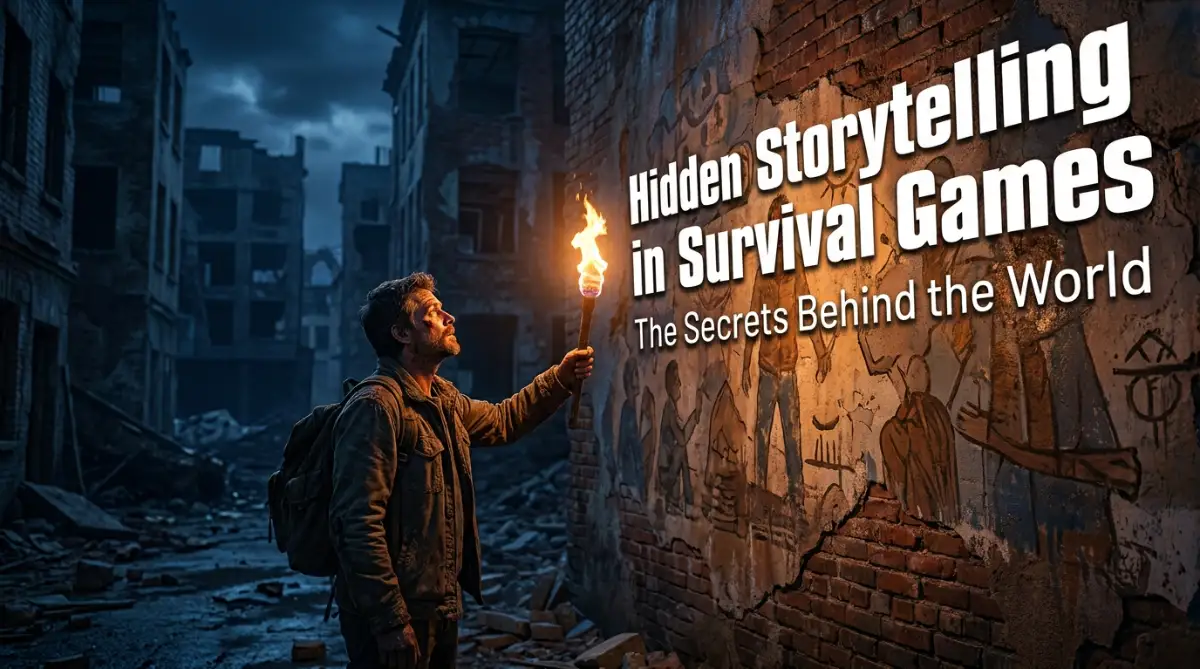
The Silent Magic That Traps Our Minds
I remember sitting in my dark living room at two in the morning, staring blankly at my glowing monitor. My digital character was freezing, starving, and hiding in a ruined wooden cabin from unseen enemies outside. But I completely forgot about my own physical hunger or the late time on the clock.
I was absolutely obsessed with a torn, bloody letter I had just found on the cabin floor. That tiny piece of digital paper told the heartbreaking story of a father waiting for his family, and it honestly moved me to tears. I realized right then that the best survival games do not just throw you into an empty sandbox.
They secretly trap your mind in a deeply emotional, carefully crafted world without saying a single word out loud. This is an experience so many of us crave when we boot up a new title. We want to be transported to another dimension entirely.
However, the reality for most average gamers today is quite the opposite. People are exhausted, frustrated, and tired of spending their hard-earned money on massive open-world titles that feel completely empty. We run around collecting random rocks and sticks, wondering why we should even care about the virtual world.
This serious lack of connection creates a real sense of gaming burnout. You sit down after a long, stressful day of work hoping to escape into an exciting adventure. Instead, you just feel like you are doing virtual chores in a lifeless digital playground.
The magic is completely gone. Your mental peace is interrupted by the annoying feeling that you are wasting your precious free time on a soulless product. When a game fails to build a believable world, it actively disrespects the player's intelligence.
Gamers are smart people. We naturally crave deep, hidden mysteries that make our brains work. We want to feel like real explorers discovering forgotten secrets, not just robotic consumers clicking buttons on a plastic controller.
If developers want to keep our attention, they have to master the art of silent communication. They must learn how to build worlds that breathe, speak, and remember the past.

Decoding the Blueprint of Immersive Game Worlds
Building a believable digital universe requires a deep understanding of human psychology. Developers cannot just drop a hundred zombies into a forest and call it a day.
They have to strategically place every single tree, broken car, and empty water bottle to paint a larger picture. Let us explore the exact methods creative teams use to make you fall in love with a fictional universe.
The Masterclass of Environmental Storytelling
Think of environmental storytelling like a crime scene investigation. When you walk into a room in a survival game, the developers want you to play the role of a detective.
You might open the door to an abandoned hospital room. Instead of a cutscene explaining what happened, you just see a barricaded door, three empty food cans, and two skeletons holding hands on a hospital bed.
Your brain instantly connects the dots. You realize these two people locked themselves in, slowly ran out of food, and chose to spend their final moments together.
This silent narrative hits you much harder than any voice-acted dialogue ever could. It makes the world feel incredibly lived-in and real.
Pro Tip: I used to just rush through abandoned buildings, mashing the loot button and grabbing every item as fast as possible. But then I started slowing down and actually looking at how the furniture was arranged. My entire gaming experience completely changed when I realized the developers intentionally placed objects in specific spots to show exactly how the previous owners spent their final days.
This technique constantly rewards players who pay attention to small details. It turns a boring looting trip into an emotional journey.
Watch this fascinating breakdown of how game developers trick your brain into believing a digital world is completely real [Step-by-Step]!
When you actively participate in piecing the story together, your brain releases dopamine. You feel smart for figuring out the hidden history of that specific location.
This is exactly why you remember these small, silent moments long after you finish playing. The environment itself becomes the main character of the story.
How Resource Scarcity Explains the Hidden History
In standard action games, you find ammunition and health potions perfectly lined up in shiny crates. But in a true survival experience, every item you find tells you something about the world's history.
If you spend three hours searching a massive city and only find a single rusty knife, the game is sending you a message. It is telling you that a massive panic occurred here, and people took absolutely everything of value when they fled.
The scarcity of resources forces you to respect the danger of the environment. You stop running wildly down the middle of the street and start creeping through back alleys.
The Psychological Impact of Loot Distribution:
When a world has been stripped bare by previous survivors, you instantly feel a deep sense of isolation. You realize you are completely alone at the end of the world.
If you suddenly find a fully stocked military bunker, you do not just feel happy about the loot. You immediately wonder why the soldiers left all this amazing gear behind.
Was there a sudden biological attack? Did a larger monster chase them away? The items left behind create terrifying, unanswered questions in your mind.
By linking the gameplay mechanics directly to the lore, developers keep you constantly engaged. You are not just managing an inventory screen; you are interacting with the tragic history of the map.
Reading the World Through Item Descriptions
Many players completely ignore the inventory menu, treating it just like a digital backpack. But brilliant writers hide some of the best world-building directly inside the item descriptions.
Imagine you pick up a basic silver ring. The description does not just say it gives you a tiny health bonus. It says, "A tarnished ring belonging to the forgotten king, dropped during his cowardly escape."
Suddenly, a simple piece of jewelry gives you a massive clue about the political history of the game. You learn that the kingdom fell because the leader was a coward.
This method respects the player's time. If you want to dive deep into the lore, you can sit by a virtual campfire and read every single description.
If you just want to fight monsters, you can totally ignore it. This flexibility is what makes great world-building so universally appealing.
- Food Items: A description of a mutated fruit can explain how radiation ruined the soil.
- Weapons: The scratched markings on a rifle can tell you the name of the soldier who carried it before you.
- Clothing: A ragged jacket might have a description detailing the harsh, freezing winters of the region.
You slowly piece together a massive puzzle, one small item at a time. It turns every single piece of trash you pick up into a potential history lesson.
The Secret Psychology of Sound Design
We talk a lot about what we see on the screen, but our ears are actually doing half the work. World-building relies heavily on the audio clues you hear when you are staring at a blank wall.
Imagine exploring a massive, dark cave system. You cannot see anything beyond your tiny flashlight beam. But then, you hear the distant sound of heavy chains dragging across a stone floor.
The developers do not need to show you the monster. The audio alone paints a terrifying picture in your imagination. Your mind invents a creature far scarier than any 3D model they could have designed.
Building the Atmosphere Through Ambient Noise:
The wind howling through broken windows tells you the city has been abandoned for a very long time. The sound of distant, echoing gunfire tells you other survivors are fighting a losing battle.
These background noises make the map feel massive and alive. You constantly feel like things are happening in the world, even when you are just standing completely still.
Good sound design creates a deep sense of paranoia. You start questioning every snap of a twig and every rustle in the bushes.
This intense emotional reaction is the ultimate goal of any storytelling medium. When a game can make your real heart beat faster just by playing a sound effect, it has successfully trapped you in its world.
Myth vs. Reality in Game Design
There is a common misunderstanding about how these worlds are created. Let us clear up some of the biggest myths players believe.
The Cutscene Myth: Many people think games need long, cinematic cutscenes to tell a good story. In reality, stopping the gameplay to play a movie actually ruins the immersion for many players. You drop your controller and stop being an active participant.
The Big Budget Myth: Players often assume that you need hundreds of millions of dollars to build a great universe. Actually, some of the most beloved survival titles were made by tiny, independent teams. They succeeded because they focused on smart, subtle details instead of flashy explosions.
The Dialogue Myth: We assume characters need to talk constantly to build relationships. However, in games where characters are entirely silent, players often feel a much stronger, personal bond with them. The silence allows the player to project their own emotions onto the character.
Great world-building is never about screaming the plot loudly in your face. It is about whispering secrets in the dark and waiting to see if you are smart enough to listen.
When developers trust the audience to connect the clues, they create a loyal fanbase that will obsess over their universe forever. The magic lies in what is left hidden, waiting for a curious explorer to uncover the truth.
Mastering the Archaeologist Mindset in Digital Worlds
If you really want to get the most out of your next gaming session, you need to completely change how you view your digital surroundings. You are no longer just a player holding a controller; you are a virtual archaeologist uncovering a lost civilization.
When you adopt this specific mindset, the entire experience shifts from a simple digital hobby to an interactive puzzle. Let us explore exactly how you can train your brain to spot these incredible, hidden details that most average players completely ignore.
Read the Room Like a Crime Scene Investigator
The next time you walk into an abandoned room to loot some supplies, stop moving for exactly ten seconds. Look at the spatial arrangement of the furniture before you start opening drawers.
Is the single chair in the room facing the beautiful window, or is it facing the heavily barricaded door? A chair facing the door instantly tells you the previous owner spent their final days sitting there in absolute terror, waiting for an attack.
If you see sleeping bags arranged in a tight circle around a dead fire, you know a group of people tried to stay warm together. This level of observation requires patience, much like learning how to train an anxious dog without breaking their spirit, where you must constantly read silent behavioral cues to understand what is truly going on.
Analyzing the Overgrowth and Digital Decay
Developers use nature to silently tell you exactly how much time has passed since the world collapsed. Pay close attention to the rust on the cars and the moss growing on the concrete walls.
If a military checkpoint is completely covered in thick, green ivy, you know the soldiers abandoned that post a very long time ago. However, if you find a fresh, bloody bandage near a clean campfire, you know another survivor was just sitting there mere minutes before you arrived.
This visual timeline is a heavily researched psychological trick. Experts from the University of Oxford's experimental psychology department have shown that humans naturally react emotionally to signs of decay, as it triggers our primal survival instincts.
The Hidden Logic of Base Building Mechanics
Many of these titles allow you to construct your own shelters from scratch. But did you know that the materials you are forced to use are actually a massive part of the storytelling?
If the game only allows you to build walls out of rusty scrap metal and broken tires, it reinforces the desperate, dirty reality of the universe. It is a constant reminder that society has completely failed.
This mirrors real-world resource management perfectly. Just like figuring out how to purchase your dream house with zero money down requires massive creativity and making the most of limited assets, building a virtual fortress out of trash forces you to truly value your limited resources.
Expert Insight: The Color Coding of Danger
Art directors use specific color palettes to manipulate your emotions without you ever realizing it. You can use this knowledge to predict what is going to happen next in the story.
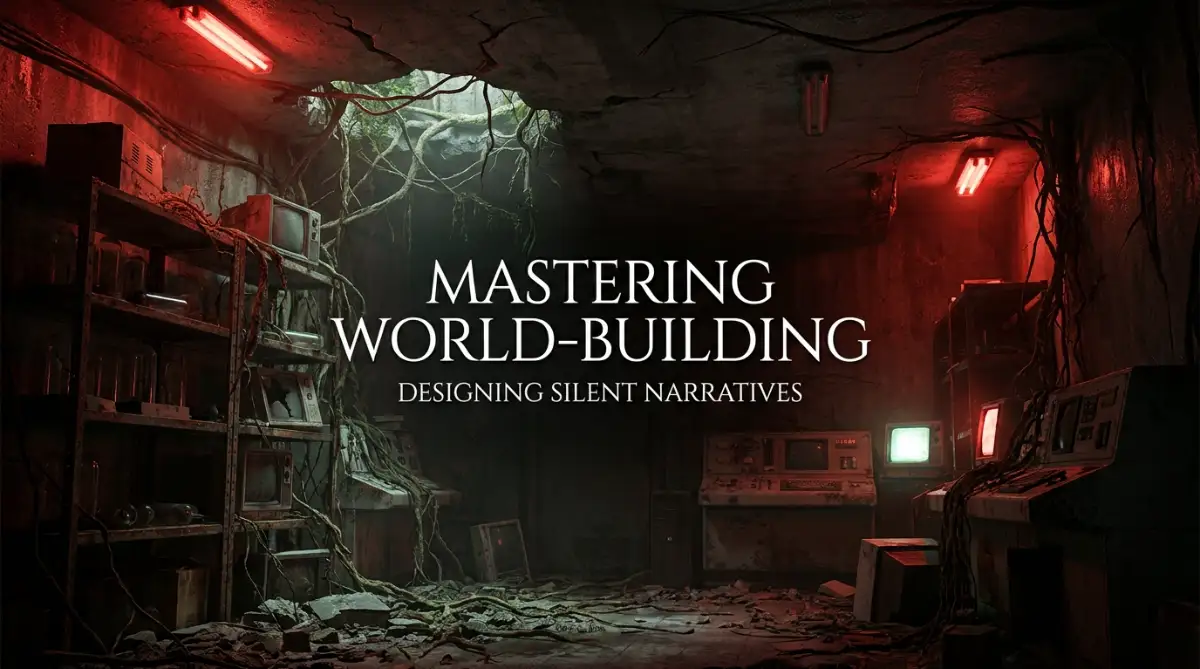
Red lighting is universally used to signal extreme danger, failing backup generators, or a recent massacre. Warm orange lighting usually points toward a safe haven, a warm fire, or a friendly trading post.
Cool blue lighting often indicates a clinical, abandoned science facility where cold, calculated experiments went wrong. Once you learn to read these subtle color shifts, you will naturally anticipate the narrative turns before the game even explains them.
The Tragic Player Habits That Destroy Immersion
Even the most beautifully crafted digital universe will feel incredibly boring if you approach it with the wrong attitude. Millions of players are unintentionally ruining their own mental escapes by bringing their stressful, real-world habits into these fictional spaces.
These common traps do not just ruin a single evening of entertainment. They actively block you from experiencing the deep emotional resonance the writers worked so hard to create for you.
The Toxic "Speedrun" Mentality
We live in an era where everyone is obsessed with efficiency and speed. We want to finish our tasks as quickly as humanly possible, and unfortunately, we bring this same stressful energy into our entertainment.
Players will sprint through a carefully designed hospital level, mashing the interact button to grab all the medical supplies, and completely ignore the heartbreaking letters left behind by the nurses. When you treat the map like a grocery store checklist, you rob yourself of the actual art.
You end up feeling empty and bored because you consumed the content too fast to actually digest the meaning behind it. This is exactly like reading the truth about employer-sponsored insurance is your family truly safe; if you just skim the headlines and ignore the fine details, you miss the actual, life-saving information hiding in the text.
Relying on Internet Guides Too Early
This is perhaps the biggest tragedy in modern gaming culture. The moment a player gets slightly confused or lost in a massive forest, they immediately open their phone and search for a step-by-step guide.
By looking up the exact location of the hidden bunker, you completely destroy the magical feeling of true discovery. The developers wanted you to wander, feel slightly panicked, and eventually figure out the map's logic on your own.
According to extensive studies published in the Journal of Cognitive Psychology, the human brain creates significantly stronger, longer-lasting memories when it is forced to overcome a struggle independently. Handing your brain the answer key completely short-circuits this highly rewarding chemical process.
Ignoring the Silent Warnings
The environment is constantly trying to keep you alive by giving you visual and audio warnings. However, many gamers just blast loud music in their headphones and completely ignore the game's audio design.
If you see a massive pile of bones outside a dark cave, the environment is screaming at you to turn around. If you ignore that silent narrative warning and walk inside unprepared, you will lose all your hard-earned gear.
This happens in business all the time, too. Entrepreneurs often ignore the hidden legal traps that can destroy your new startup overnight because they are too focused on rushing toward success. In both virtual worlds and real life, ignoring the clear, silent warning signs will always result in absolute disaster.
Treating Inventory Like a Garbage Can
A huge mistake players make is treating their character's backpack like a bottomless pit of random junk. They pick up every single item they see without ever reading the descriptions or understanding their purpose.
When you do this, you miss out on the incredible world-building hidden in the text. A strange mechanical gear might seem like useless trash, but its description might hint at a massive underground factory you have not discovered yet.
If you are preparing for a massive virtual expedition, you should treat your inventory with extreme care. It is very similar to figuring out how to buy the best travel insurance for pre-existing conditions; you have to selectively carry exactly what you need for survival and leave the useless baggage behind.
Your Action Plan for a Better Digital Adventure
The beauty of interactive entertainment is that you have complete control over how you experience the art. The developers build the stage, set up the lighting, and hide the secrets, but you are the main actor who brings it all to life.
You now understand exactly how creative teams use broken furniture, rusty weapons, and subtle audio cues to build massive, believable universes. You know that the greatest stories are rarely told through expensive movie scenes, but rather through the quiet, lonely moments of exploration.
The next time you load up your favorite map, I want you to make a conscious decision to slow down. Turn off your external music, put on a good pair of headphones, and actually listen to the wind blowing through the digital trees.
Read the handwritten notes you find next to skeletons. Follow the strange blood trails leading off the main path, even if it feels terrifying. Let yourself get completely lost in the mystery, because that is where the true magic of the medium actually lives.
When you start treating these virtual environments with respect and curiosity, your gaming burnout will completely vanish. For more unique perspectives on how digital design affects our daily psychology and habits, you can always browse the main hub at Infozonee for our latest discussions.
My Final Advice to You: I spent years aggressively rushing through my favorite titles, wondering why I never felt satisfied at the end of a long campaign. The night I finally decided to slow down, read the hidden journals, and truly absorb the quiet atmosphere, I fell in love with gaming all over again. Give yourself permission to be a curious explorer tonight; you will be absolutely amazed by the beautiful secrets waiting in the dark.
Common Questions About Video Game Storytelling
Why do game developers hide the story instead of just showing it?
Developers hide the narrative because it forces your brain to actively participate in the mystery. When you piece together clues yourself, you form a much stronger emotional connection to the universe than you would by simply watching a passive movie scene.
What exactly is environmental storytelling in simple terms?
Environmental storytelling is the practice of using the physical layout of a space to explain what happened there. It involves placing specific items, arranging furniture, and using lighting to tell a silent history without using any spoken dialogue or text.
Do I really need to read every single note I find on the ground?
You definitely do not have to read every note to beat the main campaign. However, reading these scattered documents provides massive context about the world's history, making your overall journey feel much more personal and meaningful.
How do audio engineers make empty virtual maps feel so scary?
Audio teams use low-frequency sounds, echoing footsteps, and distant, unidentifiable noises to trigger your natural survival instincts. Your brain is wired to fear unseen threats, so hearing a scary noise in the distance is often more terrifying than actually seeing a monster.
Why do silent video game characters feel so incredibly relatable?
When a character does not have a set voice or personality, it creates a blank slate for the player. This brilliant design choice allows you to directly project your own fears, hopes, and real emotions onto the character, making the digital experience deeply personal.
Disclaimer: The insights and opinions shared in this article are intended for entertainment and educational purposes only. Video game experiences vary wildly based on individual playstyles and specific software designs. The psychological concepts discussed are meant to enhance media literacy and personal enjoyment. Please remember to balance screen time with healthy real-world activities. We are not responsible for any digital purchases or gaming experiences that may result from reading this content.