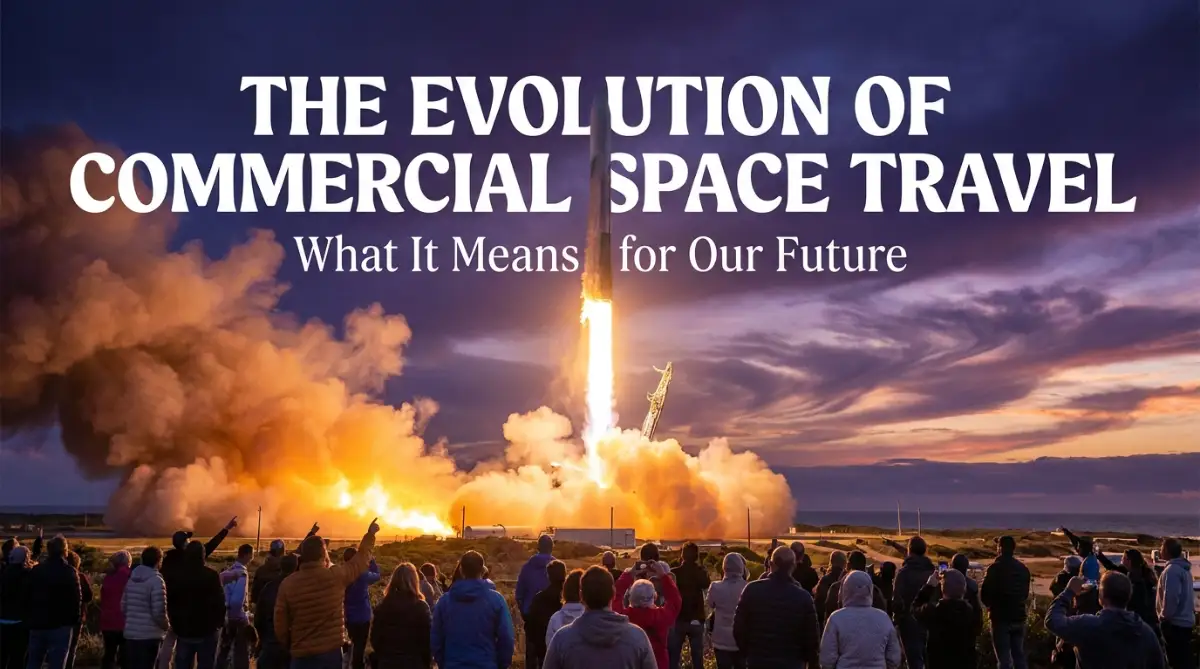
The Heavy Anxiety of Watching the Stars
I remember sitting on my tiny apartment balcony late one night, staring up at the glowing moon. My mind was completely overwhelmed by the negative news flooding my phone screen. The earth felt like a fragile, sinking ship, and I felt entirely trapped with no way out.
Just then, a news alert popped up showing another famous billionaire smiling inside a shiny private rocket. A heavy wave of anxiety hit my chest as I realized a terrifying truth. It felt like the ultra-rich were building private lifeboats, leaving the rest of us behind to deal with a broken planet.
The mental toll of this realization is something millions of ordinary people are struggling with today. We go to work, pay our bills, and worry about the rising cost of groceries. Meanwhile, private corporations are spending billions of dollars to shoot metal tubes into the dark void.
It creates a deep, uncomfortable feeling of existential dread and unfairness. You cannot help but wonder if your own children will have a safe place to live in the future. We feel disconnected, small, and entirely powerless when we look up at the night sky.
The media constantly feeds us a narrative that space exploration is just a luxurious vacation for the elite. This constant comparison destroys our mental peace and makes us resent the very technology that might actually save us. We are so busy feeling abandoned that we are completely missing the bigger picture.
The truth is much deeper and far more encouraging than what you see on social media. We are not just watching billionaires play with expensive toys. We are actually witnessing the messy, complicated birth of a brand new era for humanity.
Understanding the New Private Space Economy
We need to completely change how we look at these private rocket companies. To get rid of the anxiety, we must understand the actual science and economics behind what is happening above our heads.
This is not about abandoning our home planet. It is about expanding our resources so we do not completely destroy the Earth. Let us break down exactly how this massive industry shift impacts your daily life and your future.
The Magic of Throwing Away the Old Rulebook
For decades, going to space was a slow, incredibly expensive government monopoly. NASA and other space agencies did amazing things, but they had to use our tax money. They also used a highly inefficient method to get things off the ground.
Imagine you want to fly from New York to London for a summer vacation. You buy a ticket, board a massive Boeing 747, and enjoy the flight. Now, imagine that after you land in London, the airline completely destroys that airplane and throws it in the ocean.
If airlines had to build a brand new airplane for every single flight, a basic economy ticket would cost ten million dollars. Only presidents and billionaires could ever afford to travel. This sounds absolutely crazy, right?
Yet, this is exactly how space travel worked for the last sixty years. Governments built massive rockets, launched them once, and let them burn up in the atmosphere or crash into the sea. It was a massive waste of human effort and valuable materials.
How Reusable Rockets Change Everything
The biggest breakthrough in our modern era is not a fancy new engine or a shiny space suit. It is the simple, brilliant concept of reusability. Private companies finally figured out how to land a rocket booster safely back on a concrete pad after it delivers its cargo.
By reusing the most expensive parts of the rocket, the cost of going to space has dropped dramatically. We are talking about saving tens of millions of dollars on every single launch. This is the exact same economic shift that made commercial air travel affordable for normal families.
Pro Tip: I used to get so angry watching rocket launches, thinking it was just a massive waste of money that could be spent on Earth. Then I realized that the GPS I use every single day, and the weather forecasts that keep my family safe, all exist because of space technology. Do not let jealousy blind you from the massive, hidden benefits these scientific leaps bring to our daily lives!
When the cost of launching cargo drops, a massive door opens for everyday businesses. Startups can now afford to send up smaller satellites to improve global internet access. Medical researchers can send experiments into orbit without needing a massive government grant.
The Difference Between Tourism and True Exploration
When you watch the news, you often see two very different types of commercial space flights. It is highly important that you know the difference so you do not get confused by the media hype.
The first type is a simple suborbital hop. A rocket goes straight up, crosses the imaginary line into space, and immediately falls back down. The passengers get about four minutes of weightlessness and a beautiful view out the window.
This is essentially an extremely expensive amusement park ride. It is fun for the people who can afford it, but it does not really advance human civilization.
Watch this incredible explanation of how ordinary people are preparing for zero gravity and learn exactly what it takes to leave the atmosphere!
The second type is true orbital spaceflight. This means the rocket is moving so incredibly fast sideways that it constantly falls around the Earth without hitting the ground. This requires massive amounts of energy, brilliant engineering, and extreme bravery.
Orbital flights are where the real work happens. This is where private companies are delivering supplies to the space station, testing new life support systems, and preparing for long-term trips to other planets.
Building the Off-World Economy
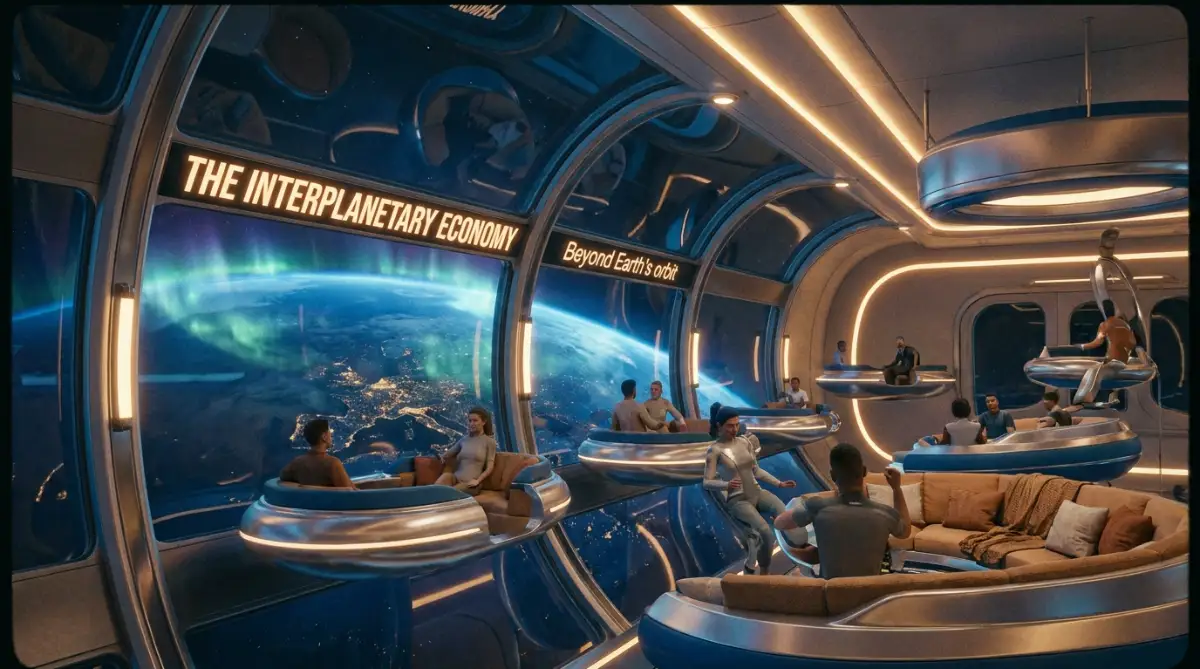
So, what happens when space travel becomes cheap and routine? We stop visiting space and start actually working there. We are currently watching the foundation of an entirely new interplanetary economy being built.
Think about heavy, polluting industries on Earth. We destroy our mountains and pollute our rivers to mine essential metals for our smartphones and electric cars. It is a terrible system that harms our environment daily.
However, the asteroid belt is filled with trillions of dollars worth of these exact same rare metals. If private companies can safely mine asteroids, we can eventually move the most toxic industries off our planet entirely. We can zone Earth for residential living and nature, and keep the heavy, dirty work in the vast emptiness of space.
Furthermore, a zero-gravity environment is basically a magical laboratory. Without gravity pulling things down, scientists can manufacture things perfectly.
- Perfect Fiber Optics: Cables made in zero gravity transmit data much faster and clearer than anything made on Earth.
- Advanced Medicines: Protein crystals grow much larger and more uniformly without gravity interfering, leading to massive medical breakthroughs.
- 3D Printing Organs: Human tissue can be printed perfectly in space without collapsing under its own weight.
These are not science fiction dreams. These are actual business plans that commercial companies are actively testing right now.
The Harsh Reality of Interplanetary Colonization
Of course, the ultimate goal for many of these private companies is to put human boots on another planet. Mars is usually the main target because it is the most similar to Earth, even though it is a frozen, toxic desert.
Many people romanticize the idea of moving to Mars to start a new life. They picture a fun, exciting sci-fi adventure where they get to be space cowboys. The scientific reality is far more terrifying and difficult.
Mars does not have a breathable atmosphere. The atmospheric pressure is so low that your blood would literally boil inside your body if you stepped outside without a heavy, pressurized suit. The soil is filled with toxic chemicals that are harmful to humans.
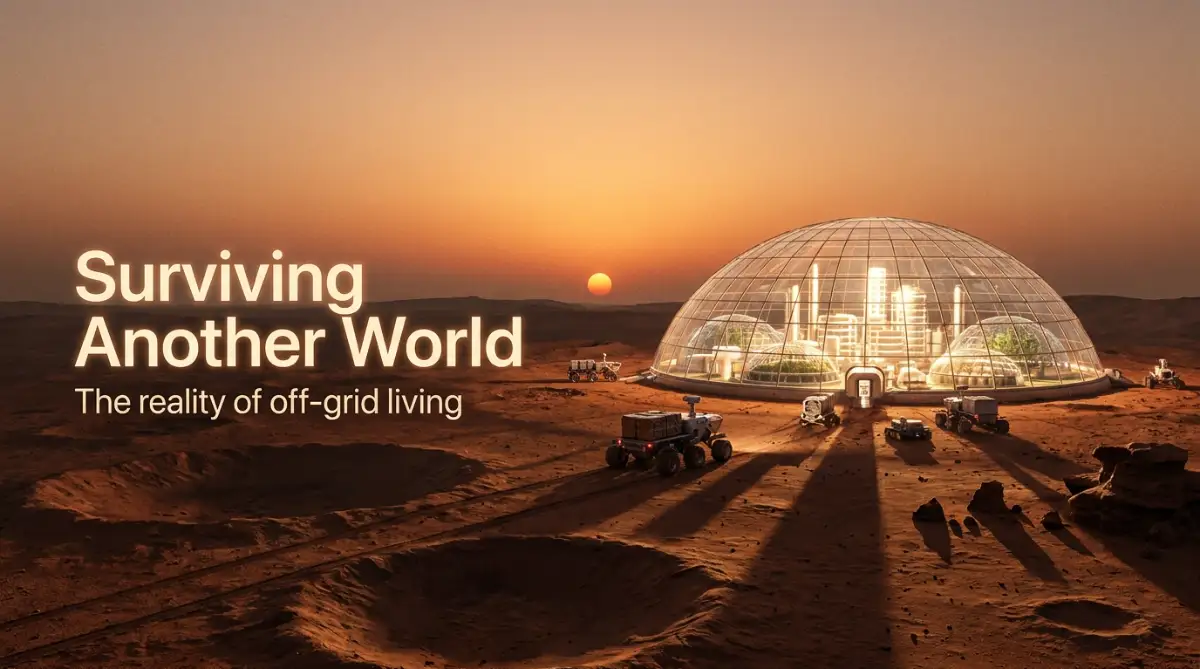
Living on Mars will be exactly like living inside a broken submarine at the bottom of a freezing ocean. You will be entirely dependent on machines for every single breath you take. You will have to grow your food in heavily shielded greenhouses to protect it from deadly solar radiation.
Why We Must Become a Multi-Planetary Species
If living on Mars is so terrible, why are we spending billions of dollars trying to get there? The answer comes down to basic survival logic.
Right now, every single human being, every piece of art, and every historical memory we have is located on one single planet. We have all our eggs in one very fragile basket.
If a massive asteroid hits the Earth, or if a global super-volcano erupts, human history completely ends. We go extinct, just like the dinosaurs did.
By establishing a self-sustaining colony on another planet, we guarantee the survival of human consciousness. Even if something terrible happens to Earth, a piece of humanity will carry on in the dark. It is the ultimate insurance policy for our entire species.
The Psychological Shift of the Overview Effect
There is one hidden benefit of commercial space travel that nobody talks about. It is a powerful psychological change known as the "Overview Effect."
When astronauts look out the window and see the Earth from a distance, something inside their brain completely changes. They see a tiny, fragile blue marble floating in a massive sea of black nothingness.
They do not see country borders. They do not see political arguments or religious wars. They just see one single, delicate spaceship carrying every person they have ever loved.
Almost every person who goes to space comes back with a deep, burning desire to protect our planet. They realize how incredibly lucky we are to have an atmosphere, oceans, and breathable air.
As commercial companies send more everyday people into orbit, this psychological shift will spread. Imagine if our politicians, teachers, and artists all experienced this profound realization. It would fundamentally change how we treat each other and how we care for our natural environment.
This is the true promise of the modern space age. We are pushing outward into the dark not to abandon our home, but to understand exactly how precious it truly is. We are building the tools to protect Earth while simultaneously ensuring that the light of human consciousness never accidentally goes out.
Navigating the New Interplanetary Economy Like a Pro
Now that we understand the massive shift happening above our heads, it is time to look at how this actually benefits you. You do not need to be a billionaire or an astronaut to take advantage of this massive technological leap.
The smartest thing you can do right now is position your mindset and your daily habits to align with this growing industry. We are moving away from traditional terrestrial business models and entering a completely new economic reality.
Look Past the Shiny Rockets and Focus on the Data
Most people get completely distracted by the massive fireballs and the cheering crowds during a launch. They treat it like a sports game, cheering for their favorite tech CEO to win the race.
If you want to truly understand the future, you must ignore the rockets entirely and look at the cargo. The real money and the real benefits are happening in the satellite data industry.
Every single day, thousands of low-orbit satellites are taking high-resolution pictures of our planet. They are monitoring crop health, tracking illegal fishing boats, and predicting massive weather events before they happen.
By learning how to read and use this public data, ordinary people are building massive businesses. Farmers are increasing their crop yields, and logistics companies are saving millions on fuel costs.
Treating Planetary Defense Like Personal Insurance
We often think of global threats as something only action movies deal with. But the reality of investing in space tech is basically buying an insurance policy for human survival.
When you sit down to figure out the truth about employer-sponsored insurance is your family truly safe, you are trying to protect your loved ones from unknown disasters. The exact same logic applies to planetary defense systems.
Projects that track near-Earth asteroids or clean up dangerous space junk might seem boring compared to landing on Mars. However, these are the exact systems that guarantee your grandchildren will have a safe planet to live on.
Major research groups, like the scientists at the Planetary Society, constantly emphasize that protecting our current orbit is the most important step before we ever leave the Earth. We must clean up our own digital backyard before we try to build a house on another world.
Preparing the Next Generation for Space Careers
If you have children or younger siblings, you need to change how you talk to them about their future careers. We are going to need a lot more than just pilots and engineers in the next ten years.
An off-world colony will desperately need space architects to design radiation-proof habitats. They will need space agriculturalists to figure out how to grow potatoes in toxic red dirt. They will even need space psychologists to help crews deal with extreme isolation.
Encourage the younger generation to blend their natural passions with the space industry. If a child loves cooking, talk to them about how they might design nutritious, long-lasting meals for a three-year trip to Mars.
By linking their everyday interests to the stars, you give them a massive competitive advantage. They will be perfectly positioned to grab the highest-paying jobs of the next decade.
The Dangerous Traps of the Sci-Fi Fantasy
When a topic is this exciting and heavily covered by the media, it is very easy to fall into psychological traps. People get completely swept up in the fantasy and forget the harsh, unforgiving laws of physics.
These massive misunderstandings do not just create arguments on the internet; they actively harm our progress. Let us walk through the most dangerous illusions people hold about our interplanetary future.
The Illusion of the "Plan B" Planet
This is easily the most destructive mindset currently circulating in popular culture. Millions of people genuinely believe that we can just trash the Earth, pack our bags, and move to Mars when things get too hot.
They view another planet as a magical escape hatch from climate change and pollution. This is an absolute, terrifying fantasy that completely ignores basic science.
Even if we completely ruined Earth's atmosphere, it would still be a million times easier to fix than trying to terraform a dead planet. Earth has a protective magnetic field, abundant water, and a breathable atmosphere. Mars has absolutely none of these things.
Thinking you can just run away from our planetary problems is a massive mistake. It is exactly like ignoring the foundation cracks in your current home because you are secretly dreaming about how to purchase your dream house with zero money down next year. You have to take care of the house you actually live in first.
Falling for the "Instant Terraforming" Myth
Science fiction movies make it look incredibly easy to turn a frozen desert into a green paradise. They show a few machines pumping out some gas, and suddenly people are walking around without helmets.
The scientific reality is incredibly humbling. Changing the entire atmosphere of a planet like Mars would take thousands of years and technology that we do not even possess yet.
If we send humans to another planet in our lifetime, they will live their entire lives inside heavily shielded, artificial metal boxes. They will never feel a natural breeze on their face or swim in a real ocean.
When we romanticize the struggle of off-world living, we disrespect the intense danger the first explorers will face. We must stay grounded in reality to properly support the massive engineering challenges ahead.
Ignoring the Wild West of Space Law
Because the technology is moving so incredibly fast, the legal system is completely failing to keep up. Right now, international space law is a massive, confusing gray area.
If a private company lands on an asteroid made of solid platinum, who legally owns that rock? Can a single corporation claim an entire crater on the moon for their exclusive mining operations?
These are not just theoretical questions for lawyers. These legal battles will define the economic future of our entire species. The experts at the United Nations Office for Outer Space Affairs are frantically trying to draft treaties to prevent actual space wars over these precious resources.
If everyday citizens ignore these legal debates, greedy monopolies will secretly write the rules. This is very similar to falling into the hidden legal traps that can destroy your new startup overnight. If you do not read the fine print today, you will lose everything tomorrow.
The Trap of Extreme Financial Cynicism
On the opposite end of the spectrum, many people completely write off space travel as a massive scam. They complain that every single dollar spent on a rocket is a dollar stolen from a hungry child on Earth.
This emotional reaction is completely understandable, but it is factually incorrect. We do not shoot suitcases full of cash into the atmosphere. Every single dollar spent on a space program is actually paid to a worker right here on Earth.
It pays the salaries of welders, software developers, mathematicians, and safety inspectors. It creates entire new industries that boost local economies and create long-term generational wealth for working-class families.
If you let extreme cynicism blind you, you will completely miss the incredible innovations that are secretly improving your daily life. You have to keep an open mind to see the hidden benefits.
Your Action Plan for an Interplanetary Tomorrow
We are incredibly lucky to be alive during this specific moment in human history. We are watching the messy, beautiful transition from a single-planet species to a multi-planetary civilization.
You no longer have to feel anxious or powerless when you look up at the night sky. You now have the knowledge to see the big picture and understand exactly how these massive machines are working to protect our future.
The next time you see a news story about a private rocket launch, I want you to completely change your reaction. Instead of feeling jealous or angry, look at it as a massive, flying laboratory.
Ask yourself what kind of scientific cargo is sitting at the very top of that rocket. Think about the thousands of hard-working engineers who spent years of their lives making sure that machine safely cleared the launch pad.
By shifting your perspective, you turn a source of deep anxiety into a source of immense inspiration. This is exactly like learning how to train an anxious dog without breaking their spirit; you replace the fear of the unknown with a structured, positive routine.
You can actively participate in this future by simply staying educated. Read journals from trusted scientific institutions rather than relying on sensational social media posts. The brilliant minds at the Massachusetts Institute of Technology Space Exploration Initiative regularly publish free, easy-to-read updates on how this technology is helping average people.
Support science programs in your local schools. Encourage your community to visit observatories and look through a telescope. A society that looks upward is a society that constantly dreams of building a better tomorrow.
Always remember that Earth is simply our first spaceship. It is a beautiful, fragile vessel traveling through the dark, and we are all members of the exact same crew. We must fiercely protect our home, even as we build the smaller lifeboats that will eventually carry us to the stars.
For more deep dives into how massive technological shifts impact our everyday lives and personal finances, you can always explore the resources available on the Infozonee homepage. We are constantly breaking down complex global trends into simple, actionable steps.
My Personal Message to You: I used to let the overwhelming news about the future paralyze me with fear. But once I started researching the actual science behind our interplanetary efforts, that fear turned into massive excitement for what we can achieve together. Do not let cynical headlines steal your hope; take a moment tonight to look at the stars and genuinely smile at the incredible journey we are all on.
Common Questions About Our Interplanetary Future
Will normal working-class people ever afford a ticket to space?
Yes, absolutely. Just like commercial airplane tickets were initially only for the ultra-rich, the cost of space tourism will drop massively as reusable rockets become standard. Within a few decades, a trip to low Earth orbit will likely cost the same as a premium international vacation.
Who legally owns the valuable resources mined from asteroids?
This is currently a massive international debate. While traditional treaties state that no country can claim territory in space, new laws are allowing private companies to keep and sell the specific resources they manage to extract.
Is the commercial space industry causing massive atmospheric pollution?
While rocket launches do release emissions, the current volume is incredibly tiny compared to the global airline industry. However, engineers are already actively developing cleaner fuels, like liquid methane, to ensure we do not damage the atmosphere as launches become more frequent.
How long does a physical trip to Mars actually take?
With our current rocket technology, a one-way trip to Mars takes roughly seven to nine months depending on planetary alignment. You cannot just launch anytime; Earth and Mars only align perfectly for a quick trip once every twenty-six months.
How can I prepare for a career in the new space economy?
You do not have to be an astrophysicist to work in this industry. Private companies desperately need accountants, graphic designers, welders, and human resources professionals who are passionate about the mission and adaptable to new environments.
Disclaimer: The insights and opinions shared in this article are intended for educational and informational purposes only. The commercial space industry involves highly complex financial markets, experimental technology, and rapid regulatory changes. This content does not constitute financial, legal, or career advice. Readers should conduct their own independent research and consult with certified professionals before making any investments related to the aerospace sector. We are not responsible for any actions taken based on the futuristic projections discussed in this post.