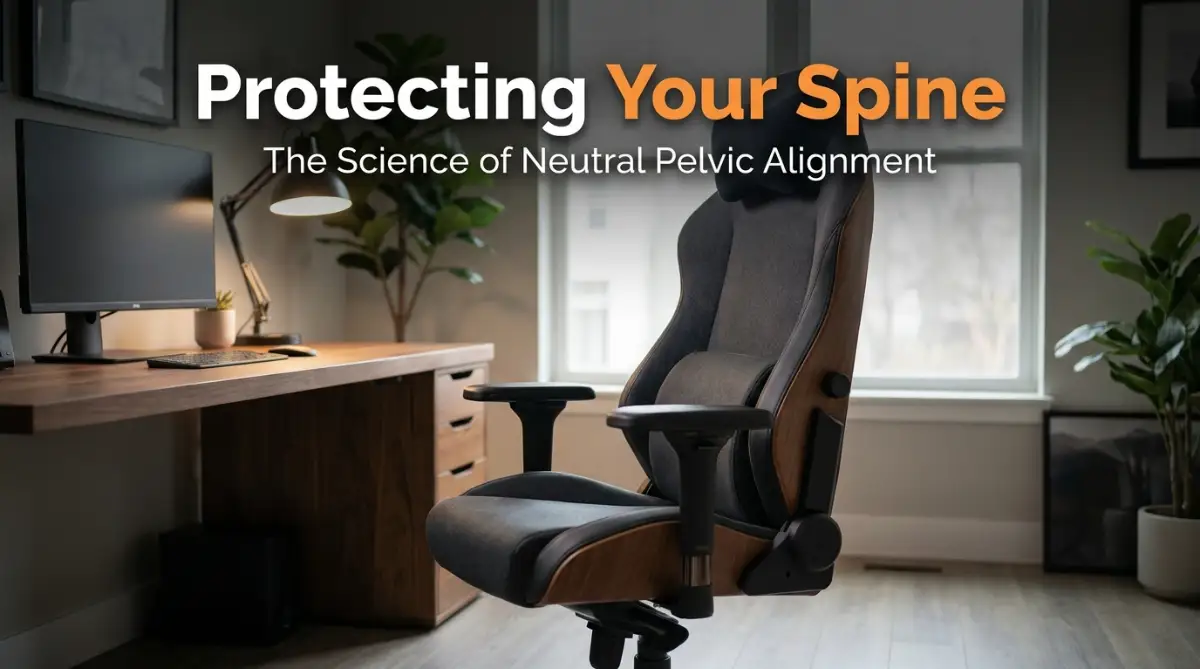
The Silent Agony: When Sitting Becomes a Daily Battle
I still remember the exact moment my lower back completely gave up on me. I was right in the middle of a long evening working at my desk, trying to finish an urgent project. When I tried to stand up to grab a glass of water, a sharp, terrifying pain shot up my spine.
I literally had to grab the edge of my desk just to keep myself from falling over. For weeks, I walked around feeling like a tired old man, constantly stretching and hoping the stiffness would just magically disappear.
I blamed my mattress, I blamed my lack of exercise, and I even blamed my heavy winter shoes. But I was completely missing the real root of my problem. It turned out, the true villain was the way I was sitting in my chair for eight hours a day.
My pelvis was tilted entirely the wrong way, and it was slowly crushing my lower back without me even realizing it.
Every single morning, millions of people wake up with that exact same heavy, dull ache in their lower back. You try to stretch it out in the shower, but that annoying stiffness never truly goes away.
It starts to mess with your mental peace in ways that are hard to explain to someone who has never felt it. You find yourself canceling plans with friends because the thought of sitting in a restaurant booth sounds like absolute torture.
When you sit down to play your favorite game or focus on work, your brain is entirely distracted by the constant discomfort. It drains your energy, makes you highly irritable, and steals the joy out of your daily activities.
The saddest part is that most of us just accept this pain as a normal part of getting older or working a desk job. We buy expensive creams, take painkillers, and just hope to survive the week.
But you do not have to live like this. The hidden key to stopping this daily misery is actually surprisingly simple, and it all starts right at your foundation.
What Exactly Is Neutral Pelvic Alignment?
To understand how to fix the pain, we first need to look at the mechanics of our bodies. Let us use a very simple and visual example.
Imagine your pelvis is a large bowl completely filled with water. If you tip that bowl too far forward, the water spills out the front.
When this happens to your body, it is called an anterior pelvic tilt. Your lower back arches way too much, your stomach pushes out, and your spine takes a massive amount of unnatural pressure.
Now, imagine tilting that water bowl too far backward, spilling the water out the back. This is known as a posterior pelvic tilt.
This happens when you slouch down deep into your seat. Your lower back rounds out into a "C" shape, completely destroying the natural curve of your spine.
Neutral pelvic alignment is when the bowl is perfectly balanced. The water does not spill forward, and it does not spill backward.
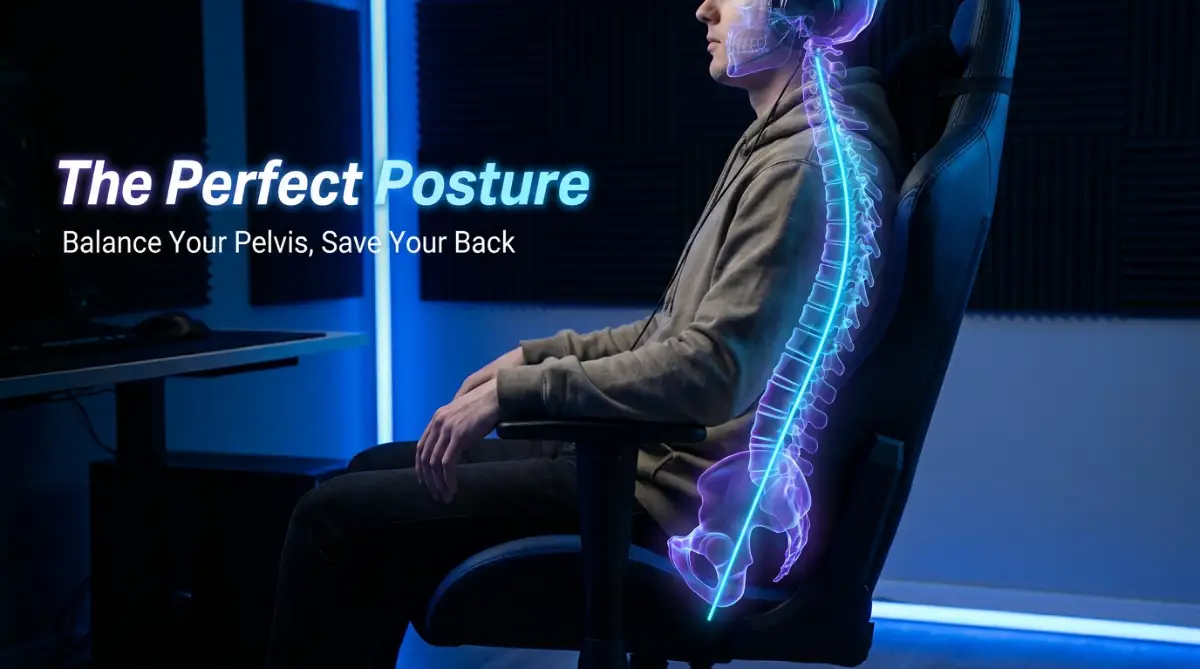
Your pelvis sits level and flat. When your pelvis is neutral, your spine naturally stacks up perfectly straight, just like building blocks.
The Domino Effect on Your Entire Body
You might be wondering why the pelvis matters so much if the pain is in your back or neck. The human body is a highly connected chain.
When your pelvic foundation is broken, everything above it has to compensate to keep your head looking straight ahead.
If you slouch and tilt your pelvis backward, your chest naturally caves inward. Because your chest caves in, your shoulders roll heavily forward.
To stop yourself from looking at the floor, you have to crane your neck out like a turtle. Suddenly, a problem that started at your hips is giving you massive tension headaches and shoulder pain.
Fixing your pelvic tilt is like fixing the foundation of a crumbling house. Once the base is perfectly level, the walls and the roof naturally fall right back into place.
Myth vs Reality: The Posture Lie We All Believe
The Myth: Good posture means forcing your shoulders back, sticking your chest out, and keeping your spine totally stiff and straight.
The Reality: Forcing your body into a rigid, military-style posture actually creates intense muscle fatigue and makes your pain much worse. Proper posture is about skeletal balance, not muscular force.
When you sit correctly, you should actually feel relaxed. Your bones should be doing the heavy lifting, giving your muscles a much-needed break.
The Science-Backed Blueprint for Perfect Seated Posture
Now that we know the true cause of the pain, it is time to fix it. Getting your body into a neutral position is not about buying expensive gadgets.
It is about understanding how to use your body and your chair perfectly together. Let us break down the exact steps you can take right now to find your perfect alignment.
Step 1: Discovering Your Foundation (The Sit Bones)
At the very bottom of your pelvis, there are two bony points. In the medical world, they are called the ischial tuberosities, but most people just call them "sit bones."
These two hard points are biologically designed to bear the weight of your entire upper body when you sit. To find them, sit on a hard wooden chair or a flat surface.
Slide your hands flat under your bottom. You will instantly feel two sharp, hard bones pressing down into your fingers.
When you sit in your premium gaming chair, your weight must be directly balanced on these two specific points. If you feel pressure entirely on your tailbone, you are slouching and tilting backward.
If you feel all the weight on your upper thighs and nothing on the bones, you are leaning too far forward. Rock back and forth slowly until you feel the weight perfectly centered right on those two sit bones.
Step 2: The 90-Degree Hip and Knee Rule
Your legs play a massive role in pulling or pushing your pelvis out of alignment. If your chair is too high, your feet dangle, which pulls your pelvis forward into a painful arch.
If your chair is completely too low, your knees pop up higher than your hips. This instantly forces your pelvis to roll backward, ruining your lower back curve.
Adjust your chair height so that both of your feet are planted entirely flat on the floor. Your knees should be at a perfect 90-degree angle, or just slightly below your hips.
Pro Tip from My Experience: I used to keep my feet tucked tightly completely under my chair wheels while I was focused on my screen. I quickly realized this bad habit was twisting my hips terribly; once I forced myself to keep my feet flat on the floor, my lower back pain reduced almost overnight.
If your desk is too high and you cannot touch the floor when you adjust the chair, do not panic. Simply grab a footrest or even a sturdy cardboard box to place under your feet.
Step 3: Activating the Core (The Natural Way)
When people hear they need to engage their core, they usually suck their stomach in as hard as they can. This makes it impossible to breathe normally and causes extreme tension.
A natural core engagement is much softer and easier. Imagine you are about to cough or laugh really hard.
Notice how your stomach muscles naturally tighten just a tiny bit? That subtle firmness is all you actually need to protect your neutral pelvic position.
Maintain a very light brace in your stomach while you sit. This small amount of tension acts like a natural corset, keeping your pelvis from tipping too far forward while you type or game.
Watch This Simple Posture Trick to Instantly Find Your Neutral Spine:
Step 4: Letting the Chair Do the Heavy Lifting
This is where a high-quality seating setup completely changes the game. Your body is not designed to sit perfectly still holding a neutral position by itself for ten hours.
Eventually, your muscles will get tired, and you will naturally start to slouch. This is exactly why premium gaming chairs are built with highly specific lumbar support systems.
Once you have balanced your weight on your sit bones and planted your feet, slide your hips all the way back into the chair. Your bottom should be firmly touching the backrest.
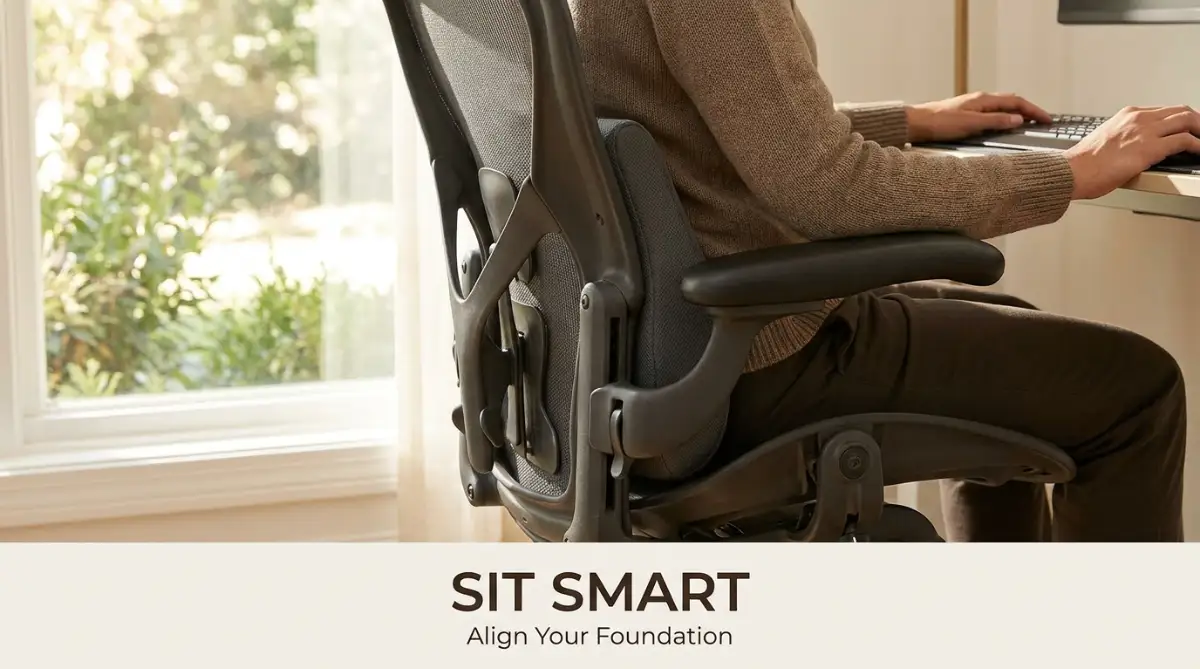
The chair's lumbar support pillow or built-in curve should now fit perfectly into the natural inward curve of your lower back. This support acts as a physical block.
It prevents your pelvis from rolling backward when your core muscles finally get tired. The chair is now doing the hard work of holding your posture, allowing your muscles to completely relax.
The Hidden Dangers of "The Gamer Lean"
We all know the famous "gamer lean." The match gets incredibly intense, so you pull away from the backrest and lean your face inches from the monitor.
While this might feel like it helps you focus, it completely destroys your pelvic alignment. When you lean forward, your hip flexors tighten up severely.
Over time, these tight front muscles actively pull your pelvis out of alignment even when you are standing up. This creates a chronic condition where you constantly look like you are sticking your stomach out.
To fix this, pull your chair much closer to your desk. If your armrests are hitting the desk, lower them or remove them entirely so you can slide properly under the table.
Why the Right Foam Density Matters
Not all chairs are created equal when it comes to holding your foundation. If the seat pan of your chair is way too soft, your pelvis will sink deeply into the foam like a hammock.
When your hips sink, your sit bones lose their firm foundation. The pelvis naturally rolls backward, and your spine instantly rounds into a painful shape.
Premium gaming chairs often use high-density cold-cure foam for this exact reason. It feels a bit firm at first, but it stops your heavy pelvis from sinking.
A firm seat pan keeps your sit bones elevated and balanced. This is a perfect example of how science and engineering work perfectly together to protect your long-term health.
A Quick Comparison: Bad Sitting vs Correct Alignment
The Breathing Test for Perfect Alignment
Here is a brilliant and simple way to check if your pelvis is actually in a neutral position. It is called the deep breathing test.
Slouch down deep into your chair and try to take a massive, deep breath into your stomach. You will notice that it feels very restricted, and you can only take a shallow breath into your chest.
Now, sit up, balance perfectly on your sit bones, and flatten your feet on the floor. Take another huge breath.
Notice how your stomach can easily expand outward? When your pelvis is neutral, your diaphragm has plenty of physical space to move down and pull in massive amounts of oxygen.
Better breathing means more oxygen flows directly to your brain. This naturally increases your focus, speeds up your reaction times in games, and keeps you from feeling sleepy in the middle of the afternoon.
Moving is Just as Important as Sitting
Even with the absolute best pelvic alignment and the most expensive chair on the market, you cannot sit forever. The human body requires continuous movement to pump blood and spinal fluid.
Between every single bone in your spine, there is a squishy disc that acts like a shock absorber. These discs do not have a direct blood supply.
They rely completely on your body movement to soak up fresh nutrients and push out old waste. When you sit perfectly still for hours, these discs slowly dry out and become easily injured.
Every single hour, you must stand up for at least two minutes. You do not have to do a massive workout; just walking to the kitchen for a glass of water is enough to refresh your spine.
When you sit back down, take five seconds to physically reset your foundation. Find those sit bones, plant your feet, and let the chair support your back.
Building this tiny physical habit will literally save you thousands of dollars in medical bills and endless hours of deep frustration over the next few decades of your life.
It is entirely possible to enjoy your gaming marathons and long work sessions without feeling completely broken afterward. It all starts with taking control of your foundation and sitting smart.
Mastering Your Foundation: Next-Level Posture Secrets
Finding your perfect seated foundation for the very first time is an amazing feeling. But keeping that perfect form throughout a massive eight-hour workday or an intense late-night gaming session is a completely different challenge.
Your body naturally wants to take the path of least resistance. When you get tired, your muscles stop working, and you instantly slip back into your old, painful habits.
To win this battle in the long run, you have to outsmart your own biology. Here are some highly effective, pro-level strategies I use to keep my body perfectly aligned without even thinking about it.
The 20-Minute Micro-Shift Strategy
Most people think good posture means sitting completely frozen like a statue. This is a massive misunderstanding of how the human body actually works.
If you hold even the healthiest position for too long, your joints will start to ache. The real secret is what experts call "dynamic sitting."
Instead of freezing in one spot, you should make tiny micro-adjustments every twenty minutes. Shift your weight slightly from the left sit bone to the right one.
Tilt your premium gaming chair back just a single inch to change the gravity load on your lower back. You can learn more about how movement impacts joint fluid from the occupational health experts at OSHA, who always recommend continuous physical adjustments.
These tiny movements keep your spinal discs hydrated and happy. It prevents your back muscles from locking up while keeping your foundation perfectly neutral.
Building Pelvic Muscle Memory (The Two-Week Hump)
When you first start sitting on your sit bones correctly, it is going to feel incredibly weird. You might even feel a little bit sore at the end of the first few days.
Do not panic, because this is entirely normal. Your body has spent thousands of hours adapting to a terrible, slouched position.
Retraining your core and back muscles takes time and a lot of patience. It reminds me a bit of how to train an anxious dog without breaking their spirit; you have to be gentle, consistent, and reward small progress.
Give yourself a solid two weeks to build new muscle memory. Every time you notice your lower back rounding out, gently rock your hips forward until you find that sweet spot again.
Eventually, your brain will rewire itself. Sitting poorly will actually start to feel uncomfortable, and your body will automatically seek out the healthy, neutral position.
Tuning Your Gaming Chair Like a Pro
Buying a highly expensive ergonomic seat is only half the battle. If you do not customize it to your exact body dimensions, you are completely wasting your money.
Start by finding the tension knob hidden just beneath your seat pan. Most people never touch this dial, but it is incredibly powerful for your spine health.
If the tilt tension is way too loose, the chair will lean backward every time you breathe, pulling your pelvis out of alignment. If it is entirely too stiff, you will have to fight the chair just to move, causing instant muscle fatigue.
Adjust that knob until the backrest holds your weight firmly, but still allows you to recline smoothly when you push back. You can discover more helpful life tips and setup guides on our homepage at infozonee.com, where we share practical advice for everyday problems.
Next, perfectly align your lumbar pillow. It should never rest down by your tailbone, and it should never push against the middle of your ribs.
Slide it directly into the deepest part of your lower back curve. When positioned right, it physically blocks your pelvis from rolling backward into that dreaded "C" shape.
The Monitor Height Magic Trick
You can have the best pelvic posture in the world, but if your screen is in the wrong place, everything will fall apart. Where your eyes look, your heavy head will naturally follow.
If your monitor is sitting directly on your desk, you will naturally pull your neck forward and look down. This instantly causes your chest to collapse, and your hips will slide forward to compensate.
According to guidelines published by Harvard Medical School, your screen should always sit directly at eye level to prevent serious cervical strain. Grab a monitor arm or simply stack some sturdy books under your screen base.
The top third of your screen should be exactly level with your eyes when you are sitting totally straight. This simple adjustment forces you to lean back into your chair's support, instantly locking your pelvis into a highly secure, neutral position.
The Silent Posture Traps Ruining Your Spine
Even when we try our absolute best to sit correctly, it is incredibly easy to fall into bad habits. These invisible mistakes happen so slowly that we do not even realize we are actively damaging our bodies.
Let us break down the worst habits you need to eliminate from your daily routine starting right now.
The Asymmetrical Nightmare (Crossed Legs)
We all love to cross our legs while we work or watch a long movie. It feels comfortable in the moment, but it is an absolute disaster for your lower body mechanics.
When you throw one leg over the other, you are lifting one side of your pelvis entirely off the chair. Your weight is now crushing down on just a single sit bone.
This forces your lower spine to twist sideways to keep your shoulders straight. Doing this every single day slowly grinds away at your spinal discs and inflames your sciatic nerve.
If you want to read more about nerve inflammation and structural damage, the medical researchers at Cleveland Clinic explain exactly how twisted sitting habits lead to severe leg pain. Keep both of your feet firmly planted on the floor to keep your hips perfectly level.
The "Wallet Trap" Disaster
This is a massive issue, especially for men who carry thick leather wallets in their back pockets. Sitting on a bulky object creates the exact same twisted imbalance as crossing your legs.
One hip is elevated an inch higher than the other. Over a few hours, the muscles on one side of your lower back become incredibly tight, while the other side becomes weak and stretched out.
Always empty your back pockets before you sit down for a long session. Your foundation must be completely flat to distribute your body weight evenly across the seat foam.
Relying on the Fake "Relaxed" Slouch
Sometimes, when we are incredibly tired, we slide our bottom to the front edge of the seat and lean our upper back against the top of the chair. We think we are giving our body a break by relaxing.
In reality, this is the most dangerous position you can possibly put your spine into. Your lower back is completely unsupported, suspended like a bridge over a massive gap.
If you are genuinely tired, do not slouch in your desk chair. Stand up, go lie down completely flat on your bed or floor for ten minutes, and let your spine truly decompress safely.
Ignoring Your Body's Warning Signals
Pain is not just a random annoyance; it is your body's built-in alarm system loudly telling you that something is mechanically wrong. Ignoring a stiff neck or a dull ache in your hips is a massive mistake.
Many people just pop an ibuprofen and go right back to sitting terribly. This masks the pain, but the physical damage to your discs is still happening quietly in the background.
You need to evaluate your daily habits honestly. It is very similar to understanding the truth about employer-sponsored insurance; if you do not read the fine print of your situation, you will end up paying a heavy price later.
Listen to the subtle aches. When your body feels tight, take it as an immediate signal to check your pelvic alignment, reset your feet, and take a quick walking break.
Your Action Plan for a Pain-Free Tomorrow
We have covered a massive amount of ground today, from finding your sit bones to tuning your expensive gaming setup. Fixing your posture is not a magic trick that happens overnight.
It is a steady journey of building physical awareness and treating your body with the deep respect it deserves. When you align your pelvis correctly, you instantly take the heavy burden off your lower back.
Your breathing becomes deeper, your focus becomes sharper, and your energy levels remain incredibly high throughout the entire day. You are finally giving your skeleton the chance to work the way nature intended.
Start small tomorrow morning. Set a timer for the first hour of your day and actively focus on keeping your weight perfectly balanced on those two foundation bones.
My Personal Takeaway: I spent years fighting terrible back pain because I refused to fix my awful sitting habits. The day I finally took control of my pelvic alignment, my entire life changed for the better. I want you to feel that same physical freedom, so adjust your chair today and start protecting the only spine you will ever have!
Common Questions About Seated Pelvic Alignment
Why does sitting up straight hurt my lower back at first?
When you slouch for years, your core and back muscles become very weak and lazy. Sitting properly forces these neglected muscles to finally work, which can cause some mild soreness. This discomfort is totally normal and usually fades away within a couple of weeks as your body builds new strength.
Can a premium gaming chair actually fix my posture?
No chair can magically fix your posture if you refuse to sit correctly. However, a high-quality chair gives you the essential tools, like proper lumbar support and firm seating, to maintain a neutral spine easily. It acts as a guide, but you still have to actively engage your foundation.
How do I know if I have an anterior or posterior pelvic tilt?
A simple way to check is by standing sideways against a flat wall. If you can fit your entire fist between your lower back and the wall, you likely have an anterior tilt (arched back). If there is zero space and your back is totally flat against the wall, you are leaning into a posterior tilt (tucked pelvis).
Should I use a footrest to keep my pelvis neutral?
Yes, using a footrest is a brilliant idea if your feet cannot rest entirely flat on the floor. Dangling legs pull your pelvis forward into an aggressive, painful arch. A simple footrest instantly relieves that tension and keeps your hips resting perfectly level.
Is it okay to recline while gaming or working?
Reclining is actually fantastic for your spine, as long as your chair supports your lower back the entire time. Leaning back at a slight angle (around 100 to 110 degrees) heavily reduces the gravitational pressure on your spinal discs. Just make sure your monitor is tilted up so you do not have to aggressively bend your neck forward.
Disclaimer: The information provided in this blog post is for educational and informational purposes only and does not constitute professional medical advice. If you are experiencing chronic or severe back pain, please consult with a qualified healthcare provider or physical therapist before making significant changes to your posture, seating habits, or daily physical routine. We are not responsible for any injury or health issues resulting from the application of this information.