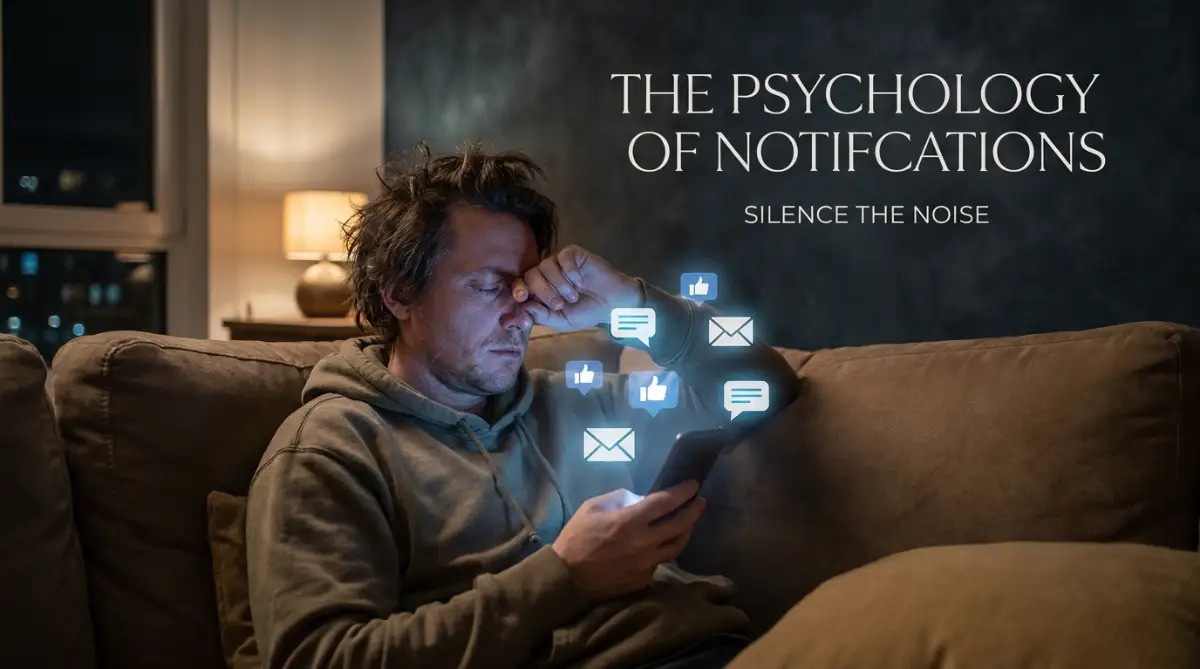
That One Tiny Ping That Ruined My Peaceful Evening
I was sitting around the dinner table with my family, enjoying a rare and beautiful quiet moment. Out of nowhere, my phone buzzed in my pocket with a familiar, sharp vibration. I silently promised myself I would completely ignore it, but my brain instantly stopped listening to the conversation happening right in front of me.
My hand naturally reached into my pocket just to check if it was some kind of sudden emergency. It was simply a random shopping app telling me about a weekend flash sale I did not care about at all. In that tiny split second, I completely lost my connection to the real people sitting beside me.
For a very long time, I walked around feeling like my smartphone was the absolute boss of my life. Every single time my screen lit up, my heart rate would jump just a little bit. I was always on edge, waiting for the next email, the next like, or the next breaking news alert.
I blamed my own lack of self-control for constantly checking my screen. I told myself that I was just a highly distracted person by nature. But I was entirely missing the hidden mechanics working behind the scenes.
The real problem was not my willpower at all. It was the fact that these tech companies spend millions of dollars designing specific psychological triggers to hijack our attention.
Every single morning, millions of normal people wake up feeling completely exhausted before they even get out of bed. You open your eyes, grab your phone from the nightstand, and are immediately hit with a giant wall of red notification badges.
Before you have even brushed your teeth, your brain is flooded with heavy demands from your boss, social media algorithms, and random group chats. This daily morning routine completely destroys your mental peace.
It starts to create a deep, invisible layer of anxiety that follows you everywhere you go. You feel like you are always on call, permanently tethered to a glowing screen that never actually sleeps.
When you sit down to focus on deep work or read a good book, your mind is terribly scattered. You physically struggle to hold your attention on a single task for more than ten minutes.
It slowly drains your daily energy, makes you incredibly irritable, and steals away your capacity for deep, meaningful thoughts.
The most frustrating part is that we just accept this constant digital noise as a normal part of modern life. We buy expensive planners, try meditation apps, and hope to somehow find our lost focus.
But you do not have to live your life on a permanent digital leash. The secret to getting your mental clarity back is actually surprisingly logical, and it begins with understanding exactly how your phone tricks your brain.
The Hidden Science of the Smartphone Trap
To successfully silence the noise, we first have to understand the biological game being played against us. It is not just random software design; it is deeply rooted in human behavioral science.
Let us use a very simple real-life analogy to understand this concept. Imagine walking up to a standard vending machine, putting in a coin, and pressing a button.
You know exactly what you are going to get every single time. Because it is completely predictable, your brain does not get overly excited about the process.
Now, imagine walking up to a casino slot machine, putting in a coin, and pulling the heavy lever. You have absolutely no idea what is going to happen next.
You might win nothing, you might win a few coins, or you might hit the massive grand prize. This extreme unpredictability creates a massive spike of dopamine in your brain.
The Variable Reward System
Your smartphone operates exactly like that glowing slot machine. Every time your phone vibrates, it is a brand-new pull of the digital lever.
It might be a highly important message from an old friend you love. It might be a totally useless alert about a game you haven't played in three months.
Because you never know what the reward will be, your brain simply cannot resist the urge to check. This psychological concept is called a variable ratio schedule of reinforcement.
Tech engineers deliberately use this specific psychological loop to keep you constantly hooked. They want you checking your screen fifty times a day because your attention is exactly how they make their money.
The Phantom Vibration Syndrome
This mental conditioning runs so incredibly deep that it starts to physically alter your sensory perception. Have you ever felt your phone vibrate in your pocket, only to pull it out and see a completely blank screen?
This weird phenomenon is known as phantom vibration syndrome. Your brain is anticipating the dopamine hit so aggressively that it actually hallucinates the physical sensation of a notification.
Your nervous system is essentially living in a constant state of high alert. When your body is always anticipating the next digital interruption, it becomes biologically impossible to truly relax.
Myth vs Reality: The Connectivity Illusion
The Myth: Keeping all your notifications turned on keeps you well-informed, productive, and highly responsive to important matters.
The Reality: Constant notifications actually destroy your productivity and drastically lower your IQ while working. Every time you shift your attention to a random ping, it takes your brain nearly twenty minutes to regain deep focus on your original task.
True productivity requires long stretches of uninterrupted silence. Your phone should be a helpful tool that you use when you decide to, not a demanding boss that interrupts you at will.
Your Actionable Blueprint for Digital Freedom
Now that we know exactly how the trap works, it is time to actively break it. Taking back your attention does not mean throwing your expensive smartphone into a river.
It simply means resetting the boundaries between your technology and your personal life. Let us break down the exact, practical steps you can take today on your Android or iOS device.
Step 1: The Ruthless Notification Audit
The very first thing you need to do is stop the massive flood of useless information at the source. Most of us just blindly hit "Allow" whenever a new app asks for notification permissions.
You need to sit down for ten minutes and perform a highly ruthless digital audit. Go into your phone settings and scroll down your entire list of installed apps.
Ask yourself a very simple question for every single app: "Is this interruption actually worth breaking my focus for?"
Social media likes, gaming reminders, and shopping coupons never qualify as urgent. Turn off their permissions completely so they can never light up your screen again.
Pro Tip from My Experience: I used to think leaving my work email notifications active meant I was a dedicated and hard worker. I quickly realized it just made me deeply resent my job on the weekends; turning them completely off and choosing to check email only twice a day actually doubled my daily output.
Only leave the sound and vibration on for things that require your immediate, physical attention. This usually means phone calls, direct text messages from real humans, and calendar reminders.
Step 2: Eliminating the Red Badge Anxiety
Even if your phone is completely silent, those bright red notification dots on your app icons are still highly dangerous. They are visually designed to trigger a sense of extreme urgency.
When you unlock your phone to check the weather, you see a little red '7' sitting on your email app. Instantly, your brain feels a heavy sense of incomplete tasks.
You click the app just to make the red dot disappear, and suddenly you have wasted thirty minutes reading unimportant messages. Both iOS and Android allow you to turn off these visual badges completely.
Go into your specific app notification settings and disable the "Badge" or "Dot" feature. Your home screen will immediately look incredibly calm, clean, and completely stress-free.
Step 3: Customizing Your Daily Focus Modes
This is where the built-in operating systems become highly powerful tools for your mental health. You do not want the same notification rules for your Tuesday morning at work as you do for your Sunday evening at home.
Apple has "Focus Mode" and Android has "Digital Wellbeing." These features allow you to create specific digital environments based on the exact time of day.
You can set up a "Work" profile that completely blocks social media alerts from 9 AM to 5 PM. You can create a "Sleep" profile that turns your entire screen black and white while blocking every single ping after 10 PM.
Watch This Quick Visual Guide to Master Your Phone Settings:
Taking five minutes to build these custom schedules means your phone will automatically protect your boundaries without you having to remember to flip a switch.
A Quick Look: Mindful vs Default Settings
Step 4: Beating the Fear of Missing Out (FOMO)
The biggest reason people refuse to silence their phones is the intense fear of a theoretical emergency. "What if my family needs me urgently and my phone is on silent?"
This is a totally valid concern, but tech companies have already solved this exact problem for you. You do not need to leave all notifications on just to catch one important call.
Both operating systems allow you to set up "Emergency Bypasses" or "Starred Contacts." You can put your phone on the strictest Do Not Disturb mode, but if your partner or parents call, the phone will still ring at full volume.
You can also turn on the setting where if the same person calls twice within three minutes, the second call breaks through the silence. This guarantees you will never miss a true crisis.
Once you set up these safety nets, your brain will finally let go of the anxiety. You will learn to trust that silence actually means everything is perfectly fine.
Step 5: Relocating the Distraction Apps
Out of sight truly means out of mind when it comes to digital addiction. If your social media apps are sitting right there on your main home screen, your thumb will automatically click them out of pure habit.
Move all of your highly distracting apps completely off your first screen. Bury them inside a folder on the second or third page of your app drawer.
If you want to take it a step further, delete the social media apps from your phone entirely and only log in through the mobile web browser. The browser experience is usually much slower and slightly annoying.
Adding just a tiny bit of friction to the process gives your conscious brain enough time to step in. It allows you to pause and ask yourself if you actually want to scroll, or if you are just totally bored.
By applying these thoughtful layers of defense, you slowly rebuild the protective walls around your attention span. You turn your shiny, demanding slot machine back into a simple, highly useful piece of metal and glass.
Going Beyond the Basics: Mastering Long-Term Digital Peace
Silencing your smartphone for the very first time feels like an absolute breath of fresh air. Your screen is finally quiet, your mind feels strangely calm, and you actually have the time to sit and think clearly.
But maintaining this beautiful state of digital peace over a long period is a completely different challenge. Tech companies update their software constantly, and new apps are always trying to find sneaky ways to bypass your restrictions.
To keep your brain protected from these highly addictive dopamine loops, you have to adopt a few advanced daily habits. Let us look at some pro-level secrets that will completely change the way you interact with your screen.
The Grayscale Mind Hack
This is arguably the most powerful trick you will ever use to break your phone addiction. Tech designers use highly saturated reds, blues, and greens specifically to stimulate the visual cortex of your brain.
Bright colors make the screen feel like a shiny toy you just cannot put down. If you want to make your phone instantly boring, you need to turn the entire screen black and white.
Both iOS and Android have a deeply hidden accessibility feature called "Color Filters" or "Grayscale." When you turn this on, every single app, photo, and notification loses its visual power.
Without those bright, flashy colors, your brain stops treating the phone like a slot machine. You will find yourself checking a text message and immediately putting the phone back in your pocket because scrolling a gray screen is incredibly dull.
The Concept of Notification Batching
You do not check your physical mailbox at the end of your driveway fifty times a day. You check it exactly once, grab all the letters, and sort through them at your own convenience.
You need to treat your digital notifications the exact same way. Instead of letting emails and social updates drip into your life all day long, you can use built-in tools to batch them together.
Apple offers a brilliant feature called "Scheduled Summary," while Android users can achieve this through focus routines. You can tell your phone to hold every single non-urgent alert and only deliver them in one big batch at 12:00 PM and 5:00 PM.
This gives you massive blocks of deep, uninterrupted focus. You get to control exactly when you consume information, rather than letting the information control you.
Creating Physical Distance Rules
Even if your phone is completely silent, simply having it sitting on your desk heavily drains your mental energy. Your brain knows the device is right there, and a tiny part of your subconscious is always wondering if you missed something.
A fascinating behavioral study by the University of Texas at Austin proved that the mere physical presence of a smartphone actively reduces your cognitive capacity. The closer the phone is to your body, the worse your brain actually performs.
To fix this, create strict physical distance rules for yourself. When you sit down to do deep work, plug your phone into a charger in a completely different room.
If you are watching a movie with your family, leave the phone on a high shelf near the front door. Creating just ten seconds of physical walking distance makes a massive difference in breaking the habit of mindless checking.
Auditing Your Hidden Digital Subscriptions
Sometimes the most annoying triggers are not even from real apps, but from heavy email marketing lists. We sign up for a free discount code once, and suddenly our inbox is overflowing with daily promotional alerts.
Take thirty minutes this weekend to aggressively unsubscribe from every single store, newsletter, and promotional list you no longer read. A clean inbox heavily reduces the psychological burden of feeling like you are always falling behind.
You can always find more lifestyle advice and everyday digital habits by visiting our main homepage at infozonee.com.
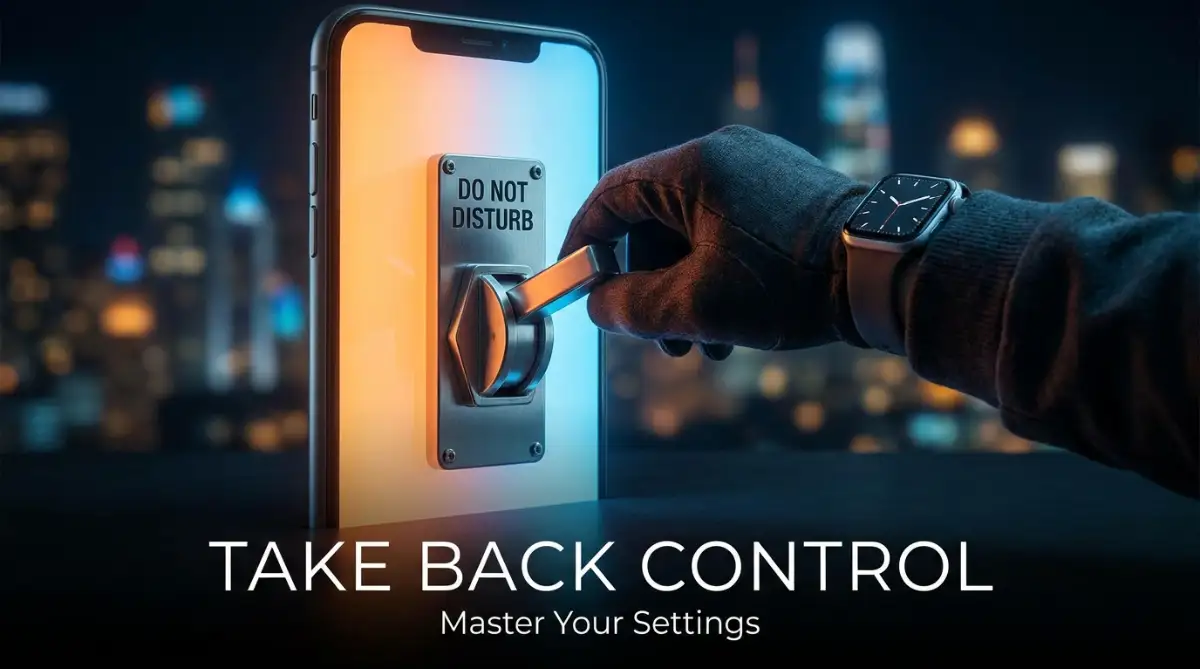
The Silent Traps That Will Pull You Back In
Taking back your attention is never a perfectly straight line. There will be days when you feel completely in control, and there will be days when you slip right back into your old, highly distracted habits.
Understanding the common mistakes people make when trying to silence their phones will save you a massive amount of frustration. Let us walk through the emotional and technical pitfalls that can easily ruin your progress.
The "Just This Once" Illusion
This is the number one reason people fail at maintaining a quiet phone. You order food from a delivery app, and the app asks you to turn on notifications so you can track the driver.
You tell yourself, "I will just turn them on this one time and turn them right back off after the food arrives." But you completely forget to turn them off.
A week later, that same app is sending you loud promotional alerts at ten o'clock at night. Your brain is highly adaptable, and it is a lot like figuring out how to train an anxious dog without breaking their spirit; you have to stay incredibly consistent with your rules, or bad habits will immediately return.
Never compromise your notification boundaries for temporary convenience. If you need to track a food delivery, just leave the app open on your screen instead of granting it permanent permission to interrupt your life.
The Smartwatch and Cross-Device Trap
You can spend hours perfectly customizing your smartphone settings, completely forgetting that you wear a buzzing computer right on your wrist. Smartwatches and tablets are massive blind spots for digital wellness.
If you silence your phone but your Apple Watch keeps tapping your wrist every time an email arrives, you have solved absolutely nothing. In fact, wrist vibrations are often much more distracting because they touch your physical body directly.
According to behavioral experts at the Center for Humane Technology, persuasive design is heavily integrated across all synced devices to maximize your screen time. You must manually go into your smartwatch and tablet settings to mirror the exact same strict boundaries you set on your phone.
If a notification is not important enough to buzz in your pocket, it absolutely does not belong on your wrist.
Managing the "Phantom Emergency" Anxiety
When people first turn off their alerts, they often experience a massive wave of panic. They constantly check their silent phone just to make sure they did not miss a family emergency or a call from their boss.
This early anxiety is totally normal, but you cannot let it defeat you. Managing this fear requires having a solid backup plan, similar to how to buy the best travel insurance for pre-existing conditions—you prepare for the worst so you can comfortably enjoy the present.
Remind yourself that you already set up emergency bypass contacts for the people who truly matter. If someone actually needs you right away, they will call you twice.
Everything else can absolutely wait until you are ready to look at your screen on your own terms.
Giving Up During the Dopamine Detox Phase
For the first three to four days of your new silent routine, your brain is going to feel incredibly bored. You have cut off its main supply of cheap, easy dopamine, and it will aggressively demand that you turn the notifications back on.
Many people mistake this temporary boredom for genuine loneliness or missing out on culture. They give up and flip all the switches back on just to feel connected again.
You have to push through this uncomfortable withdrawal phase. Once you survive the first week, your brain naturally resets its baseline, and you will start finding deep joy in normal, everyday activities again.
Your Action Plan for a Calmer Tomorrow
We have completely unpacked the hidden tricks tech companies use to steal your focus, and we have armed you with the exact settings you need to fight back. Changing your relationship with your smartphone is one of the most powerful things you will ever do for your mental health.
Your phone should be a tool that waits patiently in your pocket until you decide to use it. It should never be a demanding alarm clock that dictates how you feel and what you focus on.
Just like you have to carefully read the fine print when understanding the truth about employer-sponsored insurance, you have to take total ownership of your digital environment. No one else is going to protect your attention for you.
Start tonight before you go to sleep. Go into your settings, turn off the app badges, schedule your Do Not Disturb mode, and wake up tomorrow to a beautifully quiet, distraction-free morning.
My Personal Promise to You: I spent years feeling completely burned out, totally unaware that my vibrating phone was the root cause of my stress. The day I finally turned off my notifications, it felt like a massive weight was lifted off my chest. I want you to experience that exact same deep, lasting peace, so grab your phone right now and take your power back!
Real Questions About Breaking the Notification Habit
Will turning off my notifications make me look unprofessional at work?
Not at all. In fact, highly successful people are rarely available the very second you message them because they are focused on deep work. You can easily communicate your response times to your team, letting them know you check emails at specific intervals rather than constantly.
Why do I still feel my phone vibrating when it is completely turned off?
This is known as phantom vibration syndrome, and it happens because your nervous system is highly conditioned to expect digital rewards. Your brain literally hallucinates the physical feeling of a buzz. Thankfully, this weird sensation usually stops completely after a week or two of keeping your phone properly silenced.
Should I just buy a basic flip phone and give up on smartphones?
While a "dumbphone" is a great extreme measure, it is not actually necessary for most people. Smartphones offer amazing tools like high-quality cameras, maps, and banking apps that genuinely make life better. The goal is to use the smart features while actively blocking the addictive psychological triggers.
How long does it take for my brain to stop craving screen time?
Most behavioral experts suggest that a standard dopamine reset takes about seven to ten days. The first three days are usually the hardest, filled with intense boredom and the urge to check social media. If you stay strong through the first week, your natural attention span will dramatically improve.
Will silencing my phone actually improve my battery life?
Absolutely! Every time a notification wakes up your screen, turns on your vibration motor, and pulls data from the internet, it drains a tiny bit of power. By turning off unnecessary alerts and background data syncing, you will notice your phone battery lasts significantly longer throughout the day.
Disclaimer: The information provided in this blog post is for educational and informational purposes only. It is not intended as a substitute for professional mental health advice, diagnosis, or treatment. If you feel that your digital habits are causing severe anxiety, depression, or impacting your daily functioning, please consult with a licensed therapist or medical professional.