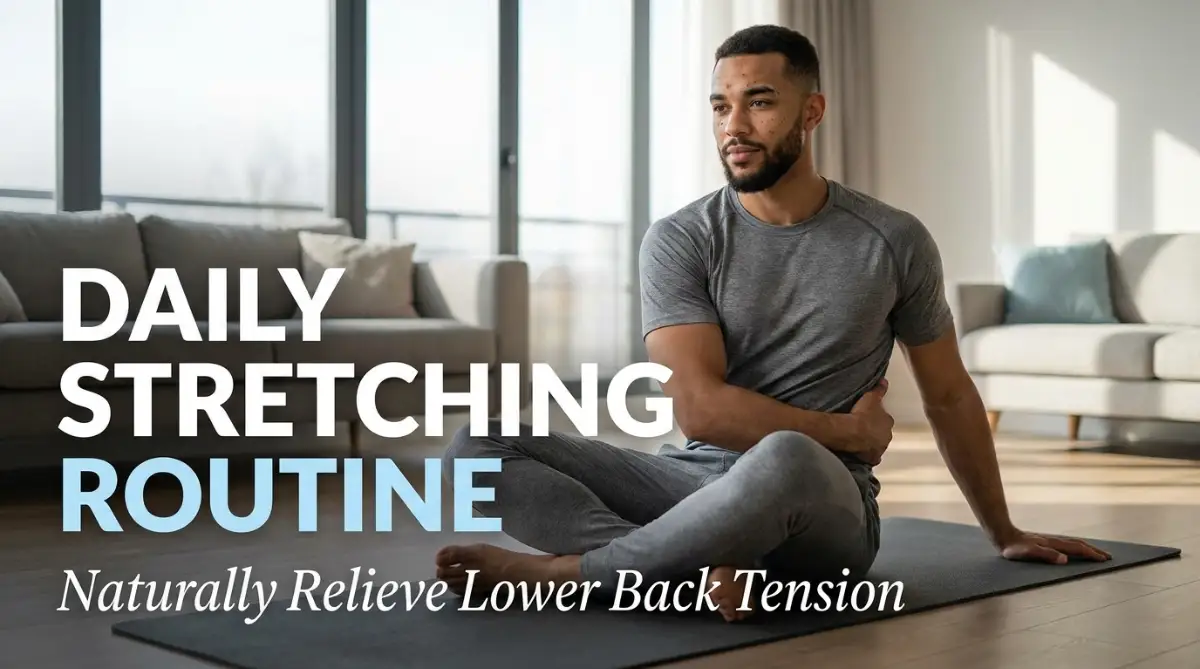
Waking Up Should Never Feel Like a Heavy Chore
Imagine opening your eyes in the morning, feeling well-rested, but dreading the moment you have to step out of bed. As you place your feet on the floor and attempt to stand, a sharp, tight pull grips your lower spine. You have not even started your day, yet your body is already begging for a break.
I know exactly how this frustrating scenario feels. It instantly changes how you interact with your family and alters your mood before breakfast. Instead of picking up your child easily or enjoying a peaceful cup of coffee, you are gently trying to force your body to stand straight.
This hidden struggle dictates your daily choices. You sit at your office desk, shifting your weight every five minutes to find a comfortable angle. The constant dull ache makes focusing on your work incredibly hard, draining your energy completely by noon.
This persistent tension is not just a physical problem; it slowly eats away at your mental peace. You start avoiding simple activities you used to love, like gardening or playing a weekend sport, purely out of fear. The anxiety of "pulling a muscle again" keeps you trapped in a lonely cycle of inactivity.
But your spine was beautifully built to move, bend, and twist freely. We just need to gently remind your stiff muscles how to let go of that built-up stress safely.
Understanding Why Your Lower Back Feels Like a Tight Rubber Band
Before we look at the physical movements, we need to understand what is happening right under your skin. Think of your lower back muscles like a thick, heavy rubber band. When you sit in one single position for hours, that rubber band stays stretched out in an unnatural way.
Over time, these muscle fibers completely forget their natural resting length. They stay locked in a defensive, hardened mode. This stiffness is actually your nervous system trying to protect your spine from perceived harm.
The Rusty Hinge Analogy
If you leave a heavy door completely still for months, the metal hinges get stiff and rusty. When you finally try to open it, the door creaks, resists, and feels incredibly heavy. Your lower lumbar region acts the exact same way after periods of inactivity.
The right, gentle movements act as the perfect oil for these rusty bodily joints. We do not need heavy stretching, aggressive twisting, or painful pulling to fix this. We just need consistent, gentle motion to bring warm blood flow back into the tight area.
Myth vs. Reality: The Bed Rest Trap
The Common Myth: When your back aches heavily, you should lie in bed flat and avoid all movement until it magically heals.
The Medical Reality: Strict, prolonged bed rest actually makes your muscles significantly weaker and much stiffer. Gentle, controlled movement is the scientifically proven way to speed up recovery and reduce daily discomfort.
Creating the Perfect Stretching Environment
Before you even start, setting the mood is surprisingly helpful for muscle relaxation. Find a quiet corner in your home where you will not be interrupted by kids or pets for just ten minutes.
Roll out a thick, comfortable exercise mat or find a soft carpeted area. Never stretch on a hard, cold tile floor, as this will make your muscles tense up defensively. Dim the bright overhead lights if you can, as softer lighting naturally helps calm your nervous system down.
The Morning Awakening: Starting Your Day Right
Your muscles are always at their coldest right after you wake up. This is absolutely not the time to aggressively touch your toes or do extreme physical backbends. We want to start moving gently from the safety of your mattress or your soft floor mat.
The Double Knee Hug (Pelvic Reset)
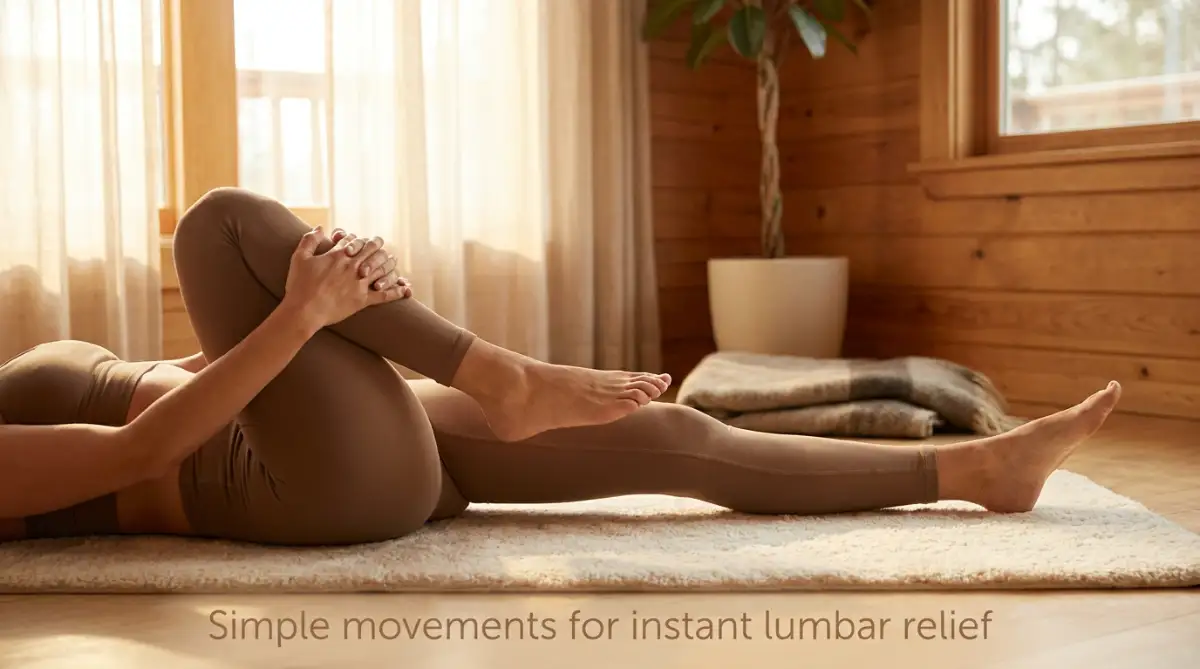
This comforting movement acts as a gentle reset button for your entire pelvis and lower spine. Lie completely flat on your back and slowly bring both of your knees toward your chest. Wrap your arms lightly around your shins or behind your thighs.
How to do this perfectly:
- Do not pull your legs violently toward you. Just let the natural weight of your arms hold your legs in place.
- Take a deep, slow breath in through your nose, filling your belly up like a balloon.
- As you slowly breathe out, allow your lower back to sink heavily and flatly into the floor beneath you.
Hold this cozy, curled position for about thirty seconds. You will slowly feel the tight, knotted muscles around your tailbone melting into the surface. This specific position feels incredibly safe and heavily supportive for a tired spine.
Common Mistake to Avoid: Many people lift their head and neck off the floor to look at their knees. Keep the back of your head resting completely flat to avoid straining your upper neck muscles.
The Spinal Wave (Cat-Cow Flow)
Now, carefully roll onto your hands and knees on your soft mat. Keep your wrists directly under your shoulders and your knees exactly under your hips. This specific movement is famous around the world for a very good reason.
The exact physical technique:
- Slowly drop your belly toward the floor and gently lift your chin to look straight ahead. Feel the entire front of your body open up warmly.
- Now, push the solid floor away, tuck your chin tight to your chest, and round your spine up like a frightened cat.
- Move extremely slowly, taking about four full seconds for each directional movement.
Do this slow wave about eight to ten times. It physically pumps fresh, oxygen-rich blood directly into your spinal discs. Think of this motion as a natural, internal massage for your central nervous system.
Mid-Day Desk Resets: Stopping the Ache Before It Spreads
Most of us spend eight to ten hours completely glued to a stiff office chair. This constant sitting significantly shortens your front hip flexor muscles. When these hip muscles get tight, they physically pull your lower back out of its natural alignment. We need to interrupt this bad cycle.
The Seated Pretzel (Figure Four Stretch)
You do not even need to stand up from your work desk for this powerful movement. Sit right at the edge of your office chair with both feet flat on the solid ground.
Carefully lift your right ankle and rest it gently across your left knee. Your legs should look exactly like the number four. Now, sit up extremely tall as if a string is pulling the top of your head.
The secret to feeling the right stretch:
- Do not round your shoulders forward like you are reading a book.
- Keep your spine perfectly straight and slowly hinge your chest forward toward your legs.
- Stop moving forward as soon as you feel a deep, satisfying stretch in your right hip and glute area.
Hold this position for five deep, incredibly slow breaths. Then, gently switch to your left leg. Releasing tight hips takes an enormous amount of downward pressure right off your lower spine.
The Gentle Chair Torso Twist
While still sitting comfortably on your chair, place your right hand flat on your left outer knee. Grab the back rest of your chair tightly with your left hand.
Inhale deeply to sit up even taller in your seat. Exhale slowly and gently look back over your left shoulder. This light twisting motion effectively wrings out the built-up tension in your core muscles like water from a wet towel.
Repeat this gently on both sides of your body. This entire process takes less than two minutes but completely changes how your back feels for the rest of the busy afternoon.
Comparing Daily Habits: What Helps vs. What Hurts
To make these stretching movements truly effective, we must look at your unconscious daily habits. Stretching for ten minutes will never fix the physical damage of sitting badly for ten hours.
Here is a quick analytical look at how small daily adjustments make a massive difference in your pain levels:
Everyday Action ~ The Painful Habit ~ The Healthy Spine Habit
Picking up objects ~ Bending entirely at the waist with totally straight legs. ~ Squatting down low, keeping the heavy load close to the chest.
Sitting at a desk ~ Slouching heavily forward, causing the lower back to round out. ~ Using a small lumbar pillow, keeping both feet completely flat.
Using a smartphone ~ Looking straight down constantly, pulling the neck heavily forward. ~ Holding the phone up at eye level to keep the head neutral.
Sleeping positions ~ Sleeping heavily on the stomach, hyper-extending the lower spine. ~ Sleeping on the side with a soft pillow tucked between the knees.
The Evening Unwind: Melting Away the Daily Stress
By the time the sun goes down, gravity has physically compressed your spine all day long. It is absolutely time to create healthy space between those tired vertebrae before you go to sleep.
The Resting Child's Pose Retreat
Get down on your soft carpet or your exercise mat. Kneel down, sit your hips all the way back onto your heels, and walk your hands far out in front of you. Let your forehead rest gently and heavily on the floor.
Why this specific pose works wonders:
- It safely and naturally stretches the entire length of your spine.
- It deeply opens up the tight, knotted muscles around your shoulder blades.
- The folded, safe position naturally calms your anxious nervous system before bed.
Stay in this comfortable position for one full minute. Focus entirely on the rhythmic sound of your own breathing. Every single time you exhale, imagine the day's heavy tension melting directly into the floor.
Pro Tip for Stiff Knees:
If sitting back on your heels causes sharp pain in your knees, do not force it. Simply place a thickly rolled-up towel right behind your knees before you sit back. This provides a soft cushion and takes the extreme pressure off your joints immediately.
The Wall Leg Rest Technique
This is my absolute favorite way to end a stressful, tiring day. Lie flat on your back, scoot your hips as close to a plain bedroom wall as possible, and extend your legs straight up the wall. Your entire body will form a perfect "L" shape.
Let your arms fall heavily to your sides with your palms facing the ceiling. Close your eyes and breathe naturally. This incredibly simple position completely reverses the harsh effects of gravity on your lower half.
It takes absolutely zero physical effort from your lower back muscles to hold this pose. They finally get a well-deserved chance to shut off and relax entirely. Five minutes in this position physically feels like a full hour of deep, healing rest.
The Hidden Power of Deep Breathing During Movement
Many people accidentally hold their breath when trying to release a tight, painful muscle. This is the exact opposite of what you should naturally do. When you hold your breath, your brain instantly signals your body to panic and tighten up further.
Oxygen as a Natural Muscle Relaxant
Every single stretch you do must be perfectly paired with slow, rhythmic breathing. Inhale smoothly through your nose for four solid seconds. Let your stomach physically expand outward like an inflating balloon.
Then, exhale very slowly through your slightly parted lips for six seconds. This intentionally longer exhale physically activates your body's rest-and-digest system. It sends a chemical signal to your brain telling it that you are completely safe.
When your brain genuinely feels safe, it finally permits your rigid muscles to let go. You will immediately notice that you can stretch a little bit further naturally on the long exhale.
A Quick Focus Exercise Before You Begin
Before starting any physical movement today, lie flat on your back and place one hand directly on your belly. Breathe deeply enough to push your resting hand upward toward the ceiling. Master this deep belly breathing first, and your new stretching routine will become twice as effective.
Why Consistency Will Always Beat High Intensity
You absolutely do not need to push yourself to the physical limit to see real results. Doing these gentle movements for just ten minutes a day is vastly better than doing an intense routine once a week.
Think of your new physical routine exactly like brushing your teeth. You do not aggressively brush your teeth for two hours on Sunday and ignore them all week. You gently maintain them daily to prevent painful decay.
Your spinal health requires that exact same level of daily, gentle maintenance. Pick a very specific time—right after waking up or right before going to bed—and stick to it religiously. Tie the new habit to something you already do effortlessly, like brewing your morning coffee.
Over time, these incredibly small acts of physical self-care will compound magically. You will soon notice you can sit in your office chair much longer without dull aches. You will bend down to easily tie your shoes with complete, fearless ease.
The haunting fear of sudden back pain will slowly fade away into the background. It will be replaced by a profound confidence in your own body's ability to heal. This journey is not about becoming a flexible gymnast; it is purely about reclaiming your daily quality of life.
Beyond the Physical: Expert Strategies for Lasting Lumbar Health
We already know that gentle daily movement is the secret to a happy spine. But stretching alone is only one piece of a much larger wellness puzzle. To keep that deep ache away permanently, we need to look at your everyday lifestyle habits.
Small adjustments outside of your exercise mat make a massive difference in how your muscles recover. You can stretch for an hour, but if you sit poorly all day, the tension will return. Let us explore some powerful daily habits that naturally support your new stretching routine.
The Sponge Analogy: Why Hydration Matters for Your Back
You might wonder what drinking water has to do with your lower spine. Your spinal column is made up of bony vertebrae separated by soft, jelly-like discs. These discs act as natural shock absorbers when you walk, run, or sit.
Think of these spinal discs exactly like kitchen sponges. When a sponge is fully wet, it is thick, bouncy, and highly protective. When a sponge completely dries out, it becomes flat, hard, and extremely brittle.
Throughout the day, gravity physically squeezes the water out of your spinal discs. If you are deeply dehydrated, these discs cannot plump back up while you sleep at night. This lack of hydration leads to bone-on-bone friction, which creates intense morning stiffness.
Medical experts heavily emphasize that maintaining proper spinal disc hydration is essential for long-term mobility. Simply drinking a large glass of water immediately after waking up gives your discs the moisture they desperately need. Make water your first morning drink, even before your daily cup of coffee.
The Temperature Trick: Warming Up the Right Way
Many people try to stretch their back the exact second they roll out of bed. Your muscles are completely cold after lying still for eight solid hours. Stretching a freezing cold muscle is like trying to stretch a cold piece of taffy—it might easily snap.
To make your morning routine infinitely more effective, introduce some gentle heat first. Take a warm, five-minute shower before you even touch your exercise mat. The warm water physically opens up your blood vessels and signals your tight muscles to safely relax.
If you do not have time for a morning shower, a standard heating pad works wonders. Place a warm heating pad against your lower back for ten minutes while you read the news. This simple trick dramatically reduces the morning resistance you feel when bending forward.
Breaking the Mind-Body Stress Loop
Physical pain is not always caused by a physical injury or heavy lifting. Sometimes, the heavy tension in your lower back is entirely emotional. When you feel anxious or overwhelmed, your brain automatically tightens your core muscles as a defense mechanism.
Think about moments when you are under severe mental pressure. For example, navigating stressful financial situations can keep you up late at night worrying. Your shoulders rise toward your ears, and your lower back tightly arches without you even noticing.
This constant emotional bracing creates massive physical knots over time. Leading health resources confirm that psychological stress directly amplifies back pain. Practicing deep belly breathing during your stretches helps break this dangerous mind-body tension loop.
Rethinking Your Daily Workspace
The chair you sit in for eight hours a day dictates the future health of your spine. Most modern office workers have terrible posture simply because their workspace is set up incorrectly.
If you spend all day training complex technical models or typing long reports, you likely hunch forward. This forward head posture puts an extra twenty pounds of pressure directly on your lower lumbar region.
Here is a quick ergonomic fix you can do right now:
Adjust your computer monitor so the very top of the screen is exactly at your eye level. Ensure your office chair supports the natural curve of your lower back. Your feet should rest completely flat on the floor, not dangling freely in the air.
Hidden Traps: What Makes Your Ache Dramatically Worse
Even with the best intentions, people often unknowingly damage their own recovery progress. Trying to fix back pain too aggressively is the most common reason people end up hurting themselves more.
We need to identify these everyday physical traps so you can safely avoid them. Falling into these common bad habits will erase all the wonderful benefits of your new stretching routine.
The Dangerous "No Pain, No Gain" Illusion
We are often taught that exercise must hurt heavily to be truly effective. This outdated fitness advice is absolutely terrible when applied to spinal health. Stretching your lower back should never, ever cause sharp or shooting pain.
When you aggressively force a stiff muscle to stretch past its comfortable limit, your body panics. The nervous system instantly triggers a "stretch reflex" to stop the movement. This reflex tightly locks the muscle down, causing a painful spasm that can last for days.
Always treat your spine with gentle respect and deep patience. Stop stretching the exact moment you feel a mild, comfortable pull in the muscle tissue. The goal is to gently coax the muscle to relax, not to aggressively force it into submission.
The "Weekend Warrior" Trap
Another massive mistake is completely ignoring your body Monday through Friday, only to exercise heavily on the weekend. You cannot undo five long days of terrible desk posture with one intense hour of Saturday yoga.
Your central nervous system hates sudden, extreme changes in physical activity. It responds much better to very small, highly predictable daily routines.
Just like you need a solid, step-by-step foundation when purchasing a new home, your body needs consistent daily maintenance. Five minutes of very gentle movement every single morning is far superior to an hour of random weekend stretching.
Holding Your Breath During Movement
This is a totally unconscious habit that almost everyone naturally does. When we attempt a difficult or unfamiliar physical movement, we tend to hold our breath tightly.
Holding your breath deeply deprives your muscle tissues of fresh oxygen exactly when they need it most. It also raises your internal blood pressure and signals your brain that you are in physical danger.
Always link your breath to your physical movement. Inhale deeply as you prepare for a stretch, and exhale very slowly as you sink into the movement. This simple breathing rhythm acts as a powerful, natural tranquilizer for your irritated nervous system.
Ignoring What Happens During the Night
You can do everything perfectly during the day, but a terrible mattress will ruin your progress overnight. We spend a full third of our entire lives lying down in bed.
A mattress that is too soft will allow your hips to sink deeply, completely throwing your spine out of alignment. A mattress that is too hard will push aggressively against your natural curves, causing intense morning stiffness.
If you wake up feeling significantly worse than when you went to sleep, your mattress is likely the hidden culprit. Consider placing a firm board under your soft mattress temporarily to see if extra support helps your pain.
Quick Q&A: Addressing Your Biggest Worries
When starting a new physical routine, it is completely normal to have some doubts. Let us clear up a few common questions that people always ask when trying to heal their backs.
"Should I stretch if I feel a sharp, electrical pain down my leg?"
Absolutely not. A sharp, shooting pain traveling down your leg is usually a clear sign of nerve irritation, not muscle tension. Stop stretching immediately and consult a physical therapist for proper guidance.
"How long will it take for my back to feel completely normal again?"
There is no exact timeline, as everybody heals at a slightly different pace. However, most people notice a massive reduction in morning stiffness within the first two weeks of daily stretching.
"Is it better to stretch in the morning or at night?"
Both times offer completely different benefits for your body. Morning stretches restore lost blood flow and wake up cold muscles for the day ahead. Evening stretches help release the built-up physical stress from sitting and prepare your body for deep sleep.
Your New Morning Reality: Taking Back Control
Living with a constantly aching lower back is completely exhausting. It drains your daily energy, ruins your mood, and stops you from enjoying simple life moments. But you no longer have to accept this discomfort as a normal part of getting older.
You now possess a powerful toolkit of gentle, scientifically backed movements to heal yourself. You understand the deep importance of daily hydration, warm temperatures, and consistent breathing.
Your Action Plan for Tomorrow Morning
Do not wait for the perfect moment to begin this healing journey. Here is your exact, simple action plan for tomorrow morning:
- Keep a large glass of plain water right next to your bed tonight.
- Drink the entire glass the exact moment you wake up tomorrow.
- Take a comfortably warm, five-minute shower to heat up your resting muscles.
- Spend just five quiet minutes doing the "Double Knee Hug" and "Spinal Wave" on a soft floor mat.
That is all it takes to start feeling significantly better. You do not need expensive gym memberships, complicated workout gear, or hours of free time. You just need five minutes of deep self-care and a commitment to your own physical well-being.
Your spine was beautifully designed to move freely and easily. Be patient with your body, stay consistent with your gentle routine, and watch how quickly your daily pain fades away. You deserve to wake up every single morning feeling light, refreshed, and completely ready to enjoy your day.
Disclaimer for Health & Medical Content: The information provided in this article is strictly for educational and informational purposes only. It is not intended to be a substitute for professional medical advice, proper diagnosis, or formal physical therapy. Always consult with a qualified healthcare provider or physical therapist before beginning any new exercise or stretching routine, especially if you have a history of severe back injuries, chronic pain, or underlying medical conditions.