
The Eerie Coincidence That Destroys Your Peace of Mind
Imagine you are sitting at a coffee shop, talking with a close friend about a specific brand of running shoes you have never bought before. Thirty minutes later, you open your favorite social media platform. The very first advertisement you see is for those exact running shoes.
A sudden chill runs down your spine. Your phone is resting quietly on the table, completely locked. Yet, it feels like an invisible stranger is standing right beside you, listening to every single word.
This eerie feeling is something almost everyone experiences, and it completely shatters your mental peace. You start questioning what else this small piece of glass and metal knows about your private life. Does it know your daily driving route, your private medical questions, or exactly where your children go to school?
Every single day, regular people face this quiet invasion of their personal boundaries. You might download a simple calculator or a free flashlight application. You remain totally unaware that this tiny program is quietly recording your exact GPS location every five minutes.
This constant, silent surveillance creates a heavy, unseen psychological burden. You feel entirely helpless because you must use these digital tools to navigate modern daily life. You cannot simply throw your device into a river and move to the woods.
The real tragedy is how normalized this invisible tracking has become in our society. We blindly tap "I Agree" on lengthy terms of service screens. We do this because we simply do not have the free hours to read fifty pages of confusing legal jargon.
We trade our deepest personal secrets for the minor convenience of a free mobile game. Ultimately, you are left feeling exposed, vulnerable, and completely out of control of your own digital identity.
Reclaiming Your Digital Life: A Practical Survival Guide
You do not need to be a professional hacker or a computer genius to secure your personal data. Taking control of your smartphone is actually quite straightforward once you understand how these hidden systems operate.
The companies building these software programs rely heavily on your lack of technical knowledge. They hide the most invasive settings deep inside complicated menus, hoping you will never try to find them.
Today, we are going to expose exactly how these programs trick you. We will walk through highly effective, everyday actions you can take right now to lock down your personal information.
The Illusion of Free Applications
We need to address the biggest elephant in the room regarding digital marketplaces. Nothing in the commercial tech world is ever truly free. If you are not paying for the product with your money, then you are the actual product.
When you download a free weather tool, the developers still need to pay their rent. They make their money by collecting your daily habits and selling that information to massive advertising networks.
Think of it like a massive digital library where every single book is a highly detailed file about your life. Total strangers can walk into this library and buy a copy of your personal book for just a few pennies. They know your estimated income, your relationship status, and even your secret fears.
To stop this from happening, you must completely change how you view the software on your screen. You must start treating every new download as a potential spy trying to enter your home.
📊 Myth vs. Reality: Breaking Down Mobile Security
Before we jump into the specific technical steps, we need to clear up some major misconceptions. Many people hold false beliefs about how their devices actually function.
Common Digital Myth ~ The Harsh Scientific Reality
"Apps only track me when I have them open." Many tools run hidden background processes. They constantly ping servers with your data even while you sleep.
"Only weird, unknown software steals my info." The biggest, most trusted brand names are often the most aggressive data collectors on the market.
"I have nothing to hide, so tracking does not matter." Data brokers combine tiny pieces of innocent info to build highly accurate profiles that can be used for identity theft.
The Location Tracking Ambush
One of the most dangerous privacy leaks happens right under your nose through location services. Almost every modern application will politely ask for permission to use your GPS coordinates.
A mapping tool obviously needs to know where you are to give you driving directions. However, a simple photo editing program has absolutely no logical reason to know your exact physical address.
When you give a random program constant access to your location, you are handing over a detailed map of your entire life. These companies can see what time you leave for work, which doctor you visit, and exactly where you sleep at night.
Real-Life Scenario: Imagine a pizza delivery driver arrives at your house with your dinner. You pay for the pizza, but then you hand the driver a spare key to your front door. You tell them they can walk into your house anytime they want to check if you are hungry.
Giving an offline game constant GPS access is the exact same concept. You are leaving your digital front door wide open for absolutely no reason.
Your Immediate Action Plan:
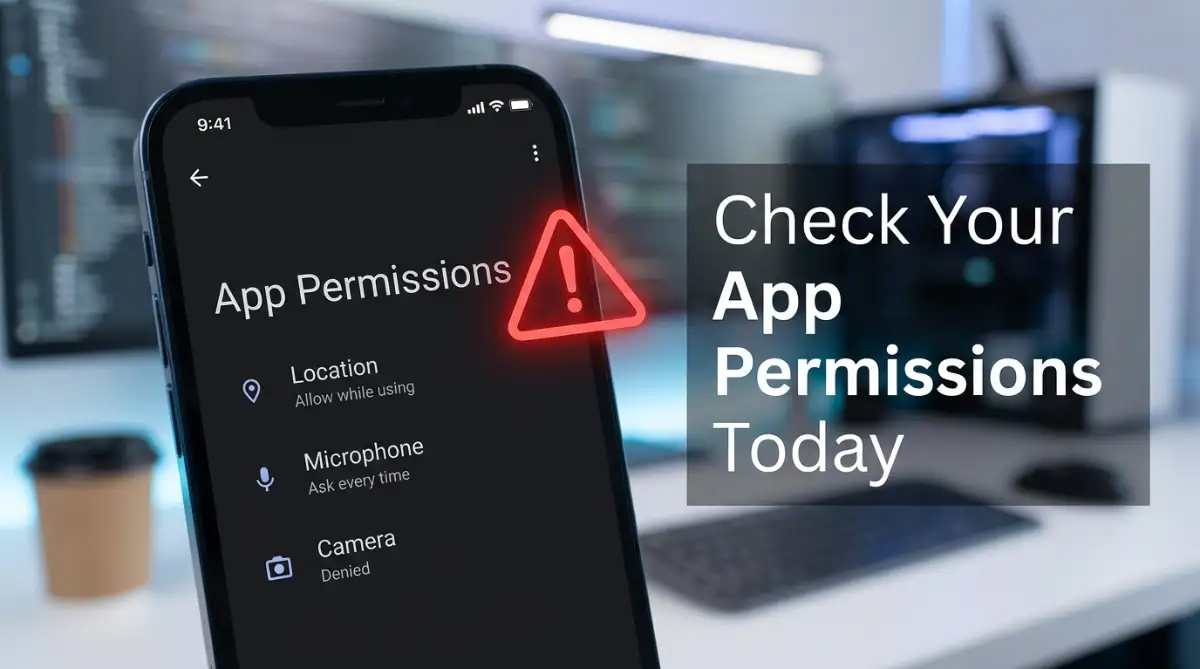
Take five minutes today to open the main settings menu on your device. Scroll down to the privacy or location section. You will see a long list of every single program installed on your phone.
Click on each one and actively change the permission from "Always Allow" to "Only While Using the App". If the program does not truly need to know your location, change the setting to "Deny" entirely. Your battery life will improve, and your privacy will be protected.
The Microphone and Camera Trap
The fear of a device secretly recording your conversations is incredibly common. While major tech companies deny actively listening to your real-time phone calls, the reality of microphone permissions is still highly concerning.
Many social platforms and mobile games will ask for microphone and camera access during the initial setup phase. They often claim they need this access for a tiny, optional feature, like adding a voice filter or taking a quick profile picture. Once you grant that permission, the software technically has the ability to turn on those sensors whenever it wants. Even if they are not recording full conversations, they often listen for specific audio triggers in your environment.
For example, some programs use your microphone to listen for high-frequency audio signals hidden in television commercials. This tells the tracking company exactly what television shows you are watching in your living room.
Pro Tip for Spotting Intruders:
Both major mobile operating systems recently introduced a brilliant visual warning system. When your microphone is active, a tiny green or orange dot will appear in the top corner of your screen.
If you are just reading an article and you suddenly see that little warning dot turn on, you have a massive problem. It means a background program is actively listening to your environment. You must instantly check your active permissions and delete the offending software.
The Hidden Danger of Social Logins
We all hate creating new passwords. It is incredibly annoying to type out your email address and invent a complicated code every time you try a new service.
To solve this annoyance, developers added big, shiny buttons that say "Log in with Facebook" or "Log in with Google". It feels like a magical shortcut that saves you three minutes of typing.
However, this convenience comes with a massive, hidden cost. When you link a new tool to your primary social media account, you are creating a permanent data bridge between the two companies.
The Ripple Effect:
The new program can now pull data from your social profile, including your friend list, your public photos, and your daily interests. Worse still, your social media platform now knows exactly what you are doing inside that new application.
They share this information back and forth continuously. This is exactly how those eerie, highly specific advertisements follow you across the internet. You are doing their tracking work for them voluntarily.
Your Immediate Action Plan:
Stop using these universal login buttons immediately. It might take an extra sixty seconds to create a brand new account using just an email address, but it breaks the tracking chain.
If you use an Apple device, always choose the "Sign in with Apple" option and select "Hide My Email". This brilliant feature creates a random, fake email address that forwards messages to your real inbox. The tracking company never actually learns your true identity.
By taking these deliberate steps, you stop acting as a passive victim in the digital tracking economy. You begin building strong walls around your personal life. You force these massive companies to respect your boundaries, one setting at a time.
Expert-Level Tactics to Outsmart Data Harvesters
Locking down your location and microphone is a fantastic first step. However, the companies building these tracking systems are incredibly smart. When you block one door, they actively try to sneak through the digital window.
To truly protect your personal life, you need to think like a digital minimalist. You must go beyond the basic settings and start addressing the hidden background activities that drain your data every single day.
Let us explore some highly effective, pro-level secrets that will instantly upgrade your smartphone security. These methods are surprisingly simple, but they will make you virtually invisible to third-party data brokers.
The Silent Clipboard Snooping Problem
Have you ever copied a sensitive password, a bank account number, or a private text message? You probably left that information sitting on your phone's invisible clipboard.
Many popular applications are programmed to automatically read your clipboard the exact second you open them. They grab whatever text you copied earlier, completely without your permission.
This means a harmless gaming app could secretly read the secure password you just copied from your password manager. To stop this, always clear your clipboard after copying sensitive information by simply copying a blank space or a random word.
Both major mobile software systems now have a setting that alerts you when a program pastes from your clipboard. Turn this alert feature on immediately. If a calculator app tries to read your copied text, delete that app right away.
Taking Control of Background App Refresh
Most people assume that when they swipe a program away on their screen, it completely shuts down. This is a massive illusion designed to make you feel in control.
In reality, almost all modern software uses a feature called "Background App Refresh." This allows them to constantly download new data, check your physical location, and communicate with external servers while your phone is locked in your pocket.
This constant background chatter is exactly how massive tech giants collect enough information to feed their complex machine-learning systems. Instead of letting corporations harvest your life for their algorithms, you can actually learn about safely training private AI models on your own local data to keep your digital environment entirely under your control.
Your Action Step: Go into your main settings and find the Background App Refresh menu. Turn this feature completely off for every single application, except for your primary email and messaging tools.
Q&A: Maintaining Your Digital Hygiene Long-Term
Question: How often should I check my privacy permissions?
Answer: Treat your digital life exactly like your physical home. You should do a deep "spring cleaning" at least once every three months. Open your permission dashboard and aggressively revoke access for any program you have not used recently.
Question: Are third-party security apps actually safe?
Answer: You must be incredibly careful here. Many free "antivirus" or "phone booster" apps are actually massive spyware programs disguised as helpful tools. According to the Electronic Frontier Foundation's extensive research on digital privacy, the best security comes from managing your built-in operating system settings properly, not downloading random third-party scanners.
By building these simple habits, you naturally develop a strong shield against silent surveillance. You stop reacting to privacy scares and start living with genuine peace of mind.

The Hidden Traps That Keep You Vulnerable
Changing your device settings is highly effective, but the human brain is often the weakest link in any security system. We are busy, stressed, and easily distracted by the demands of daily life.
Data harvesting companies know exactly how human psychology works. They design their software to wear down your patience until you eventually give up and hand over your private details.
If you want to keep your family and your finances safe, you must recognize these emotional and psychological traps. Let us break down the most dangerous mistakes regular users make without even realizing it.
The Exhaustion of "Agreeing to Everything"
Imagine coming home after a terrible, ten-hour shift at work. You just want to relax on the couch and order some dinner from a new local delivery service.
You download their app, and a massive wall of text pops up asking for your contact list, your camera, and your network data. Because you are tired and hungry, you blindly tap "Accept All" just to get your food delivered faster.
This moment of exhaustion is exactly what these companies count on. They bury the most invasive permissions right before the final step of a transaction.
The Real-World Damage:
When you hand over your entire contact list, you are not just compromising your own privacy. You are giving away the private phone numbers and email addresses of your friends, family, and coworkers. You accidentally turn yourself into a security threat to the people you love.
Ignoring the "Minor" Software Updates
Many people hate software updates. They change how the buttons look, move menus around, and sometimes make older devices run slightly slower.
Because of this annoyance, millions of users click "Remind Me Tomorrow" for months at a time. This is a catastrophic error in judgment.
Most software updates are not about adding fun new emojis or changing colors. They are directly designed to patch critical security holes that hackers are actively exploiting. The Federal Trade Commission strongly warns consumers that delaying system updates leaves your personal device completely exposed to malicious tracking malware.
Ignoring these security patches is exactly like going to sleep with your front door wide open because you were too lazy to fix the lock.
The Illusion of "Incognito" Browsing
There is a widespread, incredibly dangerous myth about how mobile web browsers operate. People genuinely believe that opening a "Private" or "Incognito" tab makes them completely invisible on the internet.
Let us be completely clear about reality. Private browsing only stops your device from saving your local search history. It does absolutely nothing to stop your internet service provider, the websites you visit, or background tracking apps from watching your behavior.
Failing to understand this technical reality leads to a dangerous sense of false security. It is very similar to blindly investing money while completely ignoring what everyone gets wrong about crypto market risks. If you do not understand how the system actually works, you will eventually lose heavily.
The Nightmare of Financial Identity Theft
The ultimate consequence of ignoring mobile privacy is not just seeing annoying targeted advertisements. The real danger is comprehensive identity theft.
When data brokers collect your location, your shopping habits, and your family connections, they build a complete shadow profile of your life. If that database gets hacked—which happens almost every week—criminals can use that detailed profile to steal your identity.
They can open credit cards in your name or drain your savings accounts. A stolen identity can completely ruin your credit score overnight. You might suddenly find yourself in a desperate situation, scrambling to figure out how to secure fast unsecured bank loans just to pay for emergency legal fees and basic groceries.
Protecting your mobile privacy is directly tied to protecting your financial future. You must take this threat seriously before a minor data leak turns into a massive personal crisis.
Your 24-Hour Digital Armor Action Plan
Taking back your digital privacy might feel a little overwhelming right now. You are suddenly aware of how many invisible eyes are watching your daily routines.
However, you should not feel scared or helpless. You now possess the exact knowledge needed to shut these tracking systems down permanently. You hold the power to decide who gets access to your life and who gets blocked at the digital door.
Start small so you do not get overwhelmed by the process. Tonight, while you are watching television, take exactly five minutes to open your phone settings.
Find the list of applications that have access to your exact GPS location. Change every single one of them to "Never" or "Only While Using." Tomorrow morning, take another five minutes to turn off Background App Refresh for your games and shopping tools.
These tiny, effortless actions compound over time. They build a powerful wall around your digital identity and your personal credit history. This directly protects your ability to achieve major life goals, such as purchasing your dream house with zero money down, without the sudden nightmare of identity theft ruining your plans.
You are the only person who can protect your mental peace in this hyper-connected society. Do not wait for a massive privacy scandal to force your hand. Lock down your smartphone today, delete the programs you no longer use, and finally reclaim the quiet, private life you truly deserve.
Disclaimer: The information provided in this article is for educational and informational purposes only. It does not constitute professional cybersecurity, legal, or financial advice. Technology and software settings change frequently. Always conduct your own research and consult with certified IT professionals before making significant changes to your digital security protocols or relying on third-party privacy tools.