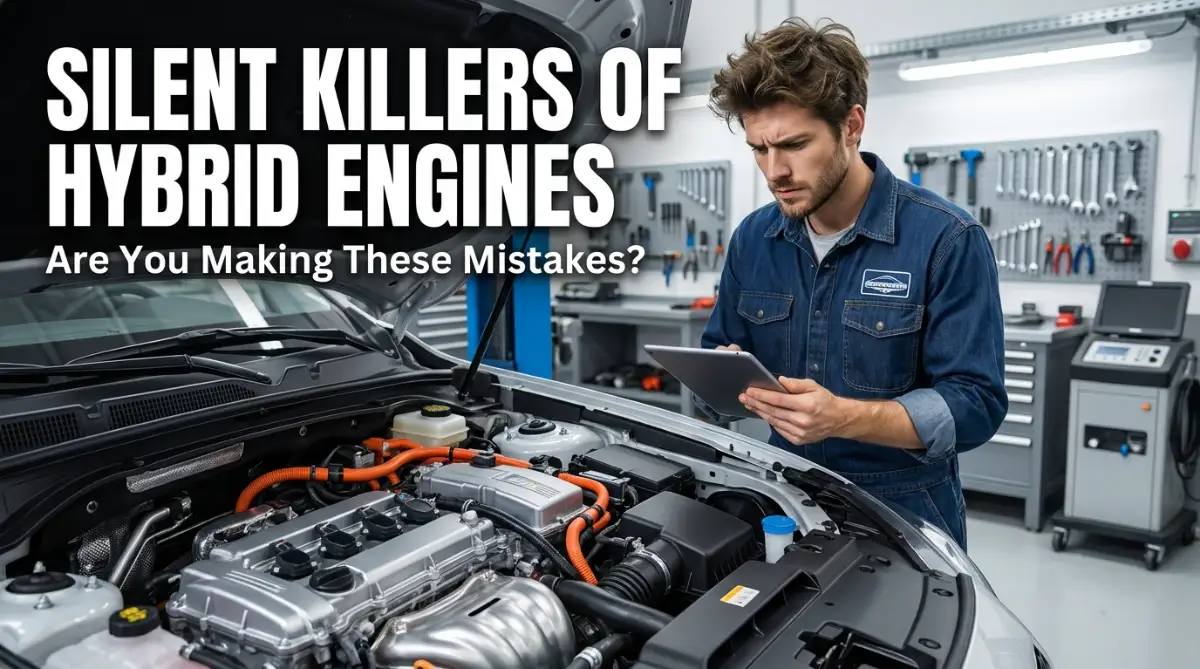
The Unexpected Reality of Owning a Hybrid
Have you ever stared at a repair estimate from a mechanic and felt your stomach instantly drop? You bought a hybrid vehicle to save money on gas and help the environment. You expected a smooth, economical ride with lower maintenance costs.
Instead, you are looking at a piece of paper telling you that your internal combustion engine needs thousands of dollars in repairs. You might be asking yourself, "How did this happen? I barely even use the gas engine!"
That right there is exactly where the nightmare begins for so many hybrid owners. We naturally assume that using the gas engine less means it will last longer. Unfortunately, physics and chemistry do not work that way.
Internal combustion engines are designed to run, get hot, and stay in motion. When they sit idle while the electric motor does all the heavy lifting, strange things start happening deep inside the cylinders.
People are dealing with unexplained engine knock, sudden drops in fuel economy, and terrifying warning lights on their dashboards. The worst part? They are unknowingly causing this damage every single day through seemingly innocent driving habits.
I want to talk directly to you today about these invisible threats. We are going to break down exactly what happens inside your hybrid system when you drive it the wrong way.
By the end of this guide, you will know exactly how to protect your investment. You will finally understand how your car thinks, and more importantly, how to stop destroying it by accident.

The Hidden Danger Inside Your Gas Tank
We need to talk about the most common trap hybrid owners fall into. Let’s call it the "Stale Fuel Syndrome." When you drive a standard gasoline car, you probably fill up the tank once a week or every two weeks. The fuel is constantly moving, burning, and being replaced.
But with a modern hybrid—especially a Plug-in Hybrid Electric Vehicle (PHEV)—you might go months without visiting a gas station. You might think this is a huge victory for your wallet. In reality, it is a ticking time bomb for your fuel system.
Gasoline is a highly refined chemical mixture, and it is not meant to sit still for long periods. Think of gasoline like a fresh loaf of bread. If you leave it sitting on the counter for too long, it goes stale, hardens, and eventually grows mold.
When gasoline sits in your hybrid’s tank for months, the lighter, more volatile chemicals evaporate. What gets left behind is a thick, sticky residue that mechanics often call "varnish."
How Varnish Attacks Your Engine
This sticky varnish slowly coats the inside of your fuel lines, your fuel pump, and most dangerously, your fuel injectors. Fuel injectors are supposed to spray a fine, perfect mist of gasoline into your engine’s cylinders.
When varnish clogs these tiny nozzles, they squirt uneven streams of fuel instead. This leads to a condition called "lean misfire," where the engine stutters and shakes violently because it is not getting the right fuel mixture.
Over time, this poor combustion leaves hard carbon deposits on your engine valves. Carbon buildup acts like sandpaper inside your engine block, slowly grinding away at the metal components.
The Simple Fix for Stale Fuel
To stop this from happening, you need to change how you manage your gas tank. If you know you mostly drive on electric power around town, never fill your gas tank all the way to the top.
Keep only a quarter or half a tank of gas at a time. This forces you to add fresh gasoline more frequently, which naturally mixes in new chemicals that dissolve any forming varnish.
Pro Tip: If you absolutely must leave gas in the tank for more than two months, pour in a high-quality fuel stabilizer. This chemical additive stops the gasoline from breaking down and protects your injectors from clogging.
The "Cold Shock" Phenomenon Tearing Cylinders Apart
Now, let's look at a driving scenario that happens millions of times a day. You are driving down the highway entrance ramp in your hybrid. You are currently running entirely on the electric battery, cruising silently at 40 miles per hour.
Suddenly, you need to merge into fast-moving traffic. You push your foot hard on the accelerator pedal. Instantly, the car realizes the electric motor does not have enough power, so it violently wakes up the gas engine to help.
In a split second, your gasoline engine goes from being completely turned off and freezing cold, to screaming at 4,000 RPMs under maximum load.
Mechanics call this "thermal shock," and it is absolutely brutal on metal engine parts. Imagine waking up from a deep sleep in a freezing room, and someone immediately forces you to sprint at full speed. Your muscles would likely tear.
The Science Behind Metal Expansion
Your hybrid engine block is made of metal alloys that need heat to expand properly. When an engine is warm, the pistons, rings, and cylinder walls expand to fit perfectly together. The engine oil is also warm and flows like water, keeping everything lubricated.
When the engine is forced to rev high while ice-cold, the metal parts have not expanded yet. They scrape against each other violently. The cold oil is thick like syrup and cannot protect the moving parts fast enough.
Every time you floor the pedal and force a cold engine to wake up at high RPMs, you are shaving microscopic layers of metal off your engine walls.
Training Yourself to Drive Synergistically
You can easily prevent this cold shock damage by being mindful of your engine's temperature. When you know you are about to get on the highway or climb a steep hill, gently press the gas pedal a minute in advance.
Give the car a slight acceleration prompt to intentionally wake up the gasoline engine. Let it idle and warm up under a light load for 30 to 60 seconds before you demand maximum power from it.
This short window gives the oil pump enough time to push lubrication to the top of the engine. It allows the metal components to heat up gently, expanding to their proper shape before handling the heavy stress of highway merging.
The Short-Trip Moisture Trap
Let's discuss another silent killer that slowly rusts your hybrid engine from the inside out. This happens mostly to drivers who use their hybrid for very short commutes, like dropping the kids at school or driving five minutes to the grocery store.
When a gasoline engine runs, the combustion process naturally creates water vapor as a byproduct. In a normal car, the engine gets very hot, and this heat boils away the water vapor safely out of the exhaust pipe.
In a hybrid car during a short trip, the gas engine might only turn on for two or three minutes before you park and turn the car off. The engine never gets hot enough to boil away that internal moisture.
Why Milky Oil Spells Disaster
Because the engine stays relatively cool, the water vapor condensates back into liquid water inside the engine block. This water then drips down into the engine oil pan.
When water mixes with engine oil, it creates a thick, milky sludge. You can actually see this if you pull out your oil dipstick and notice a yellowish, mayonnaise-like substance near the top.
Oil mixed with water loses its ability to lubricate.
Instead of protecting your engine bearings, this contaminated oil allows metal-on-metal friction. Even worse, the sitting water slowly creates internal rust on your expensive engine components.
The Highway Burn-Off Method
Driving Habit ~ Effect on Hybrid Engine ~ Long-Term Result
5-Minute City Trips ~ Engine stays cold, water builds up ~ Sludge formation, internal rust
30-Minute Highway Drives ~ Engine reaches peak operating heat ~ Burns off moisture, clean oil
Aggressive Cold Starts ~ Thick oil fails to lubricate fast ~ Metal shaving, cylinder scoring
The easiest way to defeat the moisture trap is to take your hybrid for a "health drive" at least once every two weeks. Get on the highway and drive continuously for 30 minutes.
Put the car in a mode that forces the gas engine to run the entire time. This sustained high heat will act like an oven, safely baking out all the built-up water vapor and keeping your oil perfectly clean.
The Second Cooling System You Are Ignoring
Most car owners know they need to check their engine coolant. You pop the hood, look for the plastic reservoir with pink or green liquid, and make sure it is full.
However, hybrid cars have a completely separate, independent cooling system that most owners never even look at. This second system is dedicated entirely to the hybrid inverter and the electric motor components.
The inverter is the brain of your hybrid system. It takes direct current (DC) from the battery and converts it into alternating current (AC) to drive the wheels. This heavy electrical conversion generates massive amounts of heat.
Why Inverter Failure is So Expensive
If the inverter cooling system gets low on fluid, or if the electric water pump starts to fail, the inverter will quietly overheat. Your dashboard might not even show an engine temperature warning because the gasoline engine is perfectly fine.
Eventually, the extreme heat melts the internal circuits of the inverter. When an inverter blows out, the car will immediately shut down and refuse to move. Replacing a fried hybrid inverter can easily cost you upwards of three to four thousand dollars.
Make it a habit to locate the second coolant reservoir under your hood. Your owner's manual will show you exactly where it is. Check this fluid level every single month, and never assume the regular engine coolant covers the electrical side of your car.
By actively monitoring both cooling systems, you ensure the perfect harmony between your gas engine and your electric powertrain remains perfectly balanced.
Mastering the Machine: Advanced Strategies for Hybrid Longevity
We have already covered the basic traps that silently harm your hybrid vehicle. Now, it is time to look at the professional secrets that master mechanics use to keep these engines running perfectly for hundreds of thousands of miles.
Most drivers treat their hybrid exactly like a traditional gas-powered car. That is a massive oversight. Your hybrid is a highly sophisticated piece of technology that requires a completely different approach to fluid maintenance and temperature management.
Let me share a few advanced techniques that will absolutely change the way you care for your car. These are the hidden details that separate a healthy engine from one that constantly visits the repair shop.
The Secret of Ultra-Thin Oil Requirements
If you grew up helping your dad change the oil in his old truck, you probably remember using thick, heavy motor oil. You might even think that thicker oil provides better protection for engine parts.
In the world of modern hybrid engines, using thick oil is an absolute death sentence. Most new hybrid systems require an incredibly thin oil, often rated at 0W-16 or even 0W-8.
This oil looks and feels almost like water. It is engineered this way for a very specific reason. Because your hybrid engine turns on and off constantly while you drive, the oil needs to travel from the bottom of the engine to the top in a fraction of a second.
If you let a cheap lube shop put standard 5W-30 oil into your hybrid, that thicker liquid cannot flow fast enough during those rapid engine startups.
Every single time the engine wakes up, metal grinds against metal for a few seconds.
Over a few months, this invisible friction shaves away the delicate lining of your engine cylinders. Always verify exactly what oil weight the manufacturer demands, and never let anyone convince you to use a thicker alternative.
Understanding the EGR Valve Carbon Trap
Here is a technical secret that dealership service centers rarely explain to hybrid owners. Your engine has a component called the Exhaust Gas Recirculation (EGR) valve.
Its job is to take a small amount of hot exhaust gas and push it back into the engine cylinders to lower emissions. It is a brilliant system, but it has a major weakness in hybrid vehicles.
Because hybrid engines often run cooler than normal cars, they produce more soot and unburned carbon particles. Over time, this thick, black soot completely clogs the EGR valve and its tiny metal cooling pipes.
When this system clogs, the engine will start to shake violently when you accelerate lightly. Many mechanics will wrongly tell you that you need new spark plugs or expensive ignition coils.
In reality, you just need to have the EGR circuit professionally cleaned. According to research on exhaust gas recirculation efficiency by the Society of Automotive Engineers, keeping this pathway clear is non-negotiable for preventing severe engine misfires.
The Computer Brain Needs Real-World Data
Your car is constantly learning how you drive. The central computer managing your hybrid system monitors your braking habits, your acceleration patterns, and your preferred climate control settings.
It uses all this data to decide exactly when to run the gas engine and when to rely on the electric battery. This smart technology is surprisingly similar to the logic used when building a private AI brain: how to safely train models on your data, as both rely heavily on continuous, real-time feedback loops to function properly.
If you constantly reset your car's computer by disconnecting the 12-volt battery, the system forgets everything it learned. It will temporarily run the gas engine much more frequently than necessary just to relearn its baseline settings.

The Most Dangerous Habits Robbing Your Wallet
Knowing what to do is only half the battle. We also need to talk about the everyday habits that actively destroy your engine's internal harmony.
People often buy these cars and immediately start playing a game. They try to see how long they can force the car to stay in pure electric mode. They press the "EV Mode" button constantly and accelerate painfully slow to prevent the gas engine from waking up. This hyper-milling obsession is actually terrible for your vehicle.
Forcing the battery to do all the heavy lifting drains it aggressively and generates extreme heat.
When the electric system eventually overheats, the car panics. It immediately forces the cold gas engine to turn on and take over the full load of the vehicle. This puts incredible stress on both powertrains at the exact same time.
The Hidden Filter That Causes Complete Failure
Did you know there is an air filter inside your passenger cabin that can completely destroy your engine if neglected? It is called the hybrid battery cooling fan filter.
Usually located right next to the rear passenger seats, this little vent pulls air from inside the car to keep the massive hybrid battery pack cool. If you have pets, or if your car gets dusty, this tiny filter gets blocked very quickly.
When the vent is blocked, the hybrid battery gets dangerously hot. To protect the battery from catching fire, the car's computer will drastically reduce the battery's power output.
What happens next? The computer forces your small gasoline engine to run constantly, at very high RPMs, just to keep the heavy car moving. Your gas mileage drops like a rock, and the engine is forced to work twice as hard.
A clogged ten-dollar plastic vent filter can lead to thousands of dollars in premature engine wear. Make it a habit to vacuum this vent every time you wash your car.
The Financial Shock of Ignorance
Ignoring these unique maintenance needs does not just result in a broken down car. It leads to absolute financial panic.
When a hybrid inverter or a neglected internal combustion engine fails, you are not looking at a small repair bill. You are looking at an invoice that rivals a down payment on a house.
I have seen families face sudden repair bills so massive that they are forced to figure out how to secure fast unsecured bank loans for immediate cash just to get their only vehicle back on the road. You should never let a lack of basic maintenance push you into sudden debt.
You do not want your daily transportation costs to swing wildly up and down. That kind of stress belongs in the high-risk financial sector, much like unmasking crypto volatility: what everyone gets wrong about market risks, not in your driveway.
Myth vs Reality: Dealerships vs Independent Shops
Myth: You must always take your hybrid to the dealership for every single oil change and inspection.
Reality: You do not have to overpay at the dealership, but you absolutely cannot take it to a random corner garage either.
Standard mechanics often lack the high-voltage training required to safely diagnose hybrid drivetrains. They might use the wrong fluids, ignore the secondary cooling systems, or accidentally clear the computer's memory.
You need to find a certified independent hybrid specialist. The National Institute for Automotive Service Excellence (ASE) offers specific certifications for hybrid and electric vehicles. Always ask your mechanic if they hold an L3 Light Duty Hybrid/Electric certification before letting them touch your engine bay.
Your Personal Blueprint for a Bulletproof Ride
Owning a hybrid vehicle should be a deeply rewarding experience. You are saving money at the gas pump, enjoying a remarkably quiet ride, and reducing your daily emissions.
You just need to shift your mindset slightly. Stop treating the gasoline engine and the electric motor as two separate things. They are partners in a complex mechanical marriage.
When you protect the electric battery by keeping its fan clean, you indirectly protect the gas engine from being overworked. When you run the gas engine hot on the highway occasionally, you prevent moisture from ruining your oil. Everything is connected.
Action Plan for Tomorrow Morning
Let us turn all this technical information into a simple checklist you can use right away. Here is exactly what you should do the next time you walk out to your car.
First, locate that battery cooling fan vent in the back seat and make sure no blankets, jackets, or pet hair are blocking it. Second, check your dashboard to see how much gas is in the tank. If that gas has been sitting there for months, make a plan to go for a long highway drive this weekend to burn it off.
Third, open your owner's manual and find the exact oil viscosity your manufacturer demands. Write it down on a piece of tape and stick it under your hood so a mechanic never makes a mistake.
Protecting your vehicle's health means you keep more of your hard-earned money in your bank account for your ultimate life goals. Whether you are saving for retirement or learning how to purchase your dream house with zero money down, keeping your car out of the expensive repair shop is a massive financial victory.
Take pride in understanding how your machine works. You now have the knowledge to avoid the silent killers that destroy so many engines. Drive safe, maintain your systems intelligently, and enjoy the smooth, efficient ride you deserve.
Disclaimer: The information provided in this article is for educational and informational purposes only. Automotive maintenance involves complex mechanical systems and potential safety hazards, including high-voltage electrical components. Always consult with a certified, professional mechanic or refer to your specific vehicle's manufacturer guidelines before attempting any maintenance, diagnostics, or repairs. We are not responsible for any damage, injury, or financial loss resulting from the application of the information provided in this blog post.