
The Day the Financial Doors Slammed Shut
I still remember the exact moment my heart sank into my stomach at the car dealership. I had finally saved up a small down payment for a reliable used car so I could easily get to work. The salesman confidently took my application, smiled, and told me he would be right back with the keys. Twenty minutes later, he returned with a completely different look on his face.
My application was instantly denied by every single lender in their system. The severe loan default from my past had come back to haunt me like a dark financial cloud. I felt my face turn bright red as I quietly gathered my paperwork and walked out of the showroom.
I felt totally defeated, embarrassed, and completely locked out of the normal financial world. Every time I applied for a simple apartment lease, a basic cell phone plan, or an emergency credit card, I was treated like a massive risk. I was tired of feeling like a second-class citizen just because I made a few terrible financial mistakes when times were incredibly tough.
The weight of a broken financial reputation affects every single corner of your daily life. It is not just about getting rejected for flashy loans or big luxury items. It is the constant, nagging anxiety of knowing that if a real emergency happens, you have absolutely zero safety net to rely on.
People with damaged credit pay significantly higher security deposits just to turn on their basic home electricity. They are forced to accept predatory interest rates on desperate personal loans that only dig the debt hole much deeper. The stress slowly eats away at your mental peace, making you dread opening the mailbox every single morning.
You start to believe that this dark financial label is a permanent tattoo that you can never wash off. You silently watch your friends buy homes and upgrade their lives while you remain stuck in the exact same spot.

Designing Your Organic Financial Comeback Strategy
The amazing news is that a broken financial profile is never a permanent life sentence. You do not need to pay thousands of dollars to shady repair companies who promise overnight miracles. You simply need to understand exactly how the scoring algorithm works and feed it the exact positive data it craves. Let us walk through a highly practical, totally organic roadmap to bring your financial reputation back to life.
Facing the Monster: Pulling Your Raw Data
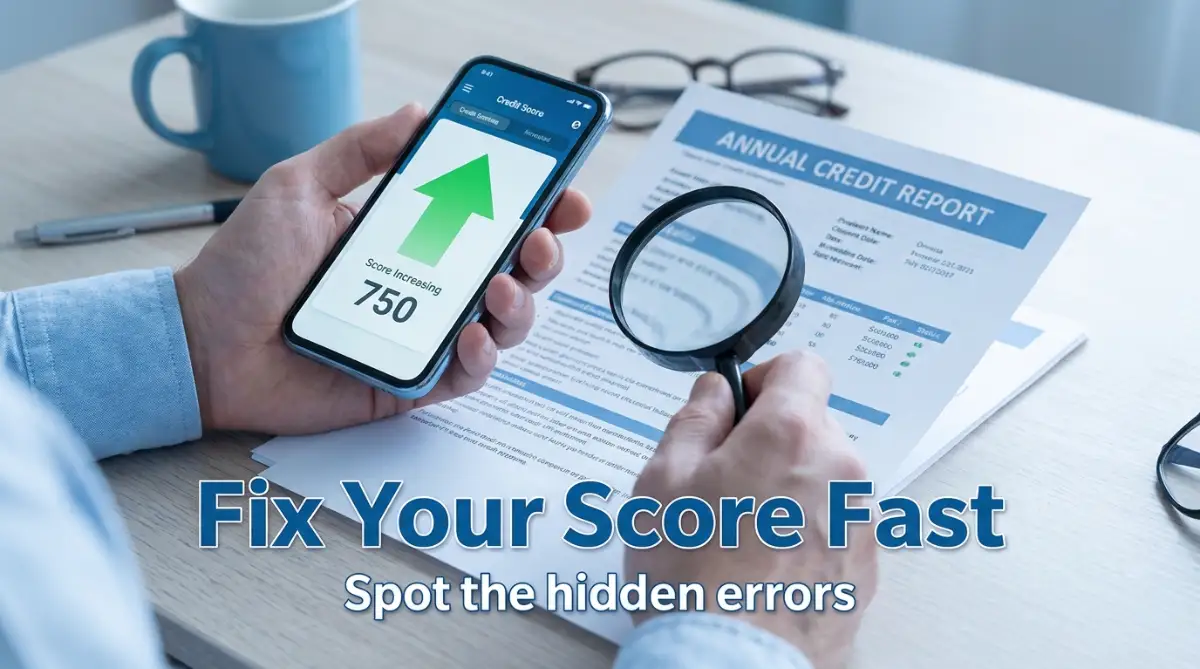
You cannot fix a problem if you refuse to look at the actual damage. Your very first move is to pull a comprehensive copy of your data from all three major reporting bureaus. These are Equifax, Experian, and TransUnion.
Many people completely avoid this step because seeing the negative marks on paper is highly emotional and scary. However, you must treat this report like a medical X-ray of your current financial health.
When you finally look at the report, grab a bright red marker and highlight every single negative account you see. You are looking for late payments, the specific dates of your defaults, and any collection accounts attached to your name. Understanding your exact starting point is the most powerful thing you can do today.
The Debris Cleanup Phase
Once you have the reports in front of you, you must actively search for hidden administrative errors. The reporting bureaus are massive data companies, and they make shocking mistakes every single day.
An old default might be listed twice under two different collection agencies, which unfairly damages your score twice. A payment you actually made on time might be incorrectly marked as thirty days late.
If you spot any of these unfair errors, you have the legal right to challenge them immediately. You can send a simple, polite letter to the bureau pointing out the exact mistake and asking for it to be removed. When false negative marks are deleted, your score can jump up organically within just a few weeks.
The Secured Foundation Strategy
When regular banks refuse to trust you with a standard credit card, you have to build your own bridge of trust. This is where a secured card becomes your absolute best friend.
A secured card requires you to put down a small cash deposit, usually around two hundred dollars. This cash deposit acts as your exact spending limit, meaning the bank takes absolutely zero risk. If you miss a payment, they simply keep your deposit money.
Because the bank is completely protected, almost anyone can get approved for one, even with a recent severe default. You use this card to buy your normal weekly groceries or pay a single utility bill. Then, you pay the balance off entirely before the month ends.
This specific video breaks down exactly how secured lines of trust manipulate the scoring algorithm in your favor. Take two minutes to watch this clear visual explanation before applying for a new card.
The Golden Rule of Utilization Ratios
Getting a new card is only the very first piece of the puzzle. How you actually use that available limit is what truly drives your organic growth.
The scoring algorithm looks very closely at a metric called your "utilization ratio." This is simply the amount of money you owe compared to the total limit you are allowed to spend. If you have a limit of two hundred dollars and you spend one hundred and ninety dollars, your ratio is maxed out.
The algorithm views maxed-out accounts as a sign of extreme financial panic. To force your score to grow, you must keep your reported balance incredibly low at all times. You should aim to never use more than ten to thirty percent of your total available limit.
If your limit is two hundred dollars, you should never let the balance cross sixty dollars. By keeping the balance tiny, you constantly prove to the algorithm that you are highly responsible and not desperate for borrowed cash.
Mastering the Statement Closing Date
Here is a brilliant secret that most average consumers completely misunderstand. Your payment due date and your statement closing date are two entirely different things.
Your due date is when you must pay the bank to avoid costly late fees. Your statement closing date is the specific day the bank takes a "snapshot" of your balance and reports it to the bureaus.
If you wait until your due date to pay your bill, a high balance might have already been reported to the system. To beat the algorithm, you should find out your exact statement closing date. Pay your balance down to almost zero a few days before that snapshot happens.
This ensures that the bureaus only ever see a tiny, highly responsible balance on your profile. This simple timing trick creates massive organic growth over a few short months.
Piggybacking on Established Trust
If you have a family member or a spouse with a flawless financial history, you can safely borrow their good reputation. This strategy is commonly known as becoming an authorized user on their account.
Your family member simply calls their bank and asks to add your name to their oldest, perfectly paid account. They do not even need to give you the physical plastic card to use.
Just by having your name legally attached to their account, all of their positive payment history instantly copies over to your blank report. It is like legally copying a straight-A student's homework to boost your own failing grade.
Pro Tip from My Own Journey: I completely ruined my early progress by closing my oldest defaulted account out of pure anger. I quickly learned that closing an old account actually wipes out your average credit age and damages your score even more. I should have just paid it off and left the positive aging history alone on my profile.
Setting Boundaries for Piggybacking
While being an authorized user is highly effective, it comes with a massive shared responsibility. If the main account holder suddenly maxes out their card or misses a payment, that negative data will also copy onto your report.
You must only use this strategy with someone you deeply trust to maintain their good habits. Have a very honest, open conversation with them before you attach your financial names together.
Make sure they understand you do not want to spend their money. You just want to silently benefit from their excellent historical data to rebuild your own foundation.
Expanding Your Mix of Data Types
The scoring models love to see that you can handle different types of financial responsibilities at the same time. This is known as your account mix.
If you only have one secured card, your mix is very thin. You only have revolving debt. To make your profile look incredibly strong, you eventually want to add an installment loan into the picture.
An installment loan is a fixed amount of money you pay back in equal chunks over time, like a car loan or a personal loan. Because you likely cannot get a normal loan right now, you should look into a specific product called a "credit builder loan."
How the Builder Loan Hack Works
A builder loan is completely backward from a traditional bank loan. Instead of handing you a pile of cash upfront, the bank takes the money you request and locks it in a secure savings account.
You then make small, affordable monthly payments to the bank. Every time you make a payment, the bank happily reports that positive action to all three bureaus.
Once you make the very last payment, the bank unlocks the savings account and hands you all the cash back. You have essentially forced yourself to save money while simultaneously building a brilliant wall of positive payment history. It is one of the safest, most organic ways to prove your reliability without risking any real debt.
The Power of Micro-Payments
When you have a very low limit on your secured card, it is incredibly easy to accidentally use too much of it. A single tank of gas might max out a two-hundred-dollar limit.
To completely prevent this problem, you should start practicing the habit of micro-payments. Instead of waiting for a single monthly bill, pay your balance off every single Friday morning.
If you spend forty dollars on Tuesday, immediately open your banking app and transfer forty dollars on Friday. By constantly clearing the balance down to zero every single week, your reported utilization will always be absolutely perfect.
This habit also keeps you deeply connected to your daily spending patterns. You stop viewing the plastic card as free money and start treating it exactly like cash from your wallet.
Dealing with Lingering Collection Accounts
Many people wonder if they should completely ignore old collection accounts and just wait for them to fall off their report. While old debts do eventually age out, ignoring them while trying to rebuild is a very dangerous game.
An active collection account is like an anchor dragging behind a moving boat. No matter how many positive things you do, that negative anchor will constantly hold your score down.
If you have a small, valid collection account, it is often best to try and settle it. You can call the collection agency and politely offer to pay a portion of the balance if they agree to update the status to "paid in full."
The Strategy of "Pay for Delete"
In some rare cases, you might be able to negotiate a "pay for delete" agreement with a collection agency. This means you agree to pay the debt, and in return, they agree to completely erase the account from your report entirely.
Collection agencies buy your old debt for pennies on the dollar, so they are often highly motivated to make a deal. You must always get this specific agreement in writing before you hand over a single dollar.
If they simply promise it over the phone, they will likely take your money and leave the ugly mark on your report anyway. Protect yourself by demanding a formal letter outlining the exact terms of the deletion.
Outpacing the Algorithmic Memory
The most important thing to remember about your score is that the algorithm has a fading memory. A severe default that happened last month will absolutely crush your numbers today.
However, a default that happened three years ago holds significantly less weight in the mathematical calculation. The older a negative mark gets, the less the system actually cares about it.
Your goal is to flood your current report with so much fresh, positive data that it entirely drowns out the old mistakes. Every single on-time payment you make today pushes that old default further and further into the irrelevant past.
Embracing the Organic Waiting Game
Building trust organically is never an overnight process. It takes time for the banks to see your new habits and trust that you have truly changed your ways.
You might do everything perfectly for two solid months and only see a tiny five-point increase. Do not let this slow progress discourage you from staying on the right path.
True financial recovery is a slow marathon, not a quick sprint. If you automate your new habits and stay disciplined, the compound effect of your positive choices will eventually create a massive upward explosion in your numbers.
Setting Up Bulletproof Payment Systems
The absolute worst thing you can do during a rebuild is miss a new payment by accident. A fresh late payment will completely destroy all the hard work you have done with your secured cards and builder loans.
To prevent human error, you must automate everything. Log into your banking portal and set up automatic payments for at least the minimum amount due on every single account.
Even if you prefer to make manual payments every Friday, having the automatic system running in the background is your ultimate safety net. If you get sick, lose your phone, or simply forget, the computer will ensure your perfect record remains completely spotless.
Next-Level Strategies to Maintain a Pristine Financial Profile
Once you have established a solid foundation with secured cards and error corrections, you need a long-term maintenance plan. The scoring algorithm monitors consistency above everything else. A few months of good behavior will get you back in the game, but years of predictable habits will unlock the best interest rates available. Let us explore some highly advanced, yet completely organic techniques to push your score into the excellent range and keep it there forever.
The Secret Power of Goodwill Adjustment Letters
One of the most effective tools for organic recovery is completely free and only requires a postage stamp. If you have an account that suffered a late payment during your default period but is now perfectly current, you can ask for a favor. You simply write a "Goodwill Adjustment Letter" directly to the creditor.
In this letter, you take full responsibility for the past mistake without making aggressive excuses. You politely explain that you went through a temporary hardship and point out your recent perfect payment history. You then kindly ask them to remove the single late mark from your record as an act of goodwill.
Banks are run by human beings who often understand sudden financial struggles. While they are not legally required to say yes, many branch managers will gladly update your file if you ask nicely. You can read more about effective communication with lenders through the official guidelines provided by the Consumer Financial Protection Bureau.
Practicing the "Gardening" Technique
In the financial community, there is a highly successful concept known as "gardening your accounts." When you plant a real garden, you do not constantly dig up the seeds to see if they are growing. You water them, leave them alone, and let time do the heavy lifting.
The exact same logic applies to your financial profile. Once you have two or three solid accounts reporting positive data every month, you must completely stop applying for anything new. Every time you apply for a new card or loan, the system places a "hard inquiry" on your file, which temporarily drops your score.
By freezing your applications and just letting your current accounts age naturally, you build a massive wall of trust. If you are ever planning on preparing for a low deposit mortgage application in the future, a solid year of gardening is highly recommended.
Leveraging Your Everyday Bills for Growth
For decades, paying your rent and utility bills on time did absolutely nothing to help your financial reputation. The system only cared about credit cards and bank loans. Thankfully, the rules have recently shifted to favor everyday working people.
You can now sign up for specialized rent reporting services that verify your monthly housing payments. These services take your perfect on-time rent history and push that data directly to the major reporting bureaus. Suddenly, the biggest bill you pay every single month becomes a powerful tool for organic growth.
Before signing up for any third-party service, always check the official housing resources from HUD to understand your rights as a tenant. Adding a two-year history of perfect rent payments can sometimes boost your profile by twenty points or more.
Structuring Your Strategic Due Dates
Managing multiple due dates is where many people accidentally slip up and ruin their progress. If you have a secured card due on the 5th, a utility bill due on the 14th, and a builder loan due on the 28th, your brain is constantly stressed. One forgotten alarm on your phone can lead to a devastating thirty-day late mark.
You can actually call your banks and request to move all of your due dates to the exact same day of the month. Ask them to align your billing cycles so everything is due exactly two days after your main paycheck clears.
When you get paid, you sit down with a cup of coffee and pay every single bill in one swift motion. This simple administrative trick completely eliminates the risk of human error and builds a remarkably strong personal financial foundation.
The Art of Staggered Utilization Strategy
We already discussed keeping your overall usage below thirty percent, but advanced users take this a step further. If you have three different credit cards, do not put small balances on all three of them at the same time. The algorithm prefers to see that you do not need to rely on every piece of plastic in your wallet.
Instead, use one card for your small weekly groceries and leave the other two cards completely at zero. The system will see that you have thousands of dollars in available limits, but you are actively choosing to only use a tiny fraction on one single account.
This sends a massive signal of financial discipline to the automated scoring models. When you want to unlock the absolute best creative property financing options, proving that you do not rely on your existing limits is incredibly powerful.
The Heartbreaking Traps That Can Reset Your Progress
Rebuilding your reputation requires extreme patience, and patience is very hard to maintain when you are feeling locked out of the system. I have seen so many hardworking people ruin two years of organic progress by falling into highly emotional traps. You must actively guard yourself against these common pitfalls, or you will find yourself right back at square one.
Falling for the "Overnight Repair" Scams
When you are desperately trying to rent a better apartment for your family, a social media ad promising a "perfect score in 30 days" looks like a miracle. These shady companies charge you hundreds of dollars upfront, claiming they have special hacker connections inside the bureaus.
The harsh reality is that nobody can legally remove accurate, negative information from your history before its time expires. These scam artists simply flood the bureaus with fake dispute letters using your name.
The bureaus will temporarily hide the negative marks while they investigate, making your numbers jump up for a few weeks. The scammer takes your money and runs. Thirty days later, the bureaus realize the disputes are completely fake, the negative marks return, and you are left completely empty-handed. Always verify the legitimacy of any service through the Federal Trade Commission guidelines on avoiding scams before handing over your debit card.
Closing Old Accounts Out of Anger
This is perhaps the most common and devastating mistake people make once they finally pay off a defaulted account. You finally send that last payment to a terrible debt collector, and out of pure spite, you demand they completely close the account forever.
You think you are teaching them a lesson, but you are actually shooting your own profile in the foot. A huge portion of your algorithmic score is based on the "average age" of all your accounts combined.
If you close an account that is five years old, you instantly wipe out five years of historical data from your profile. Your average age plummets, and your score drops significantly the very next month. Unless an old account is charging you massive monthly fees, it is mathematically smarter to leave it open and completely empty.
The Co-Signing Domino Effect
When you start to see success and your numbers finally climb into the green zone, family members will start asking you for favors. A cousin might ask you to co-sign on a car loan because they know your reputation is finally looking healthy again.
Co-signing is the single fastest way to completely destroy your organic rebuild. When you sign that paper, you are taking 100% legal responsibility for their future actions.
If your cousin loses his job and misses two car payments, those late marks strike your profile immediately. You have absolutely no control over their daily spending habits, yet your hard-earned reputation takes the entire hit. If you want to dive deeper into modern financial literacy resources, you will quickly learn that protecting your own signature is your top priority.
Ignoring the Tiny Medical Bills
People often focus all of their energy on clearing massive credit card defaults or old car repossessions. In the process, they completely ignore a small forty-dollar medical bill from an old emergency room visit. They assume such a tiny amount cannot possibly hurt them.
The scoring algorithm does not care about the size of the debt; it only cares about the negative behavior. A forty-dollar unpaid medical collection hurts your numbers just as badly as a four-thousand-dollar default.
You must clear the small debris out of your path just as aggressively as you tackle the large boulders. Ignoring small annoyances will keep a heavy ceiling over your potential growth.
Applying for Premium Rewards Cards Too Soon
After six months of using a basic secured card perfectly, people often get overconfident. They see their numbers creeping up and decide to apply for a shiny gold rewards card that offers free flights and hotel stays.
Premium cards have incredibly strict underwriting rules that automatically reject anyone with a severe default in the last few years, regardless of recent good behavior. When you apply and get denied, you still take the penalty of a hard inquiry on your report.
You must remain humble and accept that you are still in the rebuilding phase. Stick to basic, no-frills cards until your default ages out significantly. True patience is the only way to eventually achieve secure property ownership goals.
Your Roadmap for the Months Ahead
Bringing your financial reputation back from the dead is not a quick weekend project. It is a slow, methodical journey of proving to the mathematical algorithms that you are completely reliable. By pulling your raw data, fighting unfair errors, and using secured trust lines properly, you actively take the steering wheel back.
You now understand how to manipulate the statement closing dates to keep your usage ratios perfectly low. You know how to leverage rent reporting and authorized user status to artificially speed up your organic growth. Most importantly, you are fully aware of the dangerous emotional traps and scams that prey on impatient people.
The best strategy moving forward is to automate your success. Put your small, calculated payments on autopilot and simply let time pass. The algorithms have a naturally fading memory, and every single day that goes by makes your past mistakes matter a little bit less. Your focus should be on building a boring, predictable routine that slowly drowns out the noise of yesterday.
I remember waking up absolutely terrified of my financial shadow, constantly worried about the next embarrassing rejection. I promised myself I would stop looking for magic shortcuts and just do the boring, basic work required to heal my profile organically. Today, my past mistakes are nothing but distant memories, and I know exactly how amazing it feels to walk into a bank with total confidence.
Commonly Asked Questions About Your Financial Comeback
How long does a severe loan default legally stay on my record?
A standard default or collection account will generally remain visible on your report for up to seven years from the date of the original missed payment. However, the heavy impact on your mathematical score decreases significantly after the first two years of good behavior.
Will paying off a collection account immediately boost my numbers?
Simply paying an old collection account does not automatically remove the negative mark from your history. The status will change to "Paid," which looks much better to future lenders, but the initial default mark still remains unless you successfully negotiate a "pay for delete" agreement.
Can my future landlord see my defaulted personal bank loans?
Yes, most professional property management companies run a comprehensive background check that includes your full payment history. If they see a recent severe default, you might need to offer a larger security deposit or provide a strong co-signer to prove you are a safe tenant.
Does checking my own numbers on free apps hurt my daily progress?
No, checking your own data using a mobile app is considered a "soft inquiry" and does not penalize you at all. You can safely check your own progress every single day without causing any algorithmic damage to your profile.
Should I settle a massive debt for less or pay the exact full amount?
If a collection agency offers to settle your debt for half the price, it will save you cash today, but the account will be marked as "Settled for less than full balance." Paying it entirely in full looks slightly better to highly strict lenders, but settling is still significantly better than leaving it completely unpaid.
Disclaimer: The information provided in this article is strictly for educational and informational purposes only and does not constitute professional financial or legal advice. Every individual's financial situation is entirely unique, and credit reporting laws vary heavily by location. You should always consult with a certified, independent financial advisor or credit counselor before making any major decisions regarding debt settlement or loan applications. We are not responsible for any financial losses or damages resulting from the use of this information.
![Why Your Loan Applications Keep Getting Rejected [The Ultimate Blueprint]](https://infozonee.com/storage/uploads/blogs/1786542657_why-your-loan-applications-keep-getting-rejected-the-ultimate-blueprint.webp)