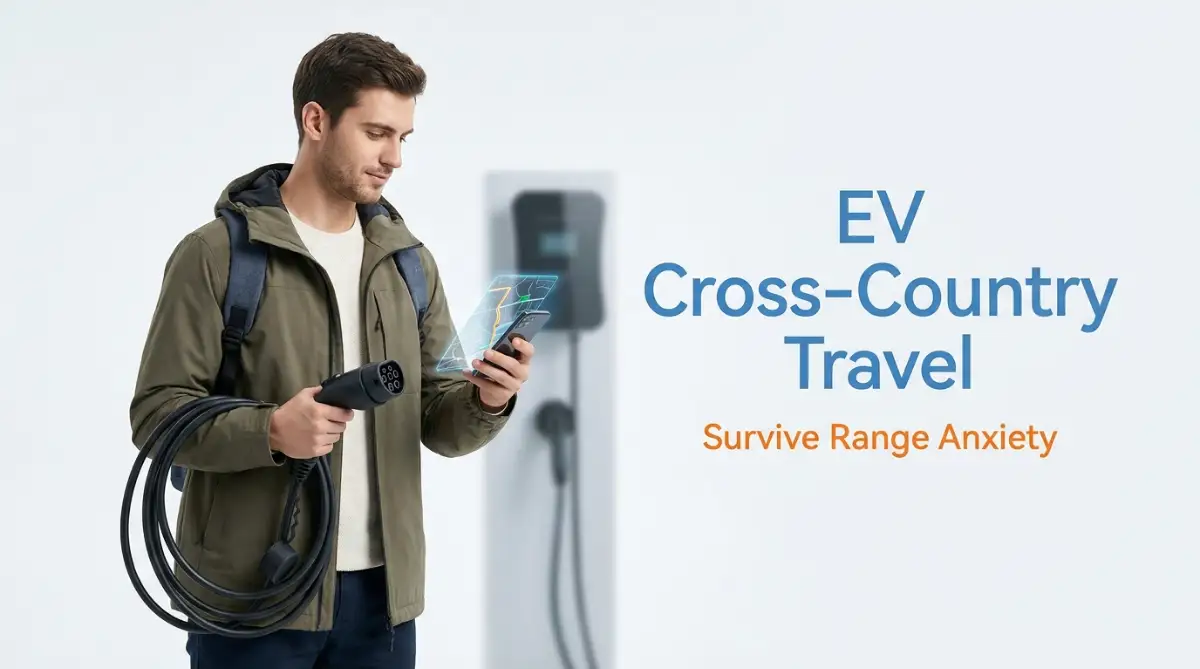
The Hidden Anxiety Behind the Steering Wheel
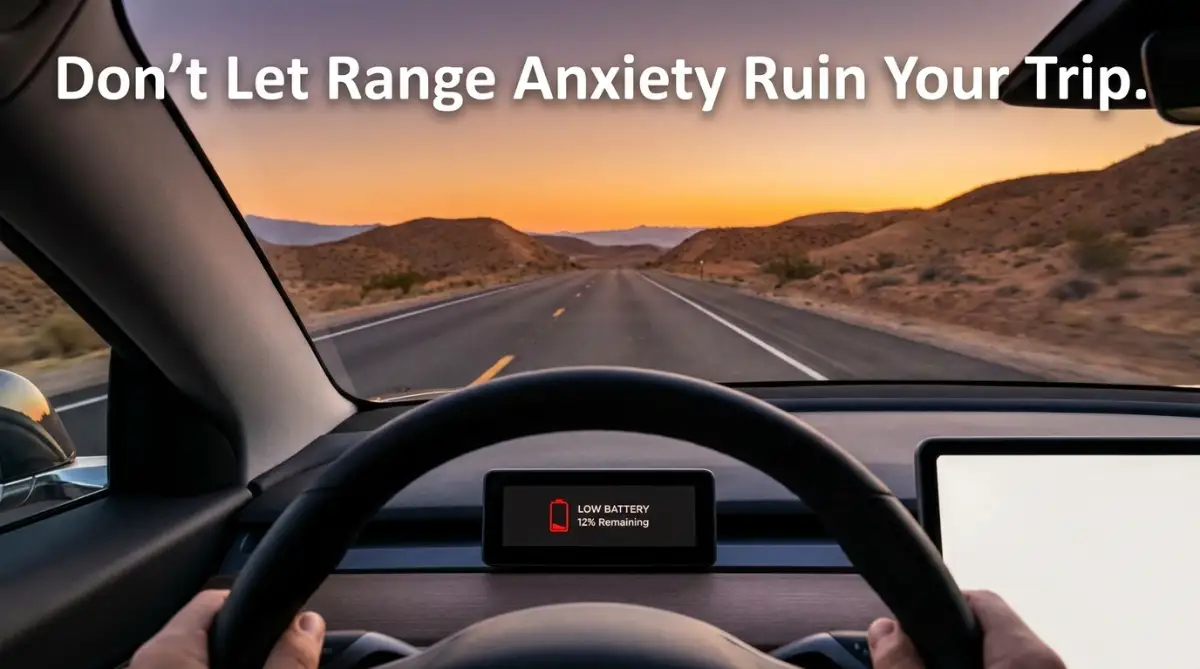
I still get chills thinking about that road trip down I-80 last summer. I was watching my battery percentage drop way faster than I calculated. My hands were literally sweating on the steering wheel when the car’s screen casually popped up a warning: the upcoming fast charger was out of service. My kids were asleep in the back, totally clueless about the panic attack I was having in the driver's seat. That sinking feeling of getting stranded in the middle of nowhere is no joke. I had to pull over onto the dusty shoulder, frantically downloading apps like PlugShare and A Better Routeplanner on a weak 3G signal just to figure out a backup plan.
That day, I promised myself I would never let range anxiety take control of my road trips again. When you first buy an electric vehicle, the idea of driving silently across the country feels like a dream. But the reality of actual highway travel quickly turns that dream into a stressful mathematical equation. You are constantly calculating miles, weather conditions, and the distance to the next plug.
For the average person, this constant worrying completely destroys the fun of a family vacation. Instead of enjoying the beautiful scenery outside your window, your eyes are glued to the battery gauge. You start feeling anxious every time you turn on the air conditioning or press the accelerator a little too hard. This mental burden is exhausting, and it keeps thousands of people from ever taking their electric cars outside their home city.
The fear of a dead battery on a dark, unfamiliar road is a very real and valid concern. Unlike a traditional gas car, you cannot simply walk to a station and bring back a small can of electricity. If your car dies, you are entirely dependent on an expensive flatbed tow truck to rescue you. This constant fear of getting stranded quietly eats away at your peace of mind and ruins the entire travel experience.
Car commercials always show shiny EVs gliding effortlessly through the mountains without a single care in the world. What those glossy ads completely leave out are the broken Electrify America screens, the annoying wait times during holiday weekends, and having to download five different buggy payment apps just to get a few kilowatts. You need a realistic survival strategy to handle these hidden road bumps before you even pack your bags.
Changing Your Highway Mindset
Taking a long trip in a battery-powered car requires a completely different way of thinking. You can no longer just jump in the driver's seat and figure things out along the way. Planning is your ultimate weapon against the stress of long-distance driving.
Mapping the Charger Desert
When you drive a regular car, you simply assume a gas station will appear whenever you need one. You must completely erase this assumption from your mind when traveling on battery power. Certain parts of the country are absolute deserts when it comes to fast-charging infrastructure.
You absolutely have to map out your route using dedicated EV route planning tools before you even back out of your driveway. Please, do not just rely on your car's factory navigation. I learned the hard way that factory maps can be outdated—my car once confidently routed me to a charging station that had literally been dug out of the ground for construction months ago. Using an app like ABRP (A Better Routeplanner) is a total lifesaver here.
Treat your route like you are planning water stops for a long hike in the desert. Always identify a primary charging station, and immediately locate a secondary backup station within twenty miles of it. If you arrive and the primary charger is broken, you will calmly drive to your backup without panicking.
The Art of Battery Preconditioning
One of the biggest secrets to a successful trip is understanding how your car battery actually feels temperature. Lithium-ion batteries are just like humans; they hate being too cold, and they hate being too hot. If your battery is cold when you plug it in, the charging speed will be incredibly slow.
Most modern cars have a hidden feature called battery preconditioning. When you tell your navigation system you are driving to a charger, it starts warming up the battery automatically. By the time you arrive, the internal temperature is perfect for accepting power at maximum speed.
Pro Tip: I used to just drive to a charger without using the car's navigation, thinking I knew the way perfectly. I quickly realized I was wasting an extra thirty minutes at every stop because my cold battery refused to charge quickly. Always use the car's navigation so the software knows exactly what you are trying to do.
Are you making this massive mistake at public charging stations? Watch this quick breakdown of how charging speeds actually work.
If your car does not have automatic preconditioning, try timing your charges after a long stretch of highway driving. The natural heat generated from driving at high speeds will warm the battery up for you. This simple trick will save you hours of boring waiting time over a long journey.
Mastering the Charging Curve
Many new drivers get highly frustrated when their car charges fast at first, but then suddenly slows down. This is not a broken machine; this is a safety feature known as the charging curve. Think of your battery like a completely empty glass, and the electricity is water pouring from a pitcher.
When the glass is empty, you can pour the water extremely fast without worrying about making a mess. But as the water reaches the top of the glass, you have to slow down the pouring so it does not spill over. Your car's computer does the exact same thing to protect the battery cells from dangerous overheating.
Charging from 10% to 80% might take only thirty minutes on a good day. However, charging from 80% to 100% can easily take another full hour of waiting. On a road trip, you should almost never wait around for the battery to hit 100%.
It is mathematically much faster to unplug at 80%, drive to the next station, and charge again. You will spend significantly less time sitting in parking lots if you ride the fastest part of the charging curve. Unplug, stretch your legs, and get back on the road while you are still ahead of schedule.
The Hidden Impact of Wind and Elevation
Your dashboard range estimator is just making a highly educated guess based on your recent driving habits. It cannot magically predict the future weather conditions you are about to drive into. Driving directly into a strong headwind is like trying to run through a swimming pool; it requires massive energy.
A strong headwind can easily steal twenty percent of your expected range in a single hour. Similarly, driving up a steep mountain pass will drain your battery faster than you can blink. You must constantly look at the weather forecast and elevation maps for the road ahead.
The good news is that what goes up must eventually come down. When you drive down the other side of that mountain, your car uses regenerative braking to capture free energy. The motor acts like a giant generator, pushing electricity back into the battery as you roll downhill.
If you notice the wind is blowing extremely hard against the front of your car, simply slow down. Reducing your highway speed by just five miles per hour dramatically reduces the aerodynamic drag. This tiny adjustment can easily save you enough power to reach the next safe stopping point.
Reading the Virtual Warning Signs
Just because Google Maps says an EV charging station exists doesn't mean it’s actually working today. Let’s be real, public charging infrastructure can be a hot mess, and broken cables are something we deal with all the time. You kind of have to play detective. Always check community apps like PlugShare where actual drivers leave check-ins. If you see recent check-ins complaining that the card reader is dead or the station is only pulling 30kW, skip it and drive to the next one. Reading these reviews takes only two minutes but can save you from a complete disaster.
Pay close attention to the charging speeds listed on the location details. Pulling into a station that only offers 50kW speeds is like trying to drink a thick milkshake through a tiny plastic straw. You want to aim for stations that offer at least 150kW or higher to keep your trip moving nicely.
Sometimes, a station will look completely fine on the app, but someone else is currently using the only working cable. Try to plan your stops around off-peak hours if you are traveling through busy areas. Avoiding the midday lunch rush means you will rarely have to wait in line for your turn to plug in.
Securing the Overnight Charge
The absolute best feeling in the world is waking up in the morning with a completely full battery. You should always try to book hotels that offer Level 2 charging stations in their parking lots. This allows your car to sip electricity slowly while you are sleeping comfortably in your bed.
Booking a hotel with a charger effectively eliminates your first charging stop of the next day. It is basically free fuel that saves you time, money, and unnecessary stress. However, you cannot just assume the hotel charger will be available when you arrive late at night.
Always call the front desk directly before you book the room online. Ask them specifically if their car chargers are currently functioning and if they are blocked by regular cars. Sometimes hotel staff use those exact parking spots for their own personal vehicles, which defeats the entire purpose.
If you have a portable charging cable in your trunk, you can even plug it into a standard outdoor outlet. It will charge incredibly slowly, adding maybe four miles of range per hour. But in a true emergency, leaving it plugged in all night could give you just enough power to reach a proper fast charger the next morning.
Managing the Cabin Climate
We all love blasting the air conditioning on a hot summer day while driving down the highway. But traditional heating and cooling systems consume a massive amount of battery power. The energy used to cool the air inside the car is energy stolen directly from your driving wheels.
Instead of freezing the entire cabin, try using your heated or cooled seats if your car has them. Seat climate controls use a tiny fraction of the electricity compared to the main air conditioning compressor. You can stay perfectly comfortable while preserving those precious miles for the actual journey.
If you must use the main heater during winter, try pre-heating the cabin while the car is still plugged into the charger. This uses the electricity from the power grid to warm the air instead of draining your battery. Once you get on the highway, maintaining that warm temperature requires much less effort from the car.
Understanding all these small details gives you complete control over your electric journey. You are no longer guessing and hoping for the best outcome. You are actively managing your energy, your time, and your mental state to ensure a smooth, enjoyable vacation for everyone in the car.
Next-Level Highway Survival Tactics For Electric Drivers
Now that you understand the basic psychology of driving an electric car across the country, we need to dive into advanced strategies. These are the hidden secrets that veteran drivers use to completely eliminate travel stress. You do not have to learn these lessons the hard way by getting stranded in a dark parking lot.
One of the smartest things you can do before leaving home is to create physical backup plans for your digital tools. We heavily rely on our smartphones to locate stations and pay for electricity. However, many fast chargers are located in extremely rural areas where cellular service simply does not exist.
If you pull up to a beautiful charging station but your phone cannot connect to the internet, you are basically locked out. The machine will not start the session because it cannot verify your payment method through the app. This is why you must always carry physical RFID payment cards for the major charging networks.
You just tap the physical RFID charging card on the machine, and it starts charging immediately—no Wi-Fi or 4G required. Getting caught in a digital dead zone is beyond frustrating, especially when you are running on 5% battery. Keeping a few physical cards in your glovebox (like ChargePoint or EVgo) is basically a cheap insurance policy against crappy cell service and glitchy software.
Another advanced tactic is understanding how physical weight and aerodynamics quietly steal your battery power. A lot of people install large roof racks or cargo boxes for their family vacation luggage. Pushing a large, square box through the wind at high speeds absolutely destroys your electric efficiency.
If you can fit your luggage inside the cabin or the front trunk, you will save a massive amount of energy. Even driving with the windows rolled down on the highway creates enough wind drag to drain your battery faster. Keeping the windows rolled up and the exterior perfectly smooth allows the car to slice through the air effortlessly.
We also have to talk about the concept of smart highway drafting, which requires absolute caution and focus. When you drive behind a massive semi-truck, that large vehicle pushes a huge amount of wind out of the way. If you follow safely behind them, your car does not have to fight the wind resistance on its own.
I am not suggesting you tailgate a truck dangerously close; always maintain a perfectly safe following distance. But even staying a reasonable distance behind a large vehicle creates a helpful slipstream effect. This simple highway trick can easily boost your overall driving range by an extra ten percent on a windy day.
You also need to familiarize yourself with alternative charging options like heavy-duty RV parks and campgrounds. Most modern RV parks have large 50-amp electrical outlets designed to power massive motorhomes. With the right adapter in your trunk, you can plug your car directly into these powerful outlets.
RV campgrounds are scattered everywhere, even in massive dead zones where fast chargers haven't been built yet. You might have to slip the camp host ten bucks for the electricity, but when you're desperate, it’s worth every penny. Keeping a heavy-duty NEMA 14-50 adapter in your trunk gives you a massive safety net when standard commercial chargers fail you.
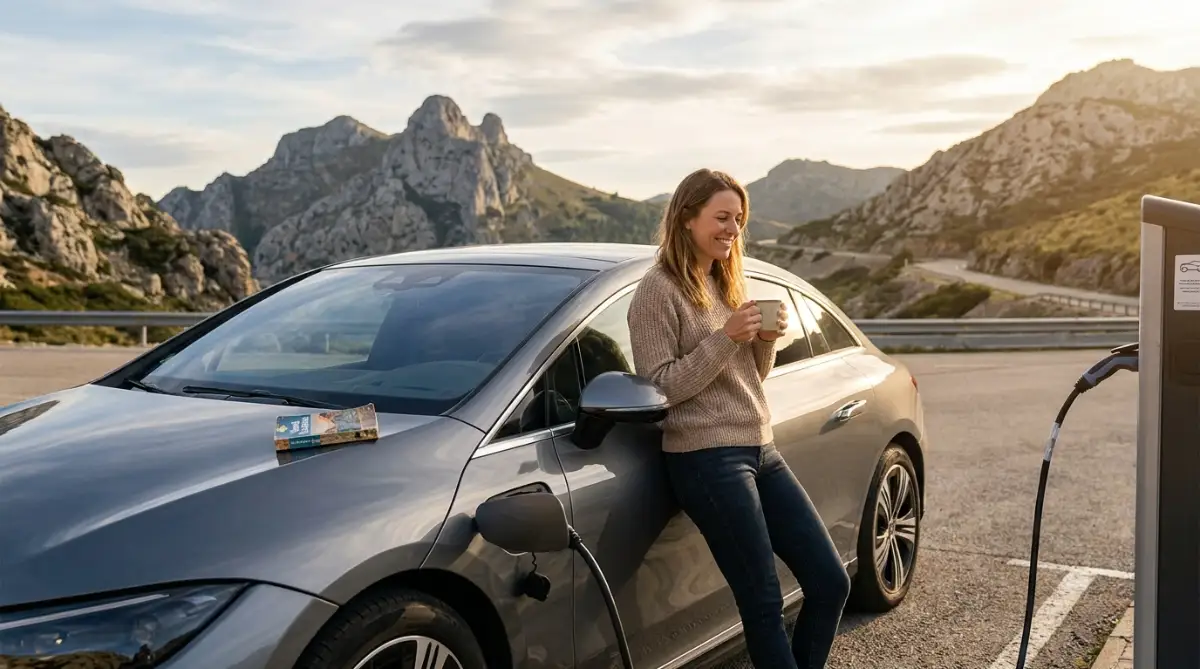
The Dangerous Traps of Electric Highway Travel
Even with the best preparation, human error is always the biggest threat to a successful road trip. People tend to get extremely confident after a few successful stops and start taking completely unnecessary risks. These small mistakes can quickly escalate into a terrifying situation on the side of a busy interstate.
One of the most dangerous traps is blindly trusting the "Guess-O-Meter" on your dashboard. That digital number predicting your remaining miles is just a machine making a highly educated guess. It assumes you will continue driving at the exact same speed, in the exact same weather, on a perfectly flat road.
If your dashboard says you have fifty miles of range, but the next charger is forty-five miles away, do not risk it. You are leaving absolutely zero room for unexpected detours, heavy traffic, or a sudden change in wind direction. Pushing your battery down to single digits is a massive gamble that you will eventually lose.
I once got cocky and tried to stretch my battery to reach a cheaper DC fast charger, totally ignoring the crazy headwind hitting my windshield. My dashboard lit up like a Christmas tree, and the car went into "turtle mode," aggressively cutting my speed just to keep the computer alive. I literally crawled off the highway exit at 20 mph. The sheer panic of almost bricking my car on the interstate was absolutely not worth saving three bucks. When we get range anxiety, we tend to make stubborn, irrational choices instead of just stopping early. Always leave yourself a comfortable twenty-mile buffer just in case the universe decides to test you.
Another huge mistake is assuming every single public plug is a fast-charging station. Many hotels, shopping malls, and restaurants advertise that they offer electric vehicle charging on their property. But these are usually Level 2 destination chargers, which only add about twenty miles of range per hour.
If you roll up to a random hotel or mall expecting a quick 30-minute top-off, you're going to be painfully disappointed. You’d have to sit in that parking lot watching Netflix for six hours just to get enough juice to reach the next town. You must filter your apps to only show DC Fast Chargers (Level 3). I see new EV owners make this exact mistake on Reddit all the time—they plug into a slow AC charger and wonder why their battery hasn't moved in an hour. Always double-check the kilowatt (kW) output before you put the car in drive. Always double-check the exact power output of the station before you ever start driving toward it.
People also completely ignore their tire pressure when taking long road trips in heavy electric vehicles. Electric cars are significantly heavier than gas cars because of the massive battery pack underneath the floor. This extra weight puts a tremendous amount of stress on your tires, especially at high highway speeds.
If your tires are even slightly underinflated, more rubber touches the road, creating massive rolling resistance. According to the official Alternative Fuels Data Center by the US Department of Energy, proper tire pressure is one of the easiest ways to maximize your driving efficiency. Checking your tires takes five minutes but can literally save you miles of precious energy on a long stretch.
Another terrible habit is refusing to adapt to sudden drops in temperature during your journey. You might start your trip in beautiful, warm weather, but driving through mountains can drop the temperature below freezing. Cold air makes the chemical reactions inside your battery move much slower, drastically reducing your available energy.
Experts at Consumer Reports explain how extreme cold affects electric vehicle batteries, warning that freezing weather can slash your mileage instantly. If you notice the temperature dropping, you must immediately recalculate your route and plan for more frequent stops. Stubbornly sticking to your original summer-weather plan will leave you stranded in the freezing snow.
Finally, many drivers completely forget to research emergency towing options before they leave their home state. If you actually run out of battery, you cannot hook your electric car up to a regular tow rope. Doing so can cause massive electrical fires or completely destroy the internal electric motors.
If you ever find yourself completely stranded, knowing how emergency towing services handle electric vehicles safely is an absolute lifesaver. You must specifically request a flatbed tow truck so your car's wheels never touch the ground during transport. Always follow the National Highway Traffic Safety Administration recommendations for roadside emergencies while waiting safely for that flatbed truck to arrive.
How to Actually Enjoy Your Next EV Road Trip
Taking a long road trip without spending a dime on gas is an amazing feeling. You get to cruise in total silence, enjoy the tech, and wake up to a "full tank" at your hotel. But to actually enjoy that experience without chewing your fingernails off, you have to be proactive.
Think of EV routing as a mini-game rather than a stressful chore. If you rush it blindly, you'll end up stranded. But if you take five minutes to prep, the whole trip becomes seamless.
Start by downloading at least three reliable EV charging apps to your phone right now. Sit on your couch, punch in your dream destination, and just play around with the route. Getting comfortable with the apps at home completely removes the anxiety of trying to figure them out while dodging semi-trucks on the highway.
It takes a little bit of a learning curve, sure, but after your first successful long-distance trip, it becomes second nature. Before you know it, you’ll be the veteran driver in the Facebook groups helping newbies conquer their own range anxiety.
I know the idea of relying entirely on public charging networks feels incredibly intimidating at first glance. But I can confidently promise you that the technology works beautifully when you know how to leverage it properly. Pack your bags, check your tire pressure, load up your favorite playlists, and get ready to enjoy the open road with complete confidence.
Common Questions About Electric Vehicle Travel
Can you safely charge an electric car in the heavy rain?
Yes, charging an electric vehicle in a heavy rainstorm or even a snowstorm is completely safe. The charging cables and the car's internal ports are heavily waterproofed and designed for extreme outdoor weather conditions. The electricity will not even start flowing until the heavy plug securely locks into the vehicle and runs a digital safety check.
Do EV batteries drain significantly faster when it is freezing outside?
Unfortunately, cold weather is the biggest enemy of lithium-ion battery efficiency and overall driving range. The cold heavily restricts the internal chemical reactions, which can temporarily reduce your total range by up to thirty percent. You will also use a lot of extra battery power just trying to keep the cabin heater running.
What actually happens if you run completely out of battery on the highway?
Your car will not just suddenly shut off at sixty miles per hour and crash into a wall. It will give you multiple loud warnings, slowly reduce your top speed, and eventually enter a "turtle mode" to help you pull over safely. Once it completely dies, it safely shifts into park, and you will need to call a professional flatbed tow truck.
Can you comfortably sleep in an electric car while it charges overnight?
Absolutely, and it is actually one of the biggest hidden benefits of owning a modern electric vehicle. Since there is no dangerous exhaust gas or carbon monoxide, you can leave the climate control running all night long. Many travelers simply fold the back seats down, throw in a comfortable mattress, and sleep perfectly while the car charges.
Are public charging stations generally safe to visit late at night?
Most major fast-charging stations are located in well-lit areas like large supermarket parking lots or bright gas stations. However, some older chargers are placed in the dark, isolated corners of abandoned shopping malls. Always trust your personal gut instinct; if a location looks dark or feels unsafe, just drive to the next available station.
Disclaimer: The information provided in this article is for educational, informational, and general travel planning purposes only. It does not constitute professional mechanical advice or official safety directives. Electric vehicle capabilities, charging infrastructure, and weather conditions change rapidly; always consult your specific vehicle’s official owner manual and local traffic authorities before undertaking a long distance road trip.