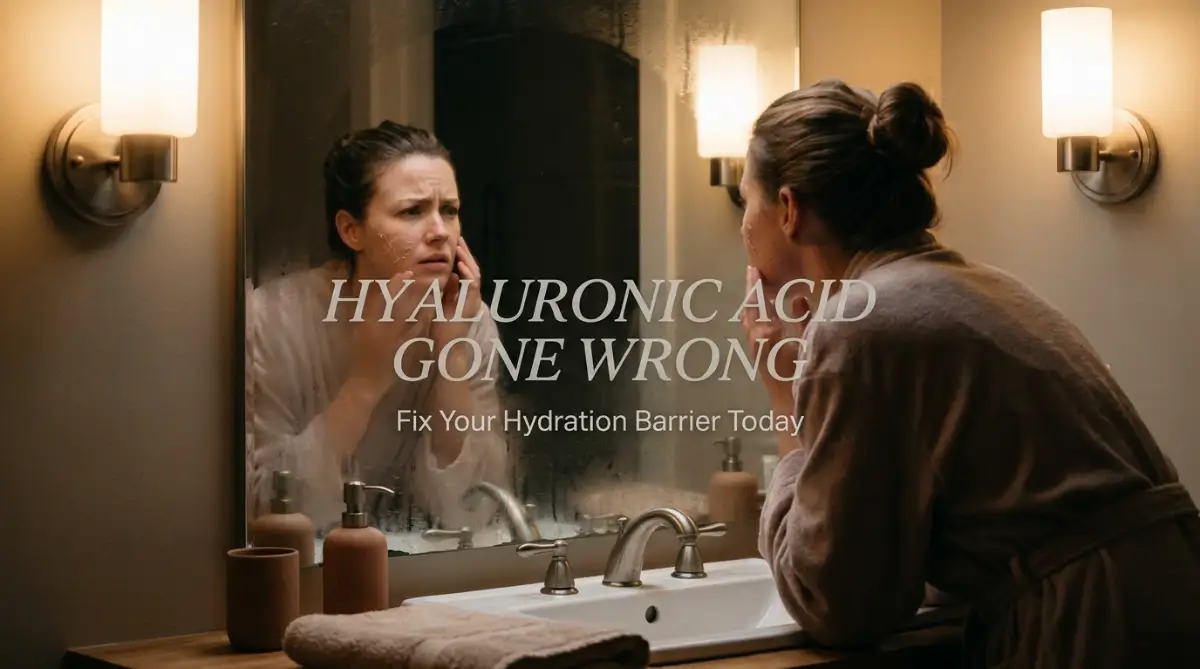
My Frustrating Battle with the Ultimate "Hydration" Miracle
I still remember the day I spent an uncomfortable amount of money on a highly viral hyaluronic acid serum. Every beauty influencer on the internet swore it was the magical cure for glowing, plump skin. I excitedly washed my face, patted it completely dry with a towel, and rubbed the expensive liquid all over my cheeks. I expected to wake up looking entirely refreshed and deeply hydrated.
Instead, I woke up with a face that felt like tight, cracking glass. My skin was flaking around my nose, and my foundation looked absolutely terrible when I tried to put it on. I felt completely betrayed by the skincare industry and thought my skin was just permanently broken.
You are definitely not alone if you have experienced this exact same disappointment. Millions of people buy these expensive serums hoping to fix their dry skin, only to end up with an even worse problem. It is incredibly frustrating to follow all the popular advice and still feel uncomfortable in your own skin.
This daily struggle completely destroys your confidence. You start avoiding certain lighting because it highlights the dry patches on your forehead and chin. You waste hours trying to cover up the texture with heavy makeup, which honestly just makes the flaking look much more obvious.
Instead of enjoying a relaxing morning routine, you feel anxious every time you look in the mirror. You start wondering if you have an undiagnosed skin condition or if you are allergic to normal beauty products. The constant tightness on your face serves as a highly annoying reminder that your routine is failing.
People often assume they just need to buy a thicker, more expensive cream to fix the problem. They end up cluttering their bathroom cabinets with dozens of useless products that never solve the root issue. The reality is that your skin is crying out for a very specific change in how you apply your current products.
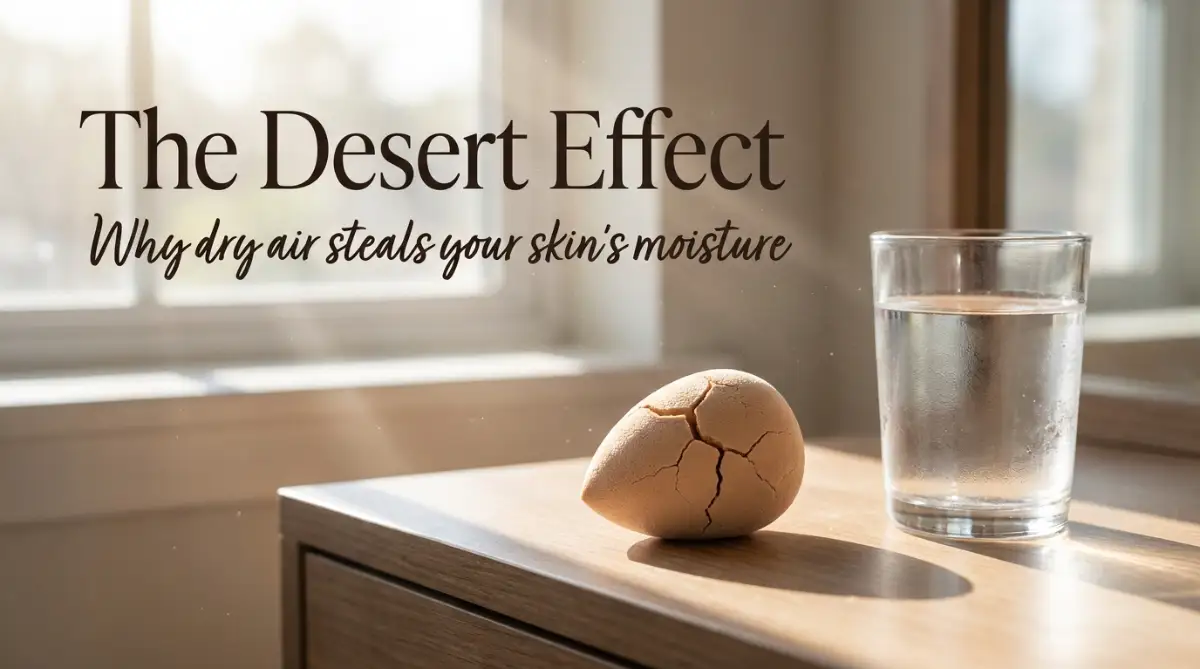
The Hidden Science Behind Your Tight and Peeling Skin
Fixing this massive annoyance does not require you to throw away your expensive serums. You simply need to understand a little bit of basic science about how water moves through the air. Once you grasp this concept, your entire skincare routine will finally make perfect sense.
Let us explore exactly why this highly praised ingredient is suddenly turning against you. By making a few tiny adjustments to your daily habits, you can force the product to do exactly what it was designed to do.
The Great Sponge Analogy of Skincare
To understand your current problem, you have to know what a humectant is. Hyaluronic acid is basically a microscopic sponge that can hold a massive amount of water. Its entire job is to grab moisture from the surrounding environment and hold onto it tightly.
When you live in a tropical or highly humid climate, the air is packed with tiny water droplets. The sticky serum on your face easily pulls that water out of the humid air and pushes it into your skin. This is exactly why people in humid places always rave about how plump their faces look.
However, the rules completely change when you live in a dry climate or turn on your indoor heater. When the air around you is totally dry, there is no moisture for the sponge to grab. But the sponge still wants water, so it starts looking for a new source.
The Betrayal of a Dry Environment
This is where the disaster actually happens on your face. Because the dry air has absolutely zero moisture to offer, the hyaluronic acid turns inward. It aggressively pulls the deep, natural water reserves out from the lower layers of your own skin.
It drags all that precious internal hydration right to the surface of your face. Once the water hits the surface, the extremely dry air in your bedroom simply evaporates it away. This process is technically called transepidermal water loss, and it is the exact reason your face feels so tight.
Your expensive serum is basically acting like a pump, sucking your natural moisture out and handing it over to the dry air. You are literally paying money to actively dehydrate your own face. Understanding this mechanism is the very first step toward stopping the damage.
The Golden Rule of Damp Application
The most powerful way to stop this reverse-pumping action is incredibly simple. You must give the sponge exactly what it wants before it has a chance to steal from you. You do this by deliberately providing a thick layer of water for the serum to hold onto.
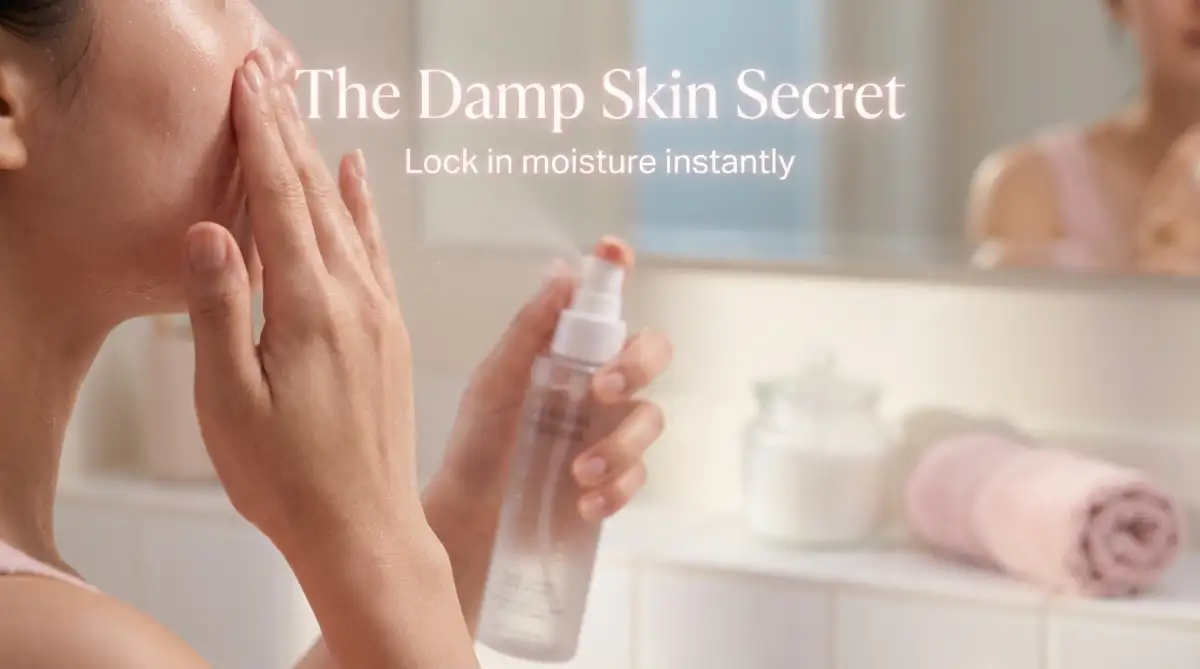
Never, ever apply a hydrating serum to a completely dry face. After you wash your face, lightly pat it with a towel but leave the skin visibly damp. While your face is still wet, immediately rub your serum into the skin.
I used to aggressively dry my face with a harsh towel until it was completely matte. My Pro Tip is to keep a cheap spray bottle of filtered water right next to your sink. Giving my face a quick mist before applying my serum completely transformed my skin texture overnight.
Why Indoor Heating Acts Like a Desert
Many people get confused because they live in a relatively normal climate, yet their skin still cracks in the winter. They forget that their home environment is completely different from the weather outside. The moment you turn on your central heating or space heater, you create an artificial desert inside your bedroom.
Heaters completely destroy the natural humidity in your room. You might be sitting in a house that has less humidity than an actual sandy desert. When you sleep in this hot, dry air for eight hours, your skin barrier takes a massive beating.
You can easily combat this by purchasing a small humidifier for your nightstand. Running a humidifier while you sleep provides a constant supply of air moisture for your skincare products to drink. This one simple addition can completely stop winter flaking.
Watch this incredibly simple visual breakdown of how humidity levels directly change your skin texture.
Myth vs Reality: The Truth About Skin Hydration
There are countless rumors floating around the internet about how to handle dry skin. Let us clear up some of the most damaging misconceptions right now.
Myth: Drinking a gallon of water a day will instantly cure your dry, flaky face.
Reality: While drinking water is healthy, it takes a very long time to reach your outer skin layers. Topical hydration is much faster and more direct.
Myth: If your skin is oily, you do not need any hydrating serums at all.
Reality: Oily skin is often deeply dehydrated. Your face produces extra oil to compensate for the severe lack of water.
Myth: A burning sensation means the product is actively working and repairing your skin.
Reality: Skincare should never burn. A burning feeling means your moisture barrier is currently damaged and crying for help.
Sealing the Deal with a Heavy Roof
Applying your serum to a damp face is only half of the solution. Once the sponge is full of water, you have to prevent the dry air from evaporating it again. You need to trap the moisture securely against your skin.
This is where occlusive moisturizers become absolutely necessary. An occlusive is a heavy, sealing ingredient like shea butter, squalane, or even plain petrolatum. Think of your hydrating serum as a wet blanket, and the occlusive moisturizer as a thick plastic tarp you throw over it.
The plastic tarp completely blocks the dry air from touching the wet blanket. Always follow up your water-based serums with a thicker cream to lock the hydration in place. If you skip this final sealing step, all your hard work will just evaporate away into the air.
A Quick Comparison: Good vs Bad Routines
To make this extremely clear, let us look at the habits that separate a painful routine from a glowing one. You will likely recognize some of your own daily habits in this chart.
Following the right side of this table guarantees that your skin retains its natural bounce. It forces the ingredients to work with your body instead of aggressively fighting against it.
The Danger of Too Many Acids
Another major issue arises when people start mixing too many active ingredients at the exact same time. The beauty industry constantly pushes us to buy multiple serums and layer them all together. People often mix their hydration serums with strong exfoliating acids like glycolic or salicylic acid.
When you live in a dry climate, your skin is already incredibly fragile and stressed. Adding strong chemical exfoliants strips away your natural oils, leaving your moisture barrier completely exposed. Without natural oils to protect you, the dry air sucks the water out of your face twice as fast.
If your skin is currently tight and peeling, you must immediately stop using all exfoliating acids. Give your face at least two full weeks of gentle hydration and heavy moisturizers to rebuild its natural defenses. You can slowly reintroduce your exfoliants once the tightness is completely gone.
Understanding the 60-Second Rule
Timing is absolutely everything when it comes to preserving water on your face. After you wash your face, water immediately begins to evaporate into the dry air around you. You have a very short window of opportunity to trap that water before it vanishes.
Dermatologists highly recommend following the sixty-second rule. You should apply your hydrating serum and your sealing moisturizer within one minute of stepping out of the shower. Do not walk around the house, check your phone, or brush your teeth first.
The longer you wait, the more natural moisture you lose to the bathroom air. Moving quickly ensures that your skincare traps the maximum amount of hydration deep inside your skin layers. This tiny shift in your timing will make your products feel ten times more effective.
How Hot Showers Sabotage Your Progress
We all love a steaming hot shower on a freezing winter morning. Unfortunately, extremely hot water is one of the worst enemies of a healthy moisture barrier. Boiling hot water aggressively melts away the natural, healthy fats that live on the surface of your skin.
These natural fats are the only thing holding your skin cells together and keeping the water locked inside. When you wash them away with hot water, you leave the door wide open for extreme dehydration. Your skin will immediately feel tight and itchy the moment you step out of the bathroom.
Always wash your face with lukewarm or slightly cool water, especially in the winter. It might feel a little less relaxing, but it will save you from months of painful peeling and redness. Protecting those natural fats is the foundation of a healthy, glowing complexion.
Mastering Long-Term Hydration Like a Skincare Chemist
Once you fix the immediate problem of applying your products on damp skin, you need a long-term strategy. True skin health is not just about a quick fix for the weekend. It is about building a daily routine that consistently protects your face from harsh environmental changes.
Many people rely completely on hyaluronic acid and ignore all the other amazing ingredients available to them. To build a truly resilient moisture barrier, you have to start thinking like a cosmetic chemist. You need to mix and match different types of hydration to create an unbreakable shield.
Let us explore some advanced techniques that professional estheticians use on their celebrity clients. These methods are surprisingly simple to do at home and will completely transform how your skin handles dry weather.
The Power of the Moisture Sandwich Method
One of the most effective tricks in the skincare community is something called "sandwiching." This method is exactly what it sounds like. You are going to layer your products like a perfectly constructed sandwich to trap every single drop of water.
You start with a base layer of plain water or a gentle hydrating mist. Then, you apply your humectant serum right in the middle as the "meat" of the sandwich. Finally, you immediately top it off with a thick layer of a heavy sealing cream as the top piece of bread.
This creates multiple layers of protection that dry air simply cannot penetrate. By wrapping your serum between water and a heavy cream, you force the hydration deep into your pores. You will wake up the next morning with skin that feels incredibly soft and bouncy.
Exploring Alternative Humectants
While hyaluronic acid gets all the marketing hype, it is actually not the only ingredient that grabs water. In fact, many dermatologists prefer older, heavily tested ingredients when treating extreme winter dryness. You should strongly consider adding glycerin to your daily routine.
Glycerin is a highly effective humectant that has been used in medical ointments for decades. Unlike its trendy cousin, glycerin is a much smaller molecule. This allows it to slip deeper into your skin layers without aggressively pulling your internal water to the surface.
If your face continues to feel tight, check the ingredient list on your favorite bottles. Look for products where glycerin is listed in the top three ingredients. According to medical insights on how indoor heating affects your skin, switching to glycerin-based products often solves winter flaking entirely.
Rebuilding the Roof with Ceramides
We talked earlier about using a thick cream to act like a plastic tarp over your hydrating serum. However, you can make that tarp even stronger by choosing a cream packed with ceramides. Ceramides are natural fats that already exist inside your skin.
Think of your skin cells as bricks, and ceramides as the sticky mortar that holds those bricks perfectly together. When the dry air damages your face, it basically chips away at that protective mortar. This leaves tiny microscopic cracks where your precious water easily escapes.
Applying a ceramide-rich cream physically patches up those invisible holes. If you are struggling with unexpected daily routines that keep your skin inflamed, repairing those microscopic cracks is your first line of defense. A strong ceramide barrier keeps the bad bacteria out and the good hydration safely locked inside.
Tracking the Weather Like a Pro
Your skincare routine should never look exactly the same in December as it does in July. Professional beauty experts constantly adjust their products based on the daily weather forecast. You need to become highly aware of the humidity levels outside your window.
I highly recommend downloading a simple weather app and checking the humidity percentage every morning. If the humidity drops below forty percent, you instantly know the air is thirsty. On those specific days, you must apply a much thicker moisturizer than you normally would.
Conversely, if it is raining and highly humid outside, you can use a lighter gel lotion. Adapting your routine to the daily environment prevents your face from becoming overwhelmed or under-hydrated. This level of awareness takes all the frustrating guesswork out of your morning routine.
The Magic of Nighttime Slugging
If your face is severely damaged, peeling, and hurting, you might need an emergency intervention. The internet has popularized a highly effective dermatological technique called "slugging." This involves coating your entire face in a thin layer of pure petroleum jelly before you go to sleep.
Petroleum jelly is the ultimate occlusive ingredient because it stops ninety-nine percent of water loss. You simply do your normal routine, wait a few minutes, and smear a pea-sized amount of the jelly over your dry patches. You will look very shiny and sticky, much like a slug.
While it feels messy, it creates a perfectly sealed greenhouse environment for your skin to heal overnight. Based on dermatologist guidelines on repairing a damaged moisture barrier, this simple trick works faster than the most expensive luxury creams on the market. Just remember to sleep with a towel over your pillowcase to avoid a greasy mess.
Protecting Your Internal Hydration
No matter how many amazing creams you apply, they cannot fix a body that is completely dried out on the inside. Your skin is your largest organ, and it heavily relies on your internal water supply to stay healthy. If you are drinking five cups of coffee a day and zero water, your face will absolutely show it.
Caffeine is a diuretic, meaning it actively flushes water out of your internal system. If you live in a dry climate, this internal dehydration compounds the external damage from the air. You are essentially fighting a losing battle from both the inside and the outside.
Try to match every cup of coffee or tea with a full glass of plain water. This ensures your internal sponge remains full, giving your topical serums something to actually hold onto. For more amazing tips on building a holistic beauty routine, you can explore our trusted beauty resources to support your entire body.
The Heartbreaking Traps That Keep Your Face Peeling
Trying to fix dry, irritated skin can sometimes feel like walking through a minefield. When we panic about our appearance, we tend to make rash decisions that only make the situation much worse. We buy harsh scrubs, layer too many chemicals, and end up completely destroying our natural defenses.
Let us walk through the most damaging traps people fall into when their face starts feeling tight. Avoiding these specific errors will save you hundreds of dollars in wasted products and weeks of unnecessary emotional distress.
Mistaking Dehydration for Dead Skin
This is arguably the most common and devastating mistake people make. When you look in the mirror and see flaky, peeling patches on your cheeks, your first instinct is usually to scrub them off. You assume it is just dead skin building up and ruining your makeup.
So, you grab a harsh physical scrub or a strong chemical peeling pad and aggressively rub your face. This is the absolute worst thing you could possibly do. Those flakes are not dead skin cells begging to be removed; they are actively crying out for intense moisture.
Scrubbing away those flakes rips off the very last layer of protection your face has left. It exposes raw, highly vulnerable skin to the dry air, causing severe redness and burning. Instead of scrubbing your flakes away, you must gently press heavy moisture directly into them.
Confusing Barrier Damage with Adult Breakouts
When your moisture barrier is broken from dry air, bad bacteria easily enter your pores. This often results in tiny, red, itchy bumps popping up all over your cheeks and forehead. Many people look at these bumps, panic, and immediately assume they are having a massive acne breakout.
They run to the store and buy strong acne washes filled with drying ingredients like salicylic acid or benzoyl peroxide. Applying these extremely drying chemicals to an already dehydrated face is a complete disaster. It creates a vicious cycle of irritation, more bumps, and more harsh treatments.
If you are dealing with hidden lifestyle habits causing persistent breakouts, you must first rule out barrier damage. Stop all acne treatments for a week and focus entirely on gentle hydration. You will be completely shocked when those "acne" bumps magically disappear just from adding moisture.
The Squeaky-Clean Cleanser Illusion
We have been heavily conditioned by marketing commercials to believe our face should feel "squeaky clean" after washing it. People love foaming cleansers that create a massive, bubbly lather. Unfortunately, that massive foam is usually created by harsh detergents called sulfates.
Sulfates are the exact same ingredients used in dish soap to aggressively strip away heavy grease. When you use them on your face, they completely strip away your healthy, natural oils. Your face feels tight and squeaky because it has been entirely robbed of its natural moisture shield.
You should never feel a tight, stretching sensation after washing your face. Switch to a creamy, non-foaming hydrating cleanser during the dry winter months. It might not feel like it is working as hard, but it is secretly saving your skin from massive dehydration.
Layering the Wrong Active Ingredients
The beauty industry loves to sell us ten-step routines filled with highly active chemicals. People often apply their hydrating serums right next to strong Vitamin C drops and heavy Retinol creams. They think they are giving their face a powerful anti-aging cocktail.
However, when your skin is already stressed by low humidity, it simply cannot handle that much stimulation. Layering too many strong chemicals causes severe invisible inflammation under the surface. This inflammation makes your skin highly sensitive and unable to hold onto water properly.
According to clinical studies on transepidermal water loss, a compromised barrier needs extreme simplicity to heal. If you are actively trying gentle methods to erase dark marks, you must wait until your skin is no longer peeling. Put your strong anti-aging serums in a drawer until your face feels perfectly bouncy and calm again.
Ignoring the Rest of Your Environment
People will spend a fortune on face creams but completely ignore the air they are breathing all day long. If you sit directly under a blasting AC vent at your office, your face is constantly being blown with freezing, dry air. No moisturizer in the world can survive eight hours of direct, dry wind.
The same rule applies to driving in your car with the heater blowing directly onto your face. This targeted blast of dry air acts like a giant hair dryer, instantly evaporating your expensive serums.
Always point air vents away from your face, whether you are in your car or at your office desk. Small environmental adjustments like this make a massive difference in how your skin feels by the end of the day. You have to protect your face from these invisible daily threats.
Your Blueprint for a Plump, Glowing Complexion
We have uncovered exactly why your favorite hydrating serum feels like it is working against you. The dry air in your environment completely changes how these popular ingredients function on a microscopic level. By simply applying your products to damp skin and sealing them with a heavy cream, you instantly take control of the situation.
You no longer have to fear the winter weather or the central heating in your home. You now understand the science of the moisture sandwich and why treating your face gently is the ultimate key to success. Taking a few extra seconds to mist your face before applying your serum will change your life.
My skin completely transformed when I stopped fighting against the dry climate and started working smarter with my routine. I threw away my harsh scrubs, bought a cheap humidifier, and finally got that beautiful, healthy glow back. I am so incredibly excited for you to try these simple steps and experience that exact same relief tomorrow morning!
Common Questions About Managing Winter Dryness
Can I use my hydrating serums twice a day in a dry climate?
Yes, you absolutely can use them both morning and night. Just ensure that every single time you apply them, your face is properly damp, and you immediately follow up with a thick sealing cream. Consistency is the secret to keeping your barrier strong.
Does glycerin actually work better than other ingredients in the winter?
Many people find that glycerin causes far less irritation than other popular humectants during the dry season. Its smaller molecular size allows it to hydrate deeply without aggressively pulling water out of your lower skin layers. It is a fantastic, highly reliable alternative.
Why does my makeup look patchy and separate over my skincare?
This usually happens because your skin is so desperately thirsty that it actually drinks the water right out of your liquid foundation. When the water is absorbed, only the dry color pigments are left sitting on your face. Fixing your underlying hydration routine will instantly make your makeup look smooth again.
How long does it take for a completely damaged moisture barrier to heal?
If you completely stop using harsh exfoliants and focus only on gentle moisture, you will feel relief in just a few days. However, it takes roughly three to four weeks for your skin to entirely rebuild its strong, natural defenses. You must be very patient and stick to a gentle routine.
Is it safe to apply petroleum jelly all over my face at night?
Yes, dermatologists highly recommend this method for severely dry skin. Petroleum jelly is non-comedogenic, meaning the molecules are actually too large to clog your pores. It creates a safe, healing environment that stops all water from evaporating while you sleep.
Disclaimer: The information provided in this article is strictly for educational and informational purposes. It does not constitute medical advice or professional dermatological treatment. Always consult with a board-certified dermatologist or healthcare provider before significantly changing your skincare routine, especially if you are experiencing severe pain, prolonged irritation, or suspect an allergic reaction. The author and publisher are not responsible for any adverse effects resulting from the use of the methods or products described above.