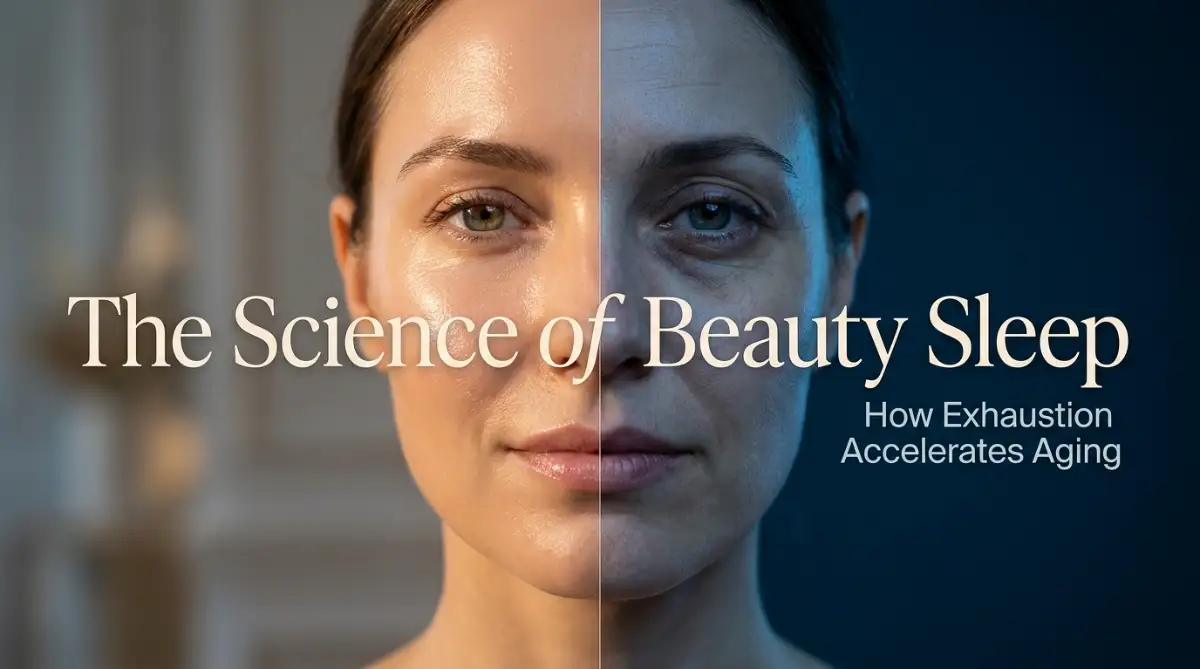
The Silent Thief: How Lack of Sleep is Stealing Your Youth (And How to Fix It)
I remember staring at the bathroom mirror at 3 AM, completely exhausted but entirely unable to sleep. My eyes looked deeply sunken, and my skin had a weird grayish tint that I had never noticed before. I gently rubbed my cheeks, feeling rough, dry patches that felt entirely foreign to my own face. It hit me hard that my constant late nights were literally drawing lines across my forehead. I felt like I was aging five years for every month I spent tossing and turning in bed. That moment of pure panic made me realize I was physically wearing my exhaustion for the whole world to see.
We often brush off a bad night of rest as just a minor inconvenience in our busy lives. You wake up, grab a massive cup of coffee, and hope nobody notices how tired you look. But deep down, you know the truth when you look in the rearview mirror on your way to work.
Your skin looks dull, your eyes are puffy, and those fine lines around your mouth suddenly look incredibly deep. This is a painful, everyday reality for millions of hardworking people who sacrifice rest just to keep up with life. We spend hundreds of dollars on expensive moisturizers, serums, and masks, desperately trying to paint over the damage.
Yet, no amount of heavy makeup or clever photo filters can truly hide the deep exhaustion trapped inside our cells. The mental toll of looking constantly tired is incredibly heavy. You start avoiding photos, feeling deeply self-conscious during morning meetings, and wondering where your natural, youthful glow went.
It is incredibly frustrating when you are trying your best to eat right and drink water, but your face still looks completely drained. You want to feel vibrant and fresh, but your own reflection keeps reminding you of the heavy stress you are carrying. This shared struggle breaks our confidence bit by bit, leaving us feeling trapped in a cycle of endless fatigue.
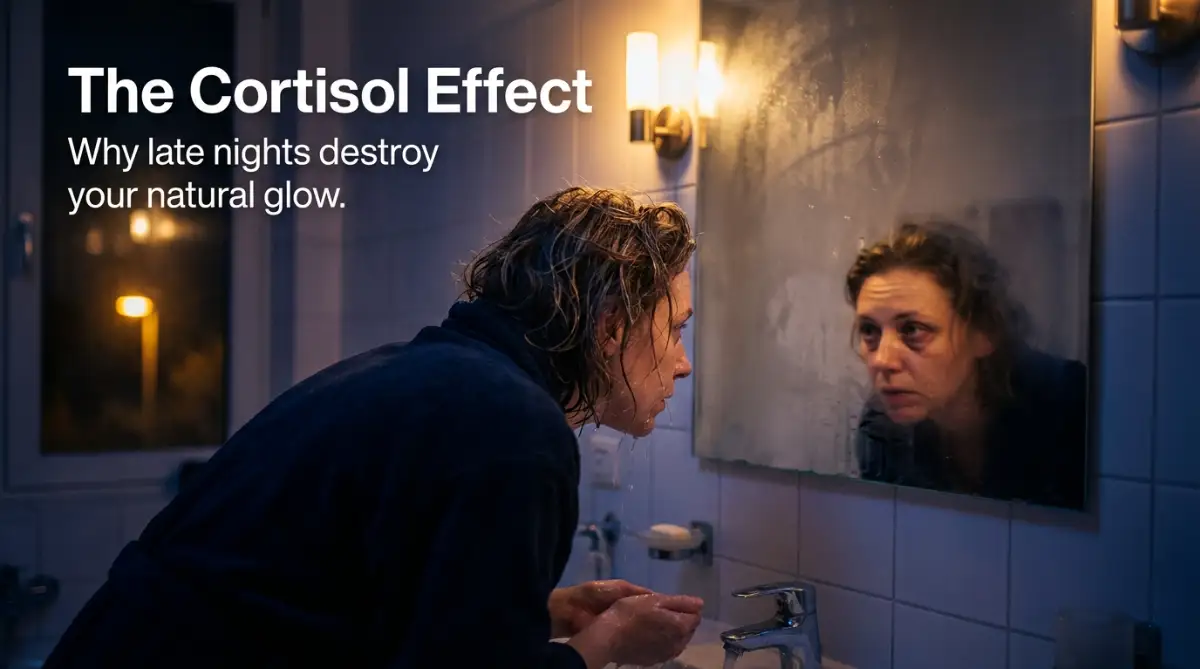
Breaking Down the Biological Connection Between Rest and Skin Health
When we talk about the damage caused by staying awake too long, we are not just talking about feeling sleepy. There is a massive chemical shift happening inside your body that directly attacks your appearance. Let us look at exactly how your body reacts when you miss out on proper rest and how it shows up on your face.
How Stress Hormones Break Down Your Support System
Whenever you force yourself to stay awake past your natural limit, your brain panics. It assumes you are in physical danger and instantly releases a heavy dose of a stress hormone called cortisol. This chemical is completely terrible for your overall skin structure.
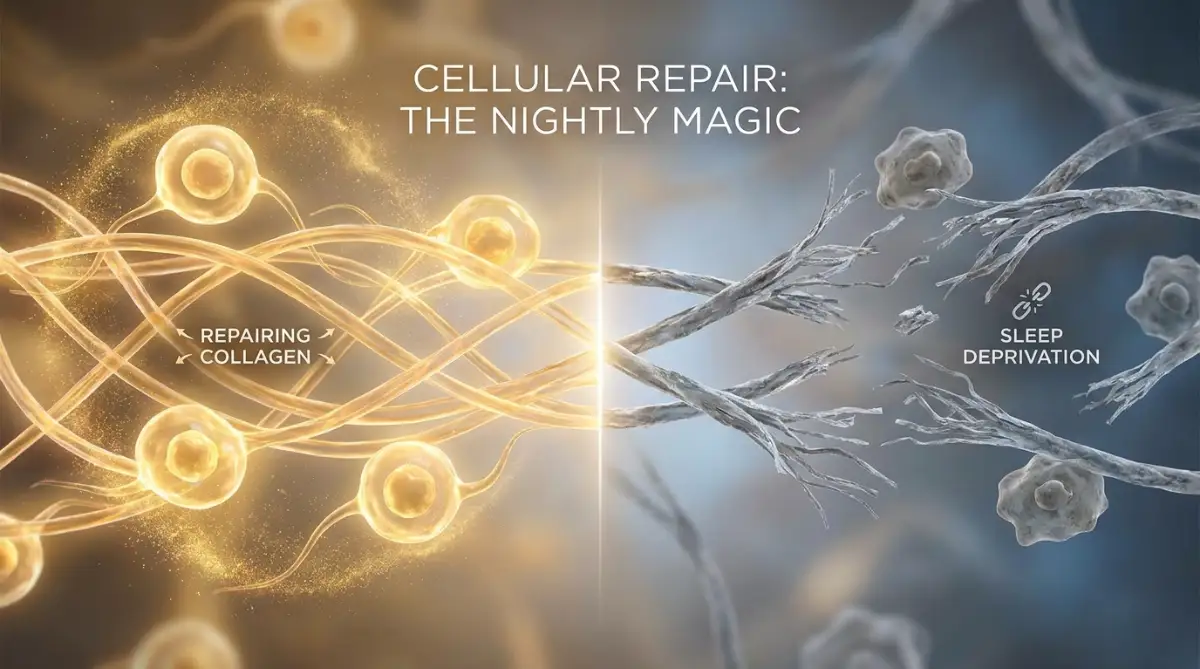
Think of your skin as a beautiful, bouncy mattress filled with strong springs. Those springs are made of a protein called collagen, which keeps your face looking plump and tight. When cortisol floods your system, it acts like a harsh acid that slowly melts those springs away.
Without that bouncy support system, your skin literally starts to cave in on itself. This is exactly why you suddenly notice deep wrinkles and sagging cheeks after a week of heavy stress and bad sleep. Your body is quite literally consuming its own structural support just to keep you awake.
The Deep Sleep Cellular Repair Phase
Your body has a brilliant, built-in maintenance crew that only clocks into work when you are completely unconscious. During the deepest phases of your rest cycle, your brain releases something called Human Growth Hormone. This is the ultimate, natural anti-aging chemical that rebuilds damaged tissues.
I used to think going to bed at 2 AM was fine as long as I slept for eight hours. However, I quickly realized my skin looked significantly better when I fell asleep before midnight. Getting into bed by 10:30 PM completely shifted how my skin repaired itself overnight, giving me a natural morning glow that no expensive cream could ever replicate.
If you constantly wake up in the middle of the night, you are interrupting this repair crew. They never get the chance to fix the daily damage caused by sunlight, pollution, and general stress. Over time, this unresolved damage piles up, leaving you with a dull, highly uneven complexion.
Blood Flow and the Mystery of Dark Under-Eye Circles
Have you ever wondered why the area under your eyes turns purple or gray when you are exhausted? The science behind this is actually fascinating and completely tied to your blood circulation. When you are sleep-deprived, your blood vessels dilate and widen in an attempt to pump more oxygen to your tired brain.
The skin directly under your eyes is incredibly thin and delicate compared to the rest of your face. Because this skin is almost transparent, those swollen, dark blood vessels become instantly visible to the naked eye. You are literally seeing your own stressed circulatory system through your skin.
Watch This Quick Explanation on How Rest Changes Your Appearance!
If you want to see exactly how your body repairs cells overnight, take a quick look at this incredible visual breakdown below.
The Hydration Drain and Dry Skin Dilemma
Proper rest does a lot more than just fix damaged cells; it actually manages your internal water balance. While you sleep, your body goes through a natural process of sweating and rebalancing moisture levels. When this cycle is broken by poor rest, your skin’s natural protective barrier gets completely thrown out of balance.
You will notice your face feeling incredibly tight, dry, and flaky after a rough night. A compromised skin barrier cannot hold onto water, meaning all the expensive moisturizers you apply will simply evaporate into the air. This severe dehydration makes every single tiny pore and fine line look twice as large as it actually is.
Myth vs Reality: The Truth About Beauty Sleep
Myth: You can easily catch up on missed sleep during the weekend and instantly reverse skin damage.
Reality: Your skin operates on a daily biological clock called the circadian rhythm. You cannot undo five days of severe collagen breakdown with one long Sunday nap. Consistency is the only thing that actually protects your youth.
Myth: Drinking tons of coffee will improve blood flow and fix a dull face.
Reality: Heavy caffeine intake actually dehydrates your skin even further. It narrows your blood vessels over time, making it even harder for fresh nutrients to reach your facial tissues.
Myth: Expensive night creams can replace a good night of rest.
Reality: Creams only treat the very top layer of your face. Proper rest repairs the deep structural layers where actual aging takes place.
Practical Steps to Protect Your Face Tonight
Understanding the science is just the first part of the journey. You need totally practical, everyday habits that you can start using tonight to protect your face. These steps are incredibly simple, but they will completely change how you look in the morning.
Create a Melatonin-Friendly Environment
Melatonin is not just a chemical that makes you sleepy; it is actually a massive antioxidant for your skin. It actively hunts down dangerous free radicals that cause premature aging. To produce enough melatonin, you must eliminate all bright blue lights at least one hour before bed.
Start dimming the lights in your house around 8 PM to signal to your brain that the day is over. Put your phone in a completely different room to avoid the temptation of midnight scrolling. This small change allows your body to flood your skin with natural, healing antioxidants.
Optimize Your Sleeping Position
Believe it or not, the way you lay your head on the pillow dramatically impacts how your face ages. If you sleep smashed on your stomach or side, you are physically folding your skin for hours at a time. These physical folds eventually turn into permanent wrinkles over time.
Try training yourself to sleep directly on your back. If that feels too uncomfortable, invest in a smooth silk or satin pillowcase. Silk creates far less friction against your delicate skin, meaning you will not wake up with those deep, aggressive creases across your cheeks.
Lower Your Core Temperature for Better Repair
Your body needs to drop its internal temperature slightly to enter the deep healing phase of sleep. If your bedroom is too hot, you will spend the entire night tossing and turning in shallow rest. This means your skin's maintenance crew never actually gets to work.
Keep your bedroom cool, ideally around 65 degrees Fahrenheit. Taking a warm shower right before bed is also a fantastic trick. When you step out of the warm water into a cool room, your body temperature drops rapidly, pulling you into a deep, restorative state much faster.
The Impact of Stress-Induced Sugar Cravings
We need to talk about what happens to your diet when you are chronically exhausted. When your energy levels completely crash, your brain screams for quick fuel. This is exactly why you suddenly crave heavy sugary snacks and fast food after a terrible night in bed.
Eating all that extra sugar triggers a highly damaging process inside your body called glycation. Sugar molecules literally attach themselves to your beautiful collagen fibers, turning them stiff and incredibly brittle. Instead of being soft and bouncy, your skin becomes rigid and highly prone to deep cracking and wrinkling.
By fixing your sleep schedule, you naturally crush those aggressive sugar cravings. You will find it so much easier to choose healthy, hydrating foods that actually nourish your complexion. It is amazing how getting enough rest makes every other healthy habit feel completely effortless.
A Quick Comparison: Rested vs. Exhausted Skin
To make this even easier to understand, here is a quick look at how your skin behaves depending on your rest:
Evening Skincare Habits That Support Deep Rest
You can actually use your evening skincare routine as a powerful psychological trigger to help you fall asleep faster. Instead of rushing through washing your face, turn it into a slow, highly relaxing ritual. The gentle massage on your face helps lower your heart rate and melt away daily anxiety.
Use completely gentle, hydrating cleansers that do not strip your natural oils away. Follow up with a thick, nourishing moisturizer that contains ingredients like ceramides or hyaluronic acid. These ingredients act like a warm blanket for your face, locking in water while your body goes to work repairing the cells.
Take an extra two minutes to gently massage your jawline and forehead while applying your products. We hold so much tension in our facial muscles throughout the day, which directly causes deep expression lines. Releasing this physical tension makes you feel incredibly relaxed and ready for a deep, healing night of rest.
Next-Level Strategies to Reclaim Your Youthful Glow Every Night
Now that we understand exactly how a lack of rest destroys our cellular structure, it is time to take aggressive action. You do not have to just sit back and watch your beautiful complexion fade away. There are highly effective, science-backed habits you can adopt tonight to completely reverse this damage.
I want to share some incredibly powerful strategies that go way beyond simply telling you to "go to bed early." These are the exact methods professional dermatologists recommend to their clients who struggle with chronic exhaustion. By making a few targeted adjustments to your evening routine, you can force your body into a deep state of overnight recovery.
Synchronizing Your Skincare with Your Biological Clock
Did you know your skin behaves completely differently at night compared to the middle of the day? During the daytime, your face is in "defense mode," fighting off harsh sunlight, heavy pollution, and dirty air. But the moment the sun goes down, your cells switch into "absorption and repair mode."
This means your face is actually much more receptive to healing ingredients right before you go to sleep. However, timing is absolutely everything when it comes to applying your evening products. If you wait until you are stumbling into bed to apply your heavy creams, most of it just rubs off on your pillowcase.
Instead, try washing your face and applying your nighttime serums at least an hour before your head hits the pillow. This gives those expensive ingredients plenty of time to sink deeply into your pores. If you want to explore deeper health and beauty strategies, establishing a strict skincare timeline is the perfect place to start.
The Magic of Managing Bedroom Humidity
We rarely think about the actual air quality inside our bedrooms, but it plays a massive role in our appearance. When you sleep in a room with dry, stale air, the environment literally sucks the moisture straight out of your face. You wake up feeling thirsty, with lips that are cracking and cheeks that feel like tight sandpaper.
This extreme overnight dehydration makes every single expression line look heavily exaggerated. To fix this, you should seriously consider keeping a high-quality humidifier right next to your bedside table. A humidifier constantly pumps a gentle mist of water into the air, keeping the room at an optimal moisture level.
When the air around you is perfectly hydrated, your skin's natural barrier stays incredibly strong and healthy. You will honestly be amazed at how much plumper and softer your face looks when you wake up in a properly humidified room. It is like giving your face a continuous, eight-hour drink of fresh water while you dream.
Calming the Nervous System with Natural Supplements
Sometimes, no matter how hard you try, your brain simply refuses to shut down at night. Your mind races with stressful thoughts about work, bills, and endless daily chores. This constant mental spinning keeps your cortisol levels dangerously high, making deep repair completely impossible.
This is where natural, gentle supplements can make a world of difference for your internal chemistry. Magnesium, for example, is a fantastic natural mineral that helps physically relax your heavy, tense muscles. It signals to your nervous system that it is finally safe to power down and rest.
When your body feels deeply relaxed, you easily slip into the deepest stages of rest where actual cellular regeneration happens. According to research on sleep and skin health by organizations like the National Sleep Foundation, maintaining a regulated internal clock is directly tied to a stronger, more resilient complexion. Always remember to check with your doctor before starting any new supplement routine, just to be safe.
Upgrading Your Nighttime Beauty Rituals
Your evening routine should feel like a luxurious escape from the stress of the world, not a rushed chore. Taking just ten extra minutes for yourself can dramatically shift your mental state before getting under the covers. Think about incorporating some gentle self-care habits that signal to your brain that the day is officially over.
For instance, you might spend a few minutes nourishing your scalp and hair naturally with a soothing massage. The physical sensation of massaging your head instantly lowers your heart rate and melts away heavy tension. You can also use a cool jade roller on your face to push out trapped fluids and reduce morning puffiness.
These small, intentional actions tell your body that it is time to heal, repair, and let go of the day's heavy burdens.
Silent Saboteurs Destroying Your Beauty Sleep
We often do things completely by accident that completely ruin our chances of waking up looking fresh. These common traps seem totally harmless at the moment, but they secretly destroy our natural glow over time. Let us look at the sneaky habits you need to avoid if you want to protect your appearance.
The Danger of "Revenge Bedtime Procrastination"
This is perhaps the most common and damaging cycle modern people fall into today. After working hard all day, taking care of the kids, and running endless errands, you finally get some quiet time at 10 PM. Because you feel robbed of your free time, you force yourself to stay awake scrolling on your phone or binge-watching shows.
You know you will be miserable in the morning, but you desperately want just one hour to yourself. This habit completely wrecks your natural sleep cycle and floods your face with damaging stress hormones. Your body becomes so confused by the late-night artificial light that it stops producing the antioxidants you need to fight off wrinkles.
Instead of staring at a glowing screen, try reading a physical book or listening to a quiet, relaxing podcast. Give yourself the gift of real, healing rest instead of empty digital distractions.
Using Aggressive Skincare on Exhausted Skin
When we look in the mirror and see a tired, dull face, our first instinct is usually to scrub it away. We reach for harsh physical exfoliators, strong chemical peels, and heavy retinol creams, hoping for a quick fix. But applying these aggressive treatments when your body is already severely exhausted is a terrible idea.
Your skin's natural barrier is already heavily compromised and incredibly fragile from the lack of rest. Hitting it with strong chemicals will only cause massive irritation, severe burning, and extreme redness. If you ever find yourself struggling to calm down unexpected skin irritation, your sleep-deprived routine might be the hidden culprit.
When you are deeply tired, skip the harsh treatments and stick to pure, gentle hydration. Give your face thick, soothing moisture instead of stripping away the little protection it has left. According to experts at the American Academy of Dermatology, protecting your fragile moisture barrier is the most effective way to prevent premature aging.
Relying on Caffeine to Mask the Problem
It is totally normal to grab a strong cup of coffee when you wake up feeling like a zombie. A little bit of caffeine is fine, but drinking it all day long to survive your shift is a massive mistake. Heavy caffeine intake is a strong diuretic, meaning it forces your body to flush out water at an alarming rate.
This leaves your internal organs and your skin completely parched and dehydrated. Furthermore, drinking coffee late in the afternoon stays in your bloodstream for hours, guaranteeing you will toss and turn again that night. You end up trapped in a miserable loop of drinking coffee to stay awake, which then prevents you from resting later.
Try swapping your afternoon coffee for a large glass of ice-cold water with fresh lemon. It wakes up your senses naturally without destroying your hydration levels or keeping you awake until midnight. The Harvard Medical School notes that managing stress and internal hydration is a two-way street that directly impacts your visible skin health.
Your Personal Blueprint for Brighter Mornings
Reversing the visible signs of heavy exhaustion is entirely possible, but it requires a commitment to yourself. You have to start viewing your sleep schedule as the most important beauty treatment you could ever invest in. No magical serum in a glass bottle will ever replace the deep, structural healing that happens when your eyes are closed.
Start by making incredibly small, manageable changes to your evening routine tonight. Turn off the bright overhead lights a bit earlier, put your phone in another room, and give your face some extra hydration. These tiny shifts compound over time, rebuilding your lost collagen and restoring that bouncy, youthful texture you miss.
I personally spent years fighting my own exhaustion, wasting money on products that never worked because I ignored my body's cry for rest. But the moment I finally prioritized my evening wind-down routine, my face transformed faster than I ever thought possible. You completely deserve to wake up feeling refreshed, confident, and proud of the glowing reflection staring back at you.
Common Questions About Exhaustion and Skin Health
Can I actually reverse the aging caused by bad sleep?
Yes, you absolutely can reverse a lot of the superficial damage caused by poor rest. When you start getting consistent, deep sleep, your body naturally ramps up collagen production again. Within a few weeks of good habits, you will notice your face looking noticeably plumper and much more vibrant.
Does sleeping on my side really cause permanent wrinkles?
Unfortunately, pressing your face into a cotton pillow for eight hours every night does create sleep creases. Over time, as our skin loses elasticity, these temporary physical folds can turn into permanent lines. Switching to a smooth silk pillowcase or training yourself to sleep on your back helps reduce this physical friction dramatically.
Why do I suddenly break out in acne when I am tired?
When you do not get enough rest, your body releases high levels of cortisol, the primary stress hormone. Cortisol sends a direct signal to your skin's oil glands to produce a massive amount of heavy sebum. This sticky excess oil easily traps dead skin cells and bacteria, leading directly to painful, inflamed breakouts.
How long will it take to see changes in my face after sleeping better?
Most people notice a difference in their under-eye puffiness and overall skin hydration within just three to five days. However, rebuilding deep collagen fibers and fading dark circles takes a bit more time and consistency. If you stick to a healthy resting schedule, you will see a massive transformation in your skin's texture within a month.
Disclaimer: The information provided in this blog post is for educational and informational purposes only and does not constitute medical advice. We are not doctors or licensed dermatologists. Always consult with a qualified healthcare provider or board-certified dermatologist before changing your sleep habits, taking new supplements, or starting new skincare routines, especially if you have underlying medical conditions.