The Hidden Nightmare Behind the "Standard" Paperwork
I still remember the exact moment my stomach dropped into my shoes. I was sitting at my kitchen table, staring at a massive stack of papers for what was supposed to be my absolute dream home. My lawyer had just pointed out a tiny, easily missed sentence buried deep on page twelve.
If I had signed that single piece of paper without checking, I would have been legally forced to pay for a severely broken foundation I knew nothing about. It was a terrifying realization that almost cost me my entire life savings in a matter of seconds. I felt completely betrayed by a process that everyone told me was perfectly safe and normal. That single moment changed how I look at property buying forever, and it made me realize how vulnerable we all are.
Ordinary people face this exact same nightmare every single day. You save up for years, sacrificing vacations and dinners out, just to get enough money for a down payment. You finally find the perfect house, and the agent hands you a massive document, calling it a "standard" agreement. Because you trust the professionals around you, you quickly sign on the dotted line.
You just want the stressful process to be over. But behind that false sense of security, dangerous legal traps are waiting to destroy your financial future. These hidden clauses can force you to forfeit your hard-earned deposit or take on massive debts you never agreed to. The emotional toll of discovering you have been legally tricked is absolutely devastating. It ruins the joy of homeownership and replaces it with sleepless nights and constant anxiety.
Decoding the Silent Traps in Property Agreements
Most people think a real estate contract is just a receipt for buying a house. In reality, it is a highly strategic legal battlefield. Sellers and their legal teams often slip in sneaky clauses designed to protect themselves while shifting all the risk onto your shoulders.
To protect your money and your peace of mind, you need to understand exactly how these traps work. We are going to break down some of the most dangerous hidden clauses you will ever encounter. More importantly, we will discuss exactly how to neutralize them before you ever pick up a pen to sign.
The Illusion of the "As-Is" Clause
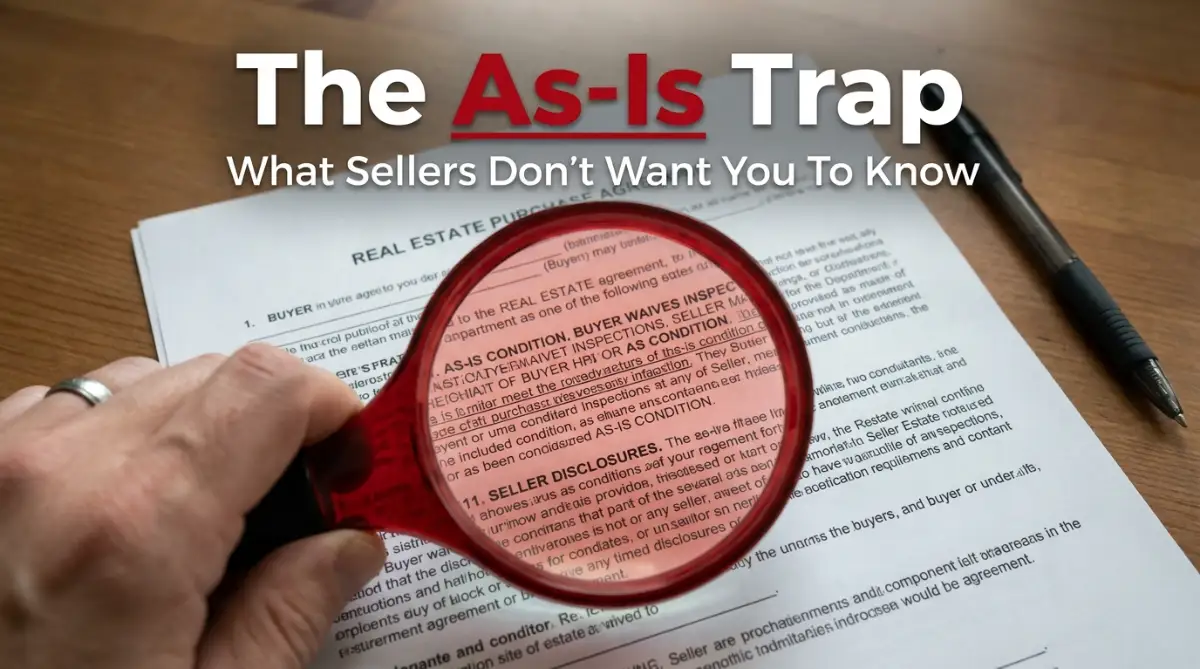
One of the most common tricks you will see is the dreaded "As-Is" condition. Sellers love to use this phrase to make their lives easier. On the surface, it sounds like you are just agreeing to buy the house in its current state without asking the seller to paint the walls or fix a squeaky door.
However, the legal reality is much darker. When you accept an incredibly broad "as-is" clause, you might be accidentally giving up your right to walk away if a major structural defect is found. Imagine discovering that the entire roof needs replacing or that the plumbing is completely rotten. If your contract lacks the proper safety nets, you are stuck footing that massive bill.
Pro Tip from Experience: I actually made this careless mistake during my first property hunt. I assumed my home inspector would catch everything, so I agreed to a strong "as-is" clause to beat another buyer. I quickly realized that an inspector cannot see inside the walls, and I was completely unprotected against hidden water damage. Always insist on keeping your inspection contingency, no matter how much you want the house.
This is why you must demand a highly specific inspection contingency. This acts as your legal emergency exit. It simply says that if the professional inspection reveals massive, expensive problems, you have the absolute right to cancel the deal and get your deposit back.
Watch This Before Signing Any "As-Is" Agreement:
If you want to understand exactly how sellers use these clauses to trap unsuspecting buyers, you absolutely need to watch this short breakdown. It explains the exact wording you should look out for before making an offer.
The Financing Deadline Trap
Another massive danger zone involves your mortgage approval deadlines. When you sign a purchase agreement, you usually include a financing contingency. This means you only have to buy the house if the bank actually gives you the loan.
But here is where the trap snaps shut. These contingencies come with extremely strict, hidden expiration dates. Let us say your contract gives you 21 days to secure your final loan approval. If the bank takes 25 days because they are backed up with paperwork, your safety net completely vanishes on day 22.
If your loan gets denied on day 23, the seller can legally keep your entire earnest money deposit. You lose the house, and you lose thousands of dollars in an instant. You must keep a hawk-like watch on these dates.
Standard Expectation vs. Dangerous Reality
To make this perfectly clear, let us look at a simple comparison of what buyers expect versus what actually happens.
If you notice your financing deadline approaching and the bank is dragging its feet, you must take immediate action. You need to ask the seller for a formal, written extension of the financing contingency. Never rely on a verbal promise or a quick text message from the real estate agent. In the legal world, if it is not written down and signed, it simply does not exist.
The Hidden Fee Shifting Strategy
Have you ever wondered who pays for all those random fees at the closing table? Things like title insurance, transfer taxes, and administrative costs can add up to thousands of dollars. In a truly fair agreement, these costs are normally split between the buyer and the seller based on local customs.
However, clever sellers often insert tiny clauses that shift all of these financial burdens entirely onto you. You might see a sentence stating that the buyer assumes all costs associated with the title transfer. Because you are so focused on the main purchase price, you completely ignore this detail.
When closing day arrives, you are suddenly hit with a bill that is five thousand dollars higher than you expected. You cannot argue because you already signed the agreement. To avoid this, you must demand an itemized breakdown of closing costs before you sign the initial offer. You need to know exactly who is paying for what.
The Terrifying Appraisal Gap
In a highly competitive housing market, buyers often offer more money than a house is actually worth just to win the bidding war. This creates a massive hidden danger known as the appraisal gap.
When you get a mortgage, the bank will send an appraiser to determine the true value of the home. The bank will only lend you money based on that specific appraised value, not the inflated price you offered to pay. If you offered three hundred thousand dollars, but the bank says the house is only worth two hundred and eighty thousand, you have a twenty-thousand-dollar problem.
Myth vs. Reality: The Appraisal Trap
The Common Myth: Most buyers assume that if the house appraises for less than the offer price, the seller is automatically forced to lower the price to match the bank's number.
The Harsh Reality: The seller does not have to lower the price at one single cent. If your contract does not include a strong appraisal contingency, you are legally forced to pay the difference out of your own pocket. If you do not have that extra twenty thousand dollars sitting in your bank account, you will have to walk away from the deal and forfeit your deposit.
To keep your money safe, your contract must state that the purchase is strictly contingent upon the home appraising for the full purchase price or higher. If it comes in low, this clause forces the seller back to the negotiating table. If they refuse to lower the price, you can legally walk away with your deposit fully intact.
Title Defects and Boundary Nightmares
When you buy a house, you are not just buying the physical building. You are buying the legal title to the land it sits on. Unfortunately, that title might be deeply flawed.
There could be hidden liens from unpaid contractors, old tax debts from previous owners, or long-forgotten claims from distant relatives. Standard contracts often include language that limits the seller's responsibility for these past issues. They might offer a "quitclaim deed" instead of a "warranty deed," which essentially means they are transferring the property to you without guaranteeing that the title is actually clean.
If you accept this, you could wake up one morning to find out you owe someone else's twenty-year-old debt. You could even discover that your neighbor legally owns a large portion of your backyard due to an old easement you never knew about.
This is exactly why you must insist on a clean, marketable title, backed by a comprehensive title insurance policy. The contract should clearly state that the seller must clear any and all title defects before the closing date. If they cannot fix the legal mess, you should have the absolute right to cancel the agreement without any financial penalty. You should never inherit someone else's legal nightmares.
Master-Level Strategies to Build a Legal Defense Shield
Now that you know exactly what kind of traps are hiding in that massive stack of papers, it is time to fight back. You do not have to be a legal expert to protect your hard-earned money. You just need to know how to take control of the negotiation process.
Standard forms are completely negotiable. Most buyers wrongly assume that a printed document cannot be changed. This is a massive legal myth that costs people thousands of dollars every single day.
You have the absolute right to cross out words, add new sentences, and completely change the rules of the game before you sign. Let us break down some of the most powerful strategies you can use to build an unbreakable legal shield around your bank account.
The Power of the Escrow Holdback Strategy
Sometimes, a seller will promise to fix a major problem before closing day. They might agree to repair a leaking roof or replace a broken air conditioning unit. But what happens if closing day arrives and the work is still not done?
If you just take their word for it and sign the final papers, you lose all your leverage. Once the house belongs to you, the seller has zero motivation to actually pay for those repairs. You are suddenly stuck with a broken house and a massive repair bill.
This is exactly where you use an "escrow holdback" clause. This is a brilliant legal tool that holds the seller completely accountable. You simply write into the contract that a specific amount of the seller's profit will be held in a neutral bank account until the repairs are completely finished.
For example, if the roof repair costs ten thousand dollars, you force the title company to hold fifteen thousand dollars of the seller's money. If they refuse to fix the roof within the agreed timeframe, you get to keep that money to pay a contractor yourself. According to guidelines from the Consumer Financial Protection Bureau (CFPB) on closing procedures, managing escrow accounts correctly is one of the best ways to protect your funds during property transfers.
Writing Custom Contingencies for Peace of Mind
Do not rely on the pre-printed safety nets in a standard form. You need to write your own custom rules. If there is something specific you are worried about, get it in writing immediately.
Let us say you are only buying this house because you plan to build a large garage in the backyard. You need to know for a fact that the city zoning laws will actually allow you to build it. You cannot just guess and hope for the best.
You must add a custom zoning contingency to the agreement. This simple sentence states that you only have to buy the house if the city formally approves your future building plans. If the city says no, you get your entire deposit back and you can walk away safely.
If you need help knowing what specific forms to bring to your legal meetings to draft these rules, I highly recommend checking out the ultimate paperwork checklist for a lawyer consultation. It will save you a massive amount of time and keep you highly organized.
Dominating the Timeline Game
In real estate, time is literally money. Every single deadline in that contract is a potential landmine waiting to explode. Most buyers just glance at the dates and assume everything will work out smoothly.
You need to take extreme ownership of your calendar. Set loud alarms on your phone for every single deadline, including the inspection period, the financing approval date, and the final walk-through.
If a deadline is approaching and you are still waiting on the bank or the inspector, you must file a written extension immediately. If the seller refuses to sign the extension, you must cancel the contract before the clock runs out. Never let a deadline expire while you are still hoping for the best.

The Devastating Traps Most Homebuyers Fall Into
Even smart people make terrible mistakes when they are rushing to buy a house. The emotional excitement of getting the keys completely blinds them to the massive financial dangers lurking in the background.
I have seen families lose their entire life savings simply because they trusted the wrong person or ignored a boring paragraph. These mistakes do not just cost you money. They destroy your mental health and turn your dream home into an absolute nightmare.
Let us carefully examine the biggest legal pitfalls that trap ordinary people every single day.
Falling for the "Verbal Promise" Trap
This is perhaps the most dangerous mistake of them all. You are walking through the house with the seller, and they notice a massive crack in the living room wall. They smile warmly and promise they will have it professionally fixed before you move in.
Because they seem like a nice, honest person, you believe them. You sign the standard contract without writing down their promise. This is a massive, catastrophic error.
In the legal world, verbal promises are completely worthless. It does not matter what they said, what they promised, or how they shook your hand. If that promise is not clearly written and legally signed inside the purchase agreement, it simply does not exist.
When you move in and find the massive crack still there, you cannot sue them. You cannot force them to pay. The standard contract usually contains a specific clause stating that only written terms are valid, completely wiping out any side conversations. To understand how strict courts are about written terms, you can read the American Bar Association guidelines on real estate contracts.
Ignoring the Homeowners Association (HOA) Dictatorship
Many modern neighborhoods are ruled by a Homeowners Association. When you buy a house in these areas, you are legally forcing yourself to obey their massive rulebook.
Buyers often completely ignore the HOA documents because they are extremely long and boring to read. They just assume the rules are simple things like keeping the grass cut and not playing loud music at night.
The reality is often shocking. I have seen HOA contracts that legally prevent you from parking your own truck in your own driveway. Some rules forbid you from having a dog over a certain weight limit. Others might strictly ban you from renting out a spare bedroom to make extra money.
If you sign the purchase agreement without deeply reviewing the HOA bylaws, you are signing away your freedom. If you break their rules later, the HOA can hit you with massive daily fines. If you fail to pay those fines, they can actually foreclose on your house and take it away from you.
Always demand a full copy of all HOA documents and demand a five-day review period. If you do not like their strict rules, you must use that contingency to cancel the deal immediately.
Skipping the Final Walk-Through Inspection
Closing day is incredibly stressful. You are busy packing boxes, organizing moving trucks, and signing endless stacks of paper. Because you are so busy, you might be tempted to skip the final walk-through of the property.
You might think, "I already had an inspection a few weeks ago, everything is fine." This is a terrifying gamble with your money. A lot can happen to an empty house in just a few weeks.
The seller might have accidentally smashed a giant hole in the wall while moving their heavy furniture out. A major pipe might have burst overnight, flooding the entire basement. Worse yet, the seller might have secretly uninstalled and stolen the expensive stainless steel appliances that were supposed to be included in the sale.
If you sign the final closing documents without looking at the house one last time, you are legally accepting the property exactly as it sits at that exact moment. You cannot go back the next day and complain about the missing stove or the flooded basement. The legal responsibility is entirely yours.
Always demand to walk through every single room of the house just a few hours before you sit down to sign the final papers. For independent advice on protecting your rights during closing, the Nolo legal encyclopedia on real estate deposits offers excellent guidance on when you can safely walk away.
Relying Solely on the Seller's Team
Many buyers try to save a little money by using the seller's title company or relying on the seller's real estate agent to explain the legal paperwork. This is a massive conflict of interest.
The seller's team works for the seller. Their primary goal is to close the deal as fast as possible and protect the seller's profits. They have absolutely no legal obligation to point out a tiny clause that might hurt you.
You need your own independent legal representation. You need someone whose only job is to protect your money and your future. Yes, hiring your own professional costs a little bit of money upfront. But it is the ultimate insurance policy against losing tens of thousands of dollars later.
If you are worried about the high costs of having a massive legal team, you might want to look into the safe way to outsource legal drafting without breaking privilege to understand how legal professionals manage paperwork efficiently. You can also visit our main resource hub at infozonee.com for more straightforward legal and financial guides.
Your Final Defense Plan for Tomorrow
Buying a home should be one of the most exciting achievements of your entire life. It should not be a terrifying legal trap that keeps you awake at night. By understanding these hidden loopholes, you are already miles ahead of the average buyer.
You now know that a "standard" contract is actually a highly dangerous document designed to protect the other side. You know exactly how to demand specific contingencies, control the deadlines, and hold the seller legally accountable for their promises.
The next time a massive stack of papers is pushed across the table toward you, you do not have to feel anxious or rushed. You can confidently take a step back, pick up your red pen, and demand that your financial safety comes first. You have the ultimate power to say no and walk away if the rules are not fair.
I know how overwhelming this entire process feels because I have been in your exact shoes, staring at confusing legal jargon and feeling completely lost. But taking control of your own paperwork was the most empowering thing I ever did for my family's financial future. You deserve a safe, secure home without any hidden legal nightmares attached to it, and I know you have the strength to demand exactly that.
Common Questions About Property Purchase Agreements
Can a buyer legally back out of an accepted real estate offer?
Yes, a buyer can legally back out if they have the right contingencies written into the contract. If your agreement includes an inspection, financing, or appraisal contingency, and those specific conditions are not met, you can cancel the deal and get your deposit back. However, if you waive these protections, backing out could cost you your entire earnest money deposit.
Who actually writes the standard purchase agreement?
Standard agreements are usually drafted by state or local real estate associations and their legal teams. While they provide a starting template, they often contain generic language that does not protect you from specific, unique problems. That is exactly why you must customize the document before signing.
What happens if I miss the exact financing deadline?
If you miss the deadline stated in your financing contingency, you automatically lose your legal right to walk away if your loan is denied. The seller can then legally keep your deposit if you cannot complete the purchase. You must always request a written extension before the clock officially runs out.
Is an "As-Is" property always a bad idea to buy?
Not necessarily, but it is incredibly risky for normal buyers. It simply means the seller will not pay for any repairs before closing. You can still buy it, but you absolutely must keep your inspection contingency so you can cancel the deal if you discover massive structural damage you cannot afford to fix.
Do I really need to hire my own lawyer to read the contract?
While it depends on local laws, hiring your own independent legal professional is the smartest thing you can do. Real estate agents are not lawyers and cannot give you formal legal advice on complex contract clauses. Having your own expert guarantees that someone is looking out exclusively for your financial safety.
Disclaimer: The information provided in this article is for educational and informational purposes only and does not constitute formal legal, financial, or real estate advice. Real estate laws and contract regulations vary significantly by location. Always consult with a licensed attorney or a qualified real estate professional in your specific jurisdiction before signing any legally binding documents or making major financial decisions.