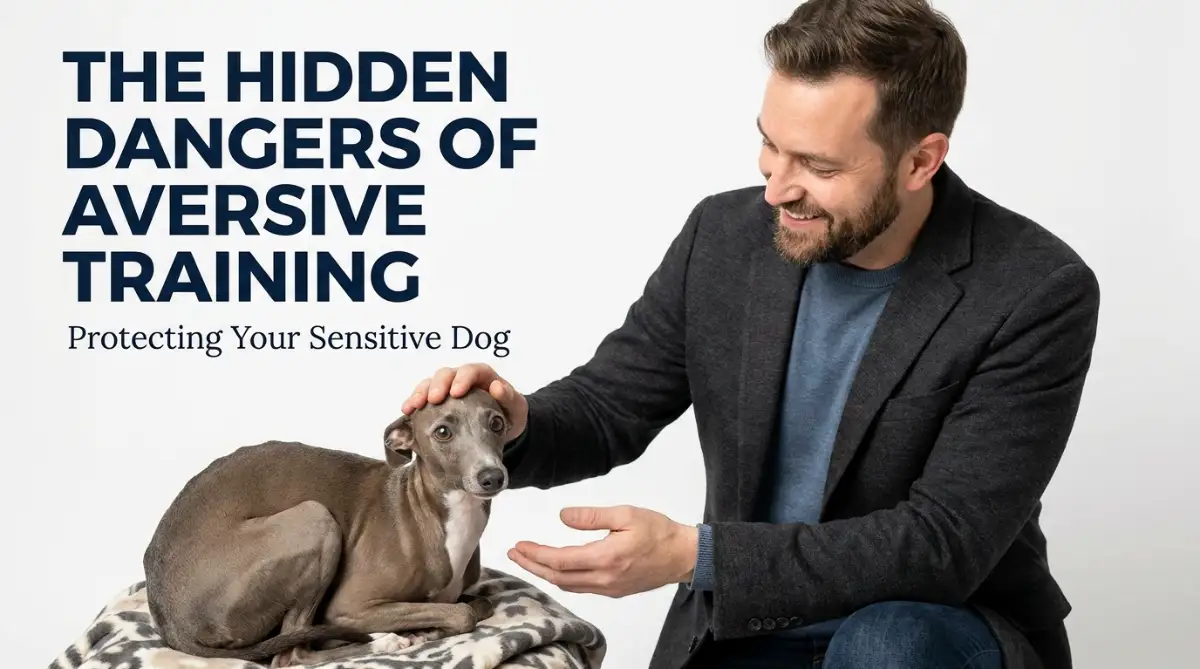
The Heartbreak Behind the "Tough Love" Approach
Picture this common scenario in countless living rooms right now. You come home after a long, exhausting day at work, hoping for a relaxing evening.
Instead, your new rescue dog immediately jumps on you, knocking your bags to the floor. Following the old-school advice you read online, you quickly pin the dog to the floor to "show them who is boss."
You hold them down, trying to establish your status as the alpha of the pack. But as you look into your dog's eyes, you do not see respect or understanding.
You see pure fear. Their body shakes, their tail tucks tightly between their legs, and they let out a quiet whimper.
This is the hidden tragedy of the traditional dominance theory. We are taught that we must rule our pets with a heavy hand, constantly proving our authority.
As a result, thousands of loving pet owners end up damaging the very relationship they wanted to build. You want a best friend, but these outdated methods turn you into a prison guard.
The stress of constantly fighting your dog for control is completely exhausting. It ruins the joy of pet ownership and fills your home with unnecessary anxiety.
You might ask yourself, "Is this really how it has to be? Do I have to scare my dog into listening to me?"
The simple answer is absolutely not. There is a much better, kinder, and highly effective way to communicate with your furry family member. Let's look closely at why we need to leave these old habits behind.
Why the "Alpha Male" Wolf Concept is Actually Broken Science
To fix a problem, we first need to understand where it started. For decades, television trainers and neighborhood experts told us that dogs are just domesticated wolves.
They claimed that wolf packs are ruled by a single, aggressive "alpha" who fights his way to the top. Based on this, they said you must fight your dog to be the alpha of your house.
Here is the truth that changes everything. The original science behind this theory was completely flawed.
The Myth of the Captive Wolf Pack
The scientist who originally published the famous alpha wolf study later spent years trying to retract his own work. He realized a massive mistake in his research methods.
His original study observed unrelated wolves forced together in a small, captive zoo space. Because these animals were stressed and trapped with strangers, they fought constantly for resources.
It was basically a wildlife version of a prison yard riot. That is not how normal animals behave in nature.
When researchers finally observed wild wolves in their natural habitats, they saw something completely different. A real wolf pack is simply a family unit.
The "alphas" are just the mother and father of the group. They do not lead by aggressively pinning their children to the ground or biting their necks.
They lead through gentle guidance, teaching, and mutual cooperation. If wild wolves do not use violence to maintain their family structure, why on earth should we use it on our living room pets?
Shifting from Intimidation to Real Communication
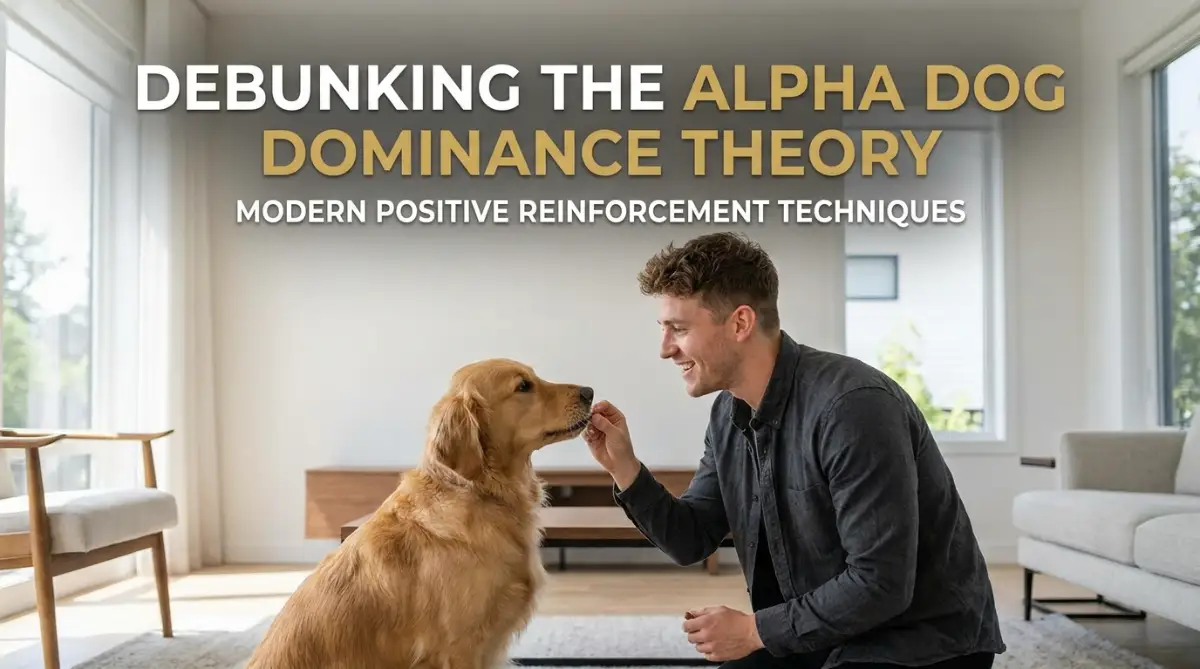
When we stop trying to dominate our dogs, a whole new world of communication opens up. This brings us to the science of positive reinforcement.
Positive reinforcement simply means rewarding the behavior you want to see more of. If an action results in something good, the dog will repeat that action.
It is exactly how human children learn best. If you get a bonus at work for doing a great job, you are highly motivated to keep working hard.
Your dog operates on the exact same psychological principle. When they sit quietly and immediately get a piece of chicken, their brain registers a massive win.
Instead of thinking, "I must sit because I am scared of being hit," they think, "Sitting down is awesome because I get treats!"
This completely changes the dynamic of your household. You move from being a scary dictator to being a trusted provider and teacher.
Myth vs Reality: Common Training Misconceptions
Let's clear up some major misunderstandings that hold pet owners back from making the switch.
Myth: Using treats means you are bribing your dog.
Reality: A bribe happens before the behavior to beg the dog to do it. A reward happens after the dog makes a good choice, acting as payment for a job well done.
Myth: Positive trainers let their dogs do whatever they want.
Reality: Force-free training involves very clear boundaries and rules. We simply enforce these rules by managing the environment and removing rewards, rather than using physical pain.
Myth: Some dogs are too stubborn and need a heavy hand.
Reality: A "stubborn" dog is usually just confused, distracted, or afraid. When you break the lesson down into smaller, highly rewarding steps, the stubbornness magically disappears.
Real-Life Scenario: The Front Door Chaos
Let's put this into a practical, real-world context that you might face today. Imagine your doorbell rings and guests are waiting outside.
Your dog goes absolutely crazy, barking, spinning, and preparing to jump all over your visitors. The old dominance method tells you to knee the dog in the chest when they jump, or aggressively jerk their collar.
What does this actually teach the dog? It teaches them that guests arriving equals pain and yelling from their owner.
This often leads to fear-based aggression. Soon, your dog might start biting guests because they associate visitors with getting hurt.
The Science-Backed Alternative
Instead of punishing the jump, we are going to teach the dog an incompatible behavior. A dog physically cannot jump up if all four paws are sitting on the floor.
Before you even open the door, ask your dog to sit on a specific mat or bed. The moment their bottom hits the floor, toss them a high-value treat like real meat or cheese.
Have your guest walk in. If the dog breaks the sit and rushes forward, the guest simply turns their back and ignores the dog completely.
The dog quickly realizes that jumping gets zero attention, zero eye contact, and zero treats. It is completely boring and unrewarding.
The moment the dog offers a sit again, the guest turns around, says hello gently, and hands them a treat.
You have just rewired the dog's brain. They now think, "Keeping my paws on the floor is the magic key that makes humans pet me and give me food."
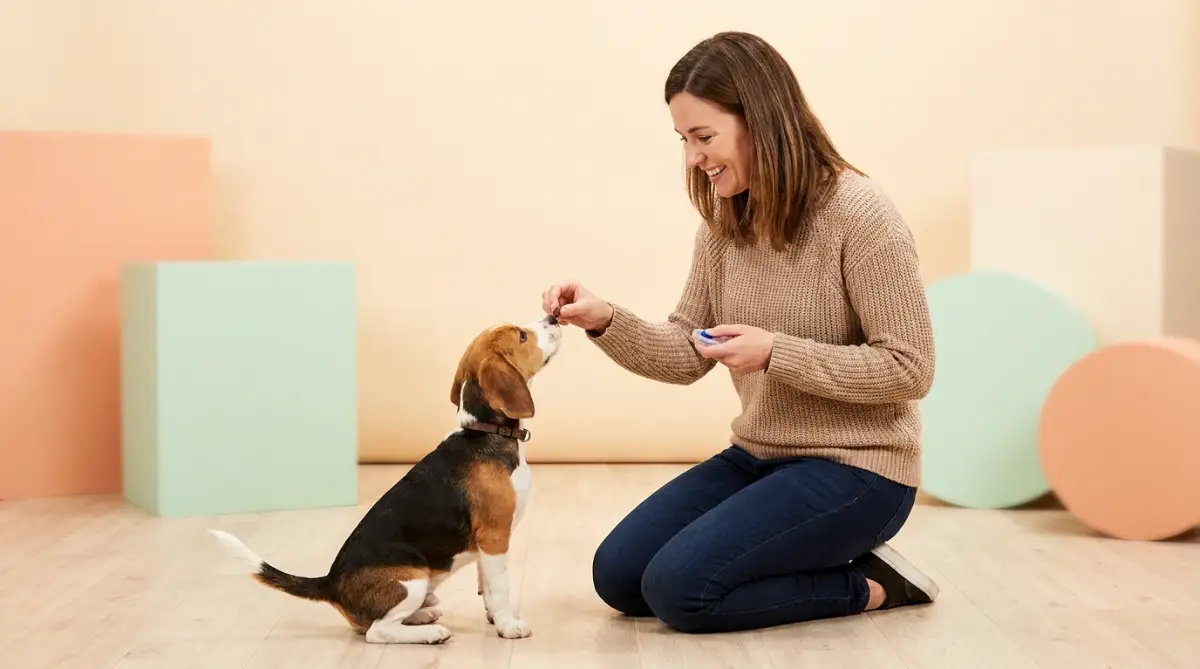
Expert Insight: The Power of the "Clicker"
Pro Tip: If you want to speed up your training by 50%, start using a mechanical clicker. Dogs do not speak English, and our words are often too slow. A clicker makes a sharp, distinct noise the exact millisecond your dog does something right. It acts as a camera shutter, taking a picture of the good behavior and promising a treat is on the way.
The Endless Leash Pulling Battle
Another massive stress point for pet owners is the daily walk. Many people end up dreading walk time because their dog pulls them down the street like a freight train.
Dominance trainers love to sell heavy prong collars or choke chains to fix this. They tell you to issue a hard "leash pop" to show the dog who is leading the pack.
While this might suppress the pulling temporarily out of pain, it destroys the trust between you and your dog. Also, constant pulling against a choke collar severely damages a dog's throat and thyroid gland.
Building Cooperative Walking Habits
Walking nicely on a leash is not a natural behavior for a dog. Humans walk very slowly compared to a dog's natural trotting speed.
To fix pulling with positive reinforcement, you must make staying by your side the best place in the world to be.
Start inside your quiet living room, away from outside distractions. Put the leash on and take one step.
If the dog stays by your leg, click your clicker and hand them a treat right next to your pant leg. Take another step and repeat.
If the dog rushes ahead and tightens the leash, simply stop walking. Become a heavy, boring tree.
Do not yank them back or yell. Just stand completely still.
The dog will eventually wonder why you stopped and will look back at you. The moment the leash goes loose, click and give them a treat next to your leg.
They will quickly learn that pulling turns off the forward motion, but staying near your leg brings wonderful snacks and allows the walk to continue.
Side-by-Side: Dominance vs Positive Methods
To make this completely clear, let's look at how these two worlds handle the same everyday issues.
Training Situation ~ Dominance / "Alpha" Response ~ Positive Reinforcement Response
Dog growls at food bowl ~ Yell at dog, take bowl away to show authority. (Creates resource guarding). ~ Toss high-value treats into the bowl from a distance. (Teaches human presence brings better things).
Dog fails to sit on command ~ Push the dog's hips down forcefully. (Causes stress and confusion). ~ Lure the dog's nose up with a treat so they naturally sit. Reward heavily.
Dog chews your favorite shoes ~ Rub their nose in it and scold them. (Makes them hide to chew things). ~ Trade the shoe for a high-value toy. Put shoes in a closed closet.
Potty accident inside ~ Hit the dog with a rolled paper. (Dog learns to fear using the bathroom around you). ~ Clean quietly. Take dog outside more often and throw a party for outside success.
The Science of Timing and Rewards
One of the biggest reasons people fail with positive training is bad timing. A dog's brain makes associations extremely fast.
If your dog sits, but it takes you ten seconds to dig into your pocket, unwrap a treat, and hand it to them, you are too late. By the time the treat arrives, the dog might be looking out the window.
You just rewarded them for looking out the window, not for sitting.
This is why having quick access to a treat pouch is a game-changer. The reward must arrive within one to two seconds of the good behavior.
You also need to understand what your dog actually finds rewarding. Not all dogs care about dry kibble when they are outside.
If you are trying to teach your dog to ignore a running squirrel, a piece of dry biscuit will not work. The squirrel is simply more exciting.
You need to pay them appropriately for hard tasks. Use boiled chicken, hot dogs, or a game of tug-of-war for the really difficult lessons.
Building a Language of Trust
When you let go of the need to be a commanding alpha, you start actually listening to your dog. Dogs communicate constantly through their body language.
A lip lick, a yawn, or a sudden turning of the head are not random movements. They are polite ways a dog says, "I am feeling stressed, please give me space."
In the dominance model, we ignore these warnings and force the dog into submission. This is exactly why so many "good dogs" suddenly bite out of nowhere.
They gave a dozen polite warnings that they were uncomfortable, but their owner ignored them to prove a point. When you use positive reinforcement, you respect those signals.
If your dog seems scared of a new object, you do not drag them toward it. You let them investigate at their own pace, tossing treats to build their confidence.
This creates a remarkably deep bond. Your dog realizes that you are their safe place in a scary world.
They start looking up to you for guidance naturally, not because you forced their head down. They follow your commands because they genuinely want to, knowing that working with you always results in a good outcome.
As we continue to explore this journey, you will find that giving up control actually gives you the perfect, well-behaved dog you always dreamed of.
Moving Beyond Basics: Pro-Level Behavior Shaping
Once you understand that you do not need to be the "alpha" of the house, the real fun begins. You can start using advanced techniques that professional animal behaviorists use every day.
These modern strategies work much faster than old-school intimidation. They also help your dog retain their good behavior for a lifetime.
Let's look at some highly effective ways to lock in good habits without ever raising your voice.
The Secret Power of "Capturing" Good Behavior
Most pet parents only think about training when they have a treat pouch on their waist. They set aside fifteen minutes, run through some commands, and then completely stop.
However, your dog is constantly learning from you all day long. One of the best ways to get a perfect companion is to use a method called capturing.
Capturing simply means catching your dog doing something wonderful completely on their own. You do not ask them to do it; you just reward it when it happens.
Imagine you are watching television and your dog quietly lies down on their bed instead of pacing around. Quietly walk over, drop a piece of cheese between their paws, and walk away.
Do not say anything to hype them up. Just deliver the reward calmly.
Your dog will suddenly realize that relaxing naturally brings amazing rewards out of thin air. Just as a developer must carefully select clean information to safely train models on your data, you must carefully choose which natural behaviors you input into your dog's daily routine.
If you capture calmness every day, you will soon have a perfectly relaxed dog.
The Art of Environmental Management
The easiest way to stop bad behavior is to make sure it never happens in the first place. Dominance trainers will tell you to leave a steak on the coffee table to "test" your dog's respect for you.
When the dog naturally eats the meat, they tell you to punish the animal. This is incredibly unfair and sets the dog up for failure.
Instead, modern science teaches us to manage the environment carefully. If your puppy loves to chew on expensive shoes, simply close the closet door.
If your dog barks out the front window at every passing car, put up an opaque window film. You are removing the opportunity for them to practice bad habits.
While the environment is managed, you can spend your energy teaching them better choices. Eventually, the bad habit fades from their memory completely.
Transitioning Away from Constant Treats
One of the biggest worries people have is that they will have to carry hot dogs in their pockets forever. This is a massive misunderstanding of positive methods.
We use heavy food rewards in the beginning because we are teaching a brand-new concept. Think of it like a human learning a new language.
Once your dog truly understands the word "sit," you can start fading the food lure. You do this through a concept called a variable schedule of reinforcement.
Instead of getting a treat every single time they sit, they might get a treat the third time, or the fifth time. This makes the game highly exciting for the dog, similar to playing a lottery ticket.
You also start replacing food with life rewards. According to the Humane Society's guidelines on positive reinforcement, you can use anything your dog loves as a paycheck.
If your dog wants to go outside, ask for a sit. When they sit, opening the backdoor becomes the actual reward.
You get the good behavior, and the dog gets what they want. It is a perfect partnership built on mutual respect.
The Hidden Pitfalls of Transitioning Your Style
Making the switch from force to cooperation sounds wonderful on paper. However, many owners hit rough patches along the way and accidentally ruin their own progress.
When you abandon the alpha dog mentality, you have to completely change your own physical habits. Let's look at the biggest traps that cause people to fail.
Mixing Methods Will Destroy Your Progress
The most damaging thing you can do to an animal is become unpredictable. Many owners try to use treats for sitting inside the house, but they still use a painful prong collar for walking outside.
This creates massive anxiety in your dog. They never know which version of you is going to show up.
Are you going to be the kind teacher with the chicken, or the scary boss who yanks their neck? This confusion destroys their trust in you completely.
The American Veterinary Society of Animal Behavior strongly advises against mixing punishment with rewards. They note that fear-based methods actively block a dog's ability to learn new things.
If you are going to commit to force-free learning, you must throw the old tools away. Consistency is the only way your dog will feel safe enough to truly listen.
Giving Up During an "Extinction Burst"
Here is a psychological secret that surprises almost every new pet parent. When you stop rewarding a bad behavior, that behavior will often get much worse before it gets better.
Scientists call this an extinction burst. Let's say your dog usually barks at you at the dinner table until you give them a piece of bread.
Tonight, you decide to ignore the barking entirely. Your dog will not immediately walk away.
Instead, they will bark louder, scratch your leg, and maybe even howl. They are thinking, "Hey, this usually works! I just need to try harder!"
Many owners panic at this moment and give the dog the bread to quiet them down. You just made a massive mistake.
You just taught your dog that being incredibly loud and annoying is the new price for bread. Understanding this temporary behavior spike is much like understanding what everyone gets wrong about market risks—if you panic and change your strategy too soon, you lose all your potential gains.
You must stay calm and wait out the storm until the dog gives up and walks away.
Believing Your Dog "Knows Better"
As humans, we constantly project our own complex emotions onto our pets. When a dog pees on the rug while we are at work, they often look guilty when we come home.
The alpha dog theory claims the dog knows they broke a rule and feels bad about it. This is scientifically false.
Dogs do not feel complex moral guilt. That "guilty look" with the tucked ears and wide eyes is actually a direct fear response.
They do not remember peeing on the rug four hours ago. They just know that when you walk through the door with an angry face, bad things happen to them.
When you scold them, you are not teaching them to hold their bladder. You are teaching them to be terrified of your arrival.
If you want long-term success, you must stop treating your dog like a stubborn roommate. Treat them like an animal that simply needs better management and clearer instructions.
Building a solid foundation of good habits takes daily dedication. Just like working hard to build consistent income online, true behavioral success requires patience, clear rules, and positive daily actions.
Your Daily Blueprint for a Harmonious Home
We have covered a massive amount of ground today. You now know that your dog is not trying to take over your house, steal your title, or dominate your family.
They are simply an opportunistic animal trying to figure out how to live in a confusing human world. By throwing away the alpha dog myth, you lift a huge burden off both of your shoulders.
You no longer have to be the tough enforcer. You can finally just be their best friend and their trusted guide.
Action Steps for Tomorrow Morning
To make this transition as easy as possible, here is exactly what you should do starting tomorrow.
First, toss out the painful gear. Take off the choke chains, shock collars, and prong collars. Switch to a comfortable, well-fitted body harness.
Second, grab a treat pouch. Fill it with tiny, pea-sized pieces of something your dog absolutely loves. Wear this pouch around the house so you are always ready to capture good choices.
Third, focus on what you want. Stop telling your dog "No" all day long. Instead, tell them exactly what they should do instead, like "Sit" or "Go to bed."
Finally, be highly generous with your praise. When they make a good choice, let them know they are the smartest dog in the world.
When you make these simple changes, the transformation is truly beautiful to watch. The fear leaves your dog's eyes, replaced by an eager, happy focus on you.
You want to create a home environment where you know your family is truly safe, and that includes the mental well-being of your pets. Positive reinforcement builds a bridge of communication that cannot be broken.
Start rewarding the good today. You will be amazed at the incredible best friend hiding just beneath the surface, waiting for a chance to shine without fear.
Disclaimer: The information provided in this blog post is for educational and informational purposes only and is not intended as a substitute for professional veterinary advice or hands-on behavioral training. Every dog is unique, and extreme behavioral issues, especially those involving aggression or severe anxiety, should always be evaluated by a certified canine behaviorist or a licensed veterinarian.