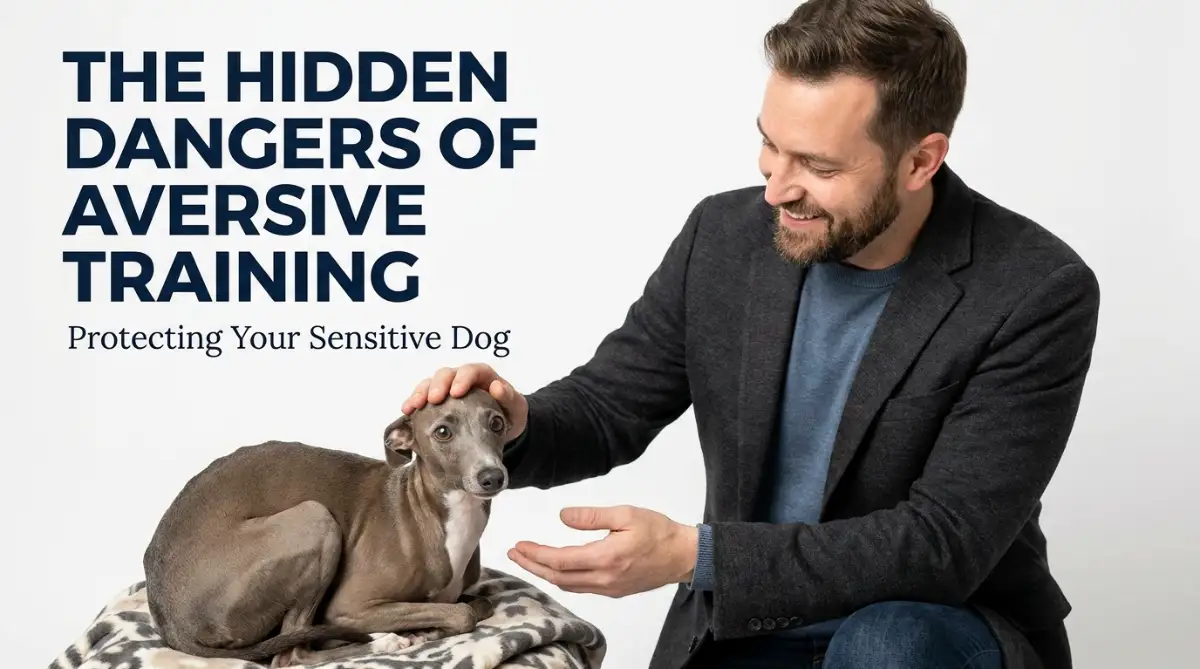
The Heartbreak of Fear-Based Training: A Look at the Reality
Imagine bringing a rescue dog into your home for the first time. You have a beautiful vision of peaceful evening walks, weekend hikes, and cozy cuddles on the couch. But reality hits hard when your new companion barks aggressively at strangers or pulls wildly on the leash.
Out of sheer frustration and desperation, you listen to a neighbor who suggests a prong collar or a loud correction spray. You try it, and it seems to work for a moment. The dog stops pulling. The barking stops.
But as the days pass, you notice something deeply heartbreaking. Your dog no longer greets you at the door with a wagging tail. They flinch when you reach out to pet their head.
They spend most of the day hiding under the dining table, watching your every move with wide, nervous eyes. This is the heavy emotional toll of using harsh methods on a sensitive soul. You wanted obedience, but instead, you accidentally destroyed the trust between you and your best friend.
Every single day, countless pet owners find themselves trapped in this exact cycle of guilt and confusion. They love their dogs deeply, but they are following outdated advice that causes invisible emotional damage. It leaves owners feeling like failures and turns the home into a stressful environment for everyone involved.
We need to understand that sensitive dogs process the world differently. What seems like a simple correction to us can feel like a terrifying threat to them. The mental peace of the entire household vanishes when fear takes the place of natural curiosity and joy.
The Science Behind Canine Sensitivity
To truly help our dogs, we have to look closely at how their brains operate during training. Dogs do not understand right from wrong in the human sense. They simply learn what brings good outcomes and what brings scary or painful outcomes.
When you use aversive methods like shouting, leash popping, or shock collars, you instantly trigger the dog's nervous system. The brain releases a flood of stress hormones, including cortisol and adrenaline. This puts the dog into a state of "fight, flight, or freeze."
In this highly stressed state, learning becomes completely impossible. The thinking part of the dog's brain shuts down, and their survival instincts take over. They are no longer thinking about how to sit or walk nicely on a leash.
Instead, they are only focused on how to make the scary sensation stop. For a highly sensitive breed, this experience is incredibly traumatic. The emotional scars from a single harsh training session can last for weeks, months, or even a lifetime.
Myth vs. Reality in Modern Dog Behavior
The Myth: You have to show your dog who is the boss. If you do not dominate them, they will take over the house and disrespect you.
The Reality: The entire concept of dominance theory has been completely debunked by modern animal behaviorists. Dogs are not trying to overthrow you or become the "alpha." They are simply opportunistic animals trying to navigate a confusing human world. True respect comes from clear communication, safety, and consistency, not from physical intimidation.
Recognizing the Silent Signs of Emotional Fallout
One of the biggest issues with punishment-based training is that it creates an illusion of a "good" dog. When an anxious dog is punished for growling, they learn to suppress their warning signals. They stop growling, which makes the owner think the problem is solved.
However, the underlying fear is still there, bubbling just beneath the surface. Because the dog can no longer warn you that they are uncomfortable, they might suddenly snap or bite without any obvious notice. This is what behaviorists call "aversive fallout."
You might think your dog is just being calm, but they might actually be experiencing learned helplessness. This happens when an animal realizes they have no control over the bad things happening to them. They simply shut down and give up completely.
Physical Stress Signals You Should Never Ignore
Your dog is always talking to you, even without making a sound. Sensitive dogs will show very specific body language when they are feeling overwhelmed by harsh training. You just need to know what to look for.
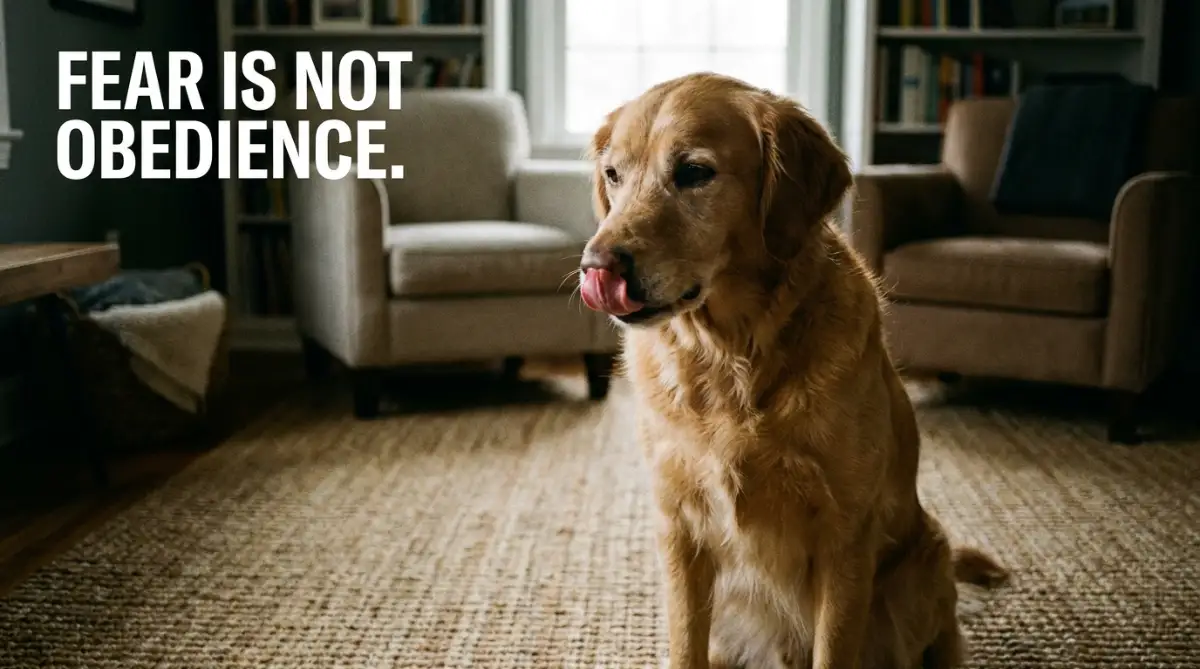
Look out for "whale eye," which is when your dog turns their head away but keeps their eyes fixed on you, showing the white parts of their eyes. You might also notice them yawning when they are not tired. This is a natural pacifying behavior they use to calm themselves down.
Lip licking, excessive panting in a cool room, and a tightly tucked tail are all huge red flags. If you see these signs during a training session, you must stop immediately. Pushing a dog when they are displaying these signals will only make their anxiety worse and damage your relationship.
A Clear Comparison: Punishment vs. Positive Reinforcement
Sometimes it helps to see the exact differences side by side. Let us look at how the two different approaches impact a sensitive dog's daily life.
Training Aspect ~ Aversive Punishment Method ~ Positive Reinforcement Method
Motivation Dog behaves to avoid pain or fear. Dog behaves to earn rewards and joy.
Mental State High stress, anxious, constantly worried. Relaxed, eager to learn, highly engaged.
Bond with Owner Based on unpredictability and fear. Based on deep trust and mutual respect.
Problem Solving Suppresses behavior without fixing the root cause. Changes the emotional response to the trigger.
Long-term Result High risk of sudden aggression or shutdown. Long-lasting obedience and a confident pet.
Healing the Bond: Gentle Alternatives That Actually Work
If you have used harsh methods in the past, please do not beat yourself up. We all do the best we can with the information we have at the time. The beautiful thing about dogs is their incredible capacity for forgiveness.
You can start rebuilding that broken trust today. The first step is to completely remove all aversive tools from your home. Throw away the pinch collars, the loud shaker cans, and the squirt bottles.
Make a promise to your dog that your hands will only be used for petting, feeding, and guiding. Next, you need to become an expert at managing your dog's environment. Management simply means setting your dog up for success so they do not have the chance to make mistakes.
If your dog barks at the mailman every morning, close the curtains before the mailman arrives. If your puppy chews on your expensive shoes, put the shoes in a closed closet. Management stops the bad behavior from being practiced, which breaks the habit naturally.
Rebuilding Trust Through Predictability
Sensitive dogs thrive on routine and clear expectations. They become highly anxious when they do not know what is going to happen next. You can lower their daily stress levels by creating a highly predictable schedule.
Feed them at the exact same time every day. Take them for walks on the same familiar routes before introducing new, busy environments. When they know what to expect, their nervous system finally has a chance to relax.
Pro Tip: Try implementing a "consent test" when petting your sensitive dog. Pet them gently on the chest for three seconds, then pull your hand away. If they lean in or paw at you for more, they are giving you consent to continue. If they look away or stay perfectly still, they are politely asking for space. Respecting their boundaries builds massive amounts of trust.
The Magic of Choice-Based Learning
One of the most effective ways to build confidence in a fearful dog is to let them make their own choices. Instead of forcing them into a sit, wait for them to naturally offer the behavior. When they do, mark the moment with a cheerful "Yes!" and give them a high-value treat.
This type of learning makes the dog feel incredibly smart and capable. They realize that their own actions can make great things happen. This shifts their mindset from a passive, worried state to an active, problem-solving state.
You can practice this by playing simple training games inside the house. Hide small pieces of boiled chicken around the living room and encourage them to sniff them out. Sniffing is a naturally calming activity that lowers a dog's heart rate.
It gives them a job to do and tires out their brain in a healthy way. You will be amazed at how quickly a nervous dog comes out of their shell when training becomes a fun, low-pressure game.
Answering Your Deepest Concerns
"Will my dog ever listen to me if I do not correct them?"
Yes, absolutely. Dogs repeat behaviors that are highly rewarding. If sitting calmly by the door earns them a piece of cheese and a walk, they will choose to sit every single time. You do not need to punish the jumping if the sitting becomes much more valuable to them.
"What if my dog is in danger and I need to stop them immediately?"
Safety is always the top priority. If your dog is about to run into traffic, you do whatever it takes to stop them, even if it scares them in the moment. However, everyday training and teaching manners should never rely on those panic-inducing reactions. Emergency management is totally different from daily education.
"My sensitive dog completely ignores treats outside. How can I use positive methods?"
When a dog refuses high-value treats like chicken or hotdogs, it is a massive indicator that they are over the threshold. Their stress levels are so high that their digestive system has temporarily shut down. You cannot train a dog in this state. You need to increase the distance from the scary trigger until they feel safe enough to eat again.
Training a sensitive dog requires a lot of patience, deep empathy, and a willingness to change our own habits. When we stop trying to force our dogs into submission, a beautiful partnership begins to bloom.
We learn to listen to their whispers before they have to shout. We create a safe haven where they can express their fears without the threat of punishment. Ultimately, the time and effort you invest in gentle, science-backed methods will give you the most loyal, loving, and well-behaved companion you could ever ask for.
Transforming Fear into Confidence: Pro-Level Behavioral Strategies
Once you step away from harsh corrections, a whole new world of communication opens up with your pet. The secret to long-term success with a sensitive dog lies in understanding how to gently rewire their emotional responses. We want them to look at the things that once terrified them and feel completely relaxed instead.
To achieve this, professional behaviorists use a powerful combination of two methods: desensitization and counter-conditioning. These might sound like complicated scientific terms, but they are incredibly simple to practice in your own living room. Desensitization means introducing your dog to their fear at a level so low that it does not trigger any panic.
Imagine your dog is absolutely terrified of loud bicycles. If a bike zooms right past their nose, they will likely lunge, bark, or try to run away in sheer terror. However, if that same bicycle is parked silently two hundred feet away across a large field, your dog might just look at it calmly. That calm distance is what we call their "safe threshold."
Your job is to always keep your dog under that threshold while they learn. Once they can calmly look at the trigger from a distance, we introduce counter-conditioning. This simply means pairing the scary thing with something completely amazing, like a piece of roasted chicken or a favorite squeaky toy.
The "Look at That" Game: A Daily Practice
One of the most effective ways to apply this science is through a simple exercise called the "Look at That" game. You can start practicing this on your very next walk. When your dog spots a trigger in the distance, wait for them to simply look at it without reacting.
The exact second they glance at the bicycle, you say a cheerful "Yes!" and immediately hand them a high-value treat. You are teaching them that the appearance of a scary object actually predicts a wonderful reward. Over time, their emotional reaction completely shifts from fear to happy anticipation.
This process requires a lot of repetition and very careful inputs. Just like carefully building a private AI brain to safely train models on your data requires highly accurate information to avoid system errors, your dog’s brain needs consistent, positive experiences to build new behavioral pathways. You cannot rush this mental rewiring.
Managing "Trigger Stacking" on Bad Days
Even with the best training strategies, there will be days when your sensitive dog simply cannot handle the outside world. This usually happens because of a phenomenon called trigger stacking. Just like humans, dogs have a limited amount of emotional bandwidth for dealing with stress on any given day.
If the mail carrier drops a loud package in the morning, a stray cat sits on the fence at noon, and a loud truck drives by in the afternoon, your dog's stress bucket is completely full. If you try to take them for a training walk that evening, they will likely completely melt down. Recognizing these tough days is a massive part of successful management.
When your dog has experienced a highly stressful event, their body gets flooded with cortisol. According to the American Veterinary Medical Association guidelines on animal welfare, it can take up to 72 hours for those stress hormones to fully leave a dog's bloodstream. On these specific days, skip the neighborhood walk entirely.
Instead, give them a "decompression day" at home. You can scatter their meals in the grass for a sniffer, give them a frozen lick mat, or practice simple tricks indoors. Honoring their need for mental rest is exactly what sets great dog owners apart from average ones.
The Hidden Traps That Break a Dog’s Spirit
Even owners with the best intentions can accidentally fall into habits that cause major setbacks for a fearful dog. When we want a problem fixed immediately, our patience often runs thin. This impatience usually leads to one of the most heartbreaking mistakes in animal training: flooding.
Flooding happens when an owner forces a dog to face their deepest fear head-on, hoping they will just "get over it." A common example is dragging a terrified, shaking rescue dog into a chaotic, crowded dog park. People often think that exposing them to other dogs will force them to make friends.
This approach almost always ends in total disaster. The dog does not learn to be brave; they simply learn that they are entirely trapped and that their owner will not protect them. This massive breach of trust can sometimes cause the dog to resort to aggression simply to protect their own life.
Experts who study canine body language and behavioral signs at the ASPCA constantly remind owners that a shut-down dog is not a cured dog. They might look calm on the outside because they are frozen in fear, but their internal stress levels are dangerously high. We must never confuse silent terror with actual obedience.
The Danger of Inconsistent Rules
Another massive pitfall is a lack of consistency among family members in the same household. If you are using gentle, reward-based methods, but your partner yells at the dog for barking, the dog becomes deeply confused. They never know which version of their humans they are going to get on any given day.
Subjecting a sensitive dog to random, unpredictable reactions creates an environment of emotional chaos. This unpredictability is much like unmasking crypto volatility and understanding market risks; when the foundation keeps shifting wildly, panic inevitably takes over. Your dog needs your home to be a place of solid, unchanging safety.
Everyone in the house must agree on the exact same management rules. If the dog is not allowed on the sofa, nobody can sneak them up there when the others are asleep. If you ignore jumping by turning your back, every single guest who enters the home must do the exact same thing.
Expecting Miracles on a Tight Deadline
Many owners give up on positive reinforcement because they think it takes too long. They try handing out treats for three days, see no major changes, and declare that the method does not work for their specific dog. This is a fundamental misunderstanding of how emotional healing actually works.
If your dog has spent years practicing a reactive behavior, you cannot expect to erase that habit in a single weekend. Rebuilding trust takes immense patience and a highly strategic approach. Similar to figuring out how to purchase your dream house with zero money down, you need to rely on smart, long-term planning rather than hoping for an overnight miracle.
Celebrate the tiny victories along the way. If your dog recovers from a scary noise in two minutes instead of ten, that is massive progress. If they take a treat outside for the first time in weeks, you are moving in the perfect direction.
Your Roadmap to a Joyful and Fear-Free Partnership
Working with a highly sensitive dog is not always an easy journey. There will be days when you feel frustrated, and times when you wonder if you are making any real progress at all. Please remember that your dedication to choosing kindness over force is making a world of difference to the animal looking up at you.
Your dog does not need you to be a flawless, professional trainer with perfect timing. They simply need you to be their safe harbor in a world that often feels overwhelmingly loud and scary. By stepping away from punishment, you are actively choosing to listen to their needs.
An Action Plan for Tomorrow Morning
You do not need to wait for a special moment to start this beautiful transformation. You can begin shifting the dynamic in your home the moment you wake up tomorrow. Here is a simple, stress-free action plan to kickstart your journey.
First, gather up any training tools that are designed to cause discomfort. Put the choke chains, prong collars, and heavy slip leads in a box and store them away forever. Replace them with a comfortable, well-fitting body harness and a standard six-foot leash.
Next, prepare a small container of highly valuable rewards. Chop up some boiled chicken, mild cheese, or plain hotdogs into tiny, pea-sized pieces. Keep this container in your fridge so you are always ready to capture and reward moments of calm behavior.
Finally, take a deep breath and forgive yourself for any past mistakes. Dogs live entirely in the present moment, and they are incredibly ready to embrace this new, gentle chapter with you. Every single time you choose patience, you are building an unbreakable bond of loyalty and love that will last a lifetime.
Disclaimer: The information provided in this article is for educational and informational purposes only. It does not replace professional advice from a certified veterinary behaviorist or a qualified, fear-free dog trainer. Every dog is highly unique, and behavioral issues—especially those involving deep fear or aggression—should be evaluated in person by a certified professional to ensure safety for both you and your pet.